Gwanggaeto Stele: The Monumental History of Goguryeo
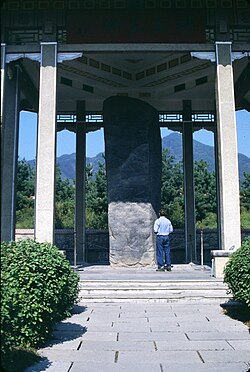
Standing as the largest engraved stele in the world, the Gwanggaeto Stele is a massive granite monument that serves as a primary window into the ancient kingdom of Goguryeo. Erected in 414 AD by King Jangsu to honor his father, the legendary King Gwanggaeto the Great, this towering structure provides invaluable historical details regarding military conquests, royal lineage, and the mythology of a lost era.
Located near the tomb of the great monarch in the present-day city of Ji'an, along the Yalu River in Jilin Province, China, the stele is more than just an archaeological relic. It is a profound historical record that continues to spark intense scholarly debate and national interest across East Asia.
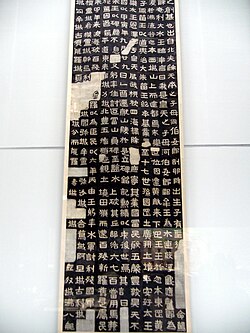
Key Facts
- Type: Memorial stele carved from a single mass of granite.
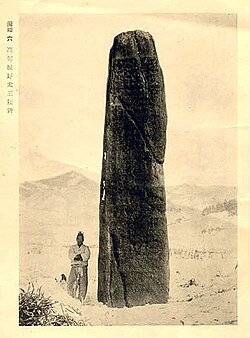
- Dimensions: Approximately 6.39 meters tall with a girth of nearly four meters.
- Language: Written exclusively in Classical Chinese.
- Location: Ji'an, Jilin Province, Northeast China.
- Historical Period: Erected in 414 AD during the Goguryeo dynasty.
- UNESCO Status: Part of a UNESCO World Heritage Site.
Historical Context and Rediscovery
For centuries, the stele remained largely unknown to the wider world. Following the fall of Goguryeo in 668 AD and the subsequent decline of the successor state Balhae, the region transitioned through various Manchurian states, including the Jurchen and the Manchu. During the Qing dynasty, a "closure policy" (fengjin) restricted access to the area north of the Yalu River, effectively isolating the monument.
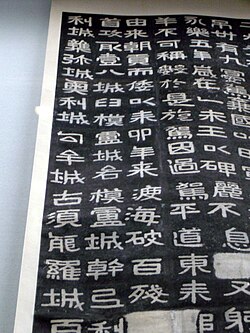
The seclusion ended in the late 19th century when the region opened for resettlement. In 1883, a Japanese officer named Sakō Kageaki, traveling incognito as a Chinese medicine herbalist, obtained a tracing of the inscriptions. This discovery brought the stele to the attention of international scholars, leading to the first detailed analyses by Japanese sinologists and later by Chinese and Korean historians.
The Inscription: Content and Structure
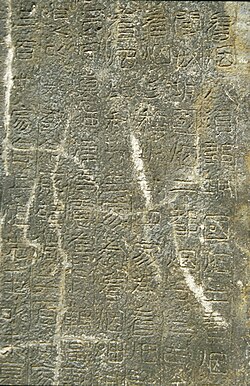
The text on the stele, which contains between 1,775 and 1,802 characters, is divided into three distinct thematic sections:
- Foundation Myth: A retelling of the legendary origins of the Goguryeo kingdom and its royal lineage.
- Military Exploits: A detailed chronicle of King Gwanggaeto's martial achievements, including the conquest of Paeryo in 395 AD and the surrender of states like Paekche in 396 AD.
- Custodial Records: A list of the Sumyoin, the officials appointed to oversee the maintenance of the king's tomb.
Chronology of Military Campaigns
The inscription provides a timeline of the king's expansionist efforts. Notable years include:
- 395 AD: The conquest of Paeryo.
- 396 AD: The conquest of Paekche.
- 400 AD: The dispatch of 50,000 troops to assist Silla, resulting in the retreat of Wa forces.
- 410 AD: The controversial Sinmyo passage, which refers to events in the year 391 AD.
The Sinmyo Passage Controversy
The most contentious aspect of the stele is a specific passage regarding the sinmyo year (391 AD). This short text has become a focal point of historical and political debate due to differing interpretations of the characters.
Japanese scholars historically interpreted the passage as describing the Wa (ancient Japanese) crossing the sea to exert influence. However, Korean scholars have challenged this, suggesting the passage actually describes King Gwanggaeto making Silla and Baekje his subjects. Some theories even suggest the inscription was intentionally altered or damaged to support specific political narratives, though many Chinese scholars argue that any visible marks are merely the result of historical repairs using lime and clay.
Summary of the Gwanggaeto Stele
| Feature | Details |
|---|---|
| Primary Language | Classical Chinese |
| Total Characters | Approximately 1,775 to 1,802 |
| Key Subject | King Gwanggaeto the Great |
| Main Controversy | The Sinmyo passage (391 AD) |
| Material | Granite |
Frequently Asked Questions
What is the significance of the Gwanggaeto Stele?
It is one of the most important primary sources for the history of the Goguryeo kingdom, providing a first-hand account of its foundation, military history, and royal traditions.
Why is the inscription controversial?
The controversy centers on the "Sinmyo passage," where different interpretations of the text lead to vastly different conclusions about the historical relationship between Goguryeo, Baekje, Silla, and the Wa.
Where can I see the Gwanggaeto Stele today?
The original monument is located in Ji'an, Jilin Province, China, housed within a protective pavilion. An exact replica is also located at the War Memorial of Seoul.
How large is the monument?
The stele stands approximately 6.39 meters tall and has a girth of nearly four meters, making it a massive single-block granite structure.
What are the three main parts of the text?
The inscription covers the Goguryeo foundation myth, the military conquests of King Gwanggaeto, and the records of the tomb's custodians.