Gunpowder Origins: Analyzing Theories of Non-Chinese Invention
The historical consensus generally attributes the invention of gunpowder and the earliest firearms to China's Song dynasty, with the oldest surviving guns appearing during the Mongol-led Yuan dynasty. However, the transmission of this technology across the globe is a subject of intense scholarly debate. While the Chinese origin is widely accepted, various theories have emerged suggesting independent inventions in Europe, the Islamic world, and India.
Key Facts
- Chinese Precedence: The earliest dated gunpowder recipes and weapons originate in China.
- European Timeline: Uncontestable evidence of firearms in the Latin West appears around 1326.
- Islamic Evidence: Reliable mentions of cannons in Middle Eastern sources generally date to the 1360s.
- Indian Claims: Theories of ancient Indian gunpowder rely on texts like the Sukraniti, though many historians view these as later forgeries or interpolations.
- The Schwarz Myth: Berthold Schwarz was once credited as the European inventor, but is now largely regarded as a legendary figure.
European Origin Theories
Some historians have questioned the transmission theory—the idea that gunpowder traveled from China to Europe. Stephen Morillo, Jeremy Black, and Paul Lococo argue that while the Chinese invented guns in principle, the development of effective, large-scale cannons may have been a European achievement.
In the 15th century, a narrative emerged attributing the invention of gunpowder to a figure named Berthold Schwarz (also known as Black Berthold). Depending on the source, he was described as a German monk, a Greek alchemist, or even a Dane. Claims regarding the date of his invention vary wildly, ranging from 1250 to 1393.
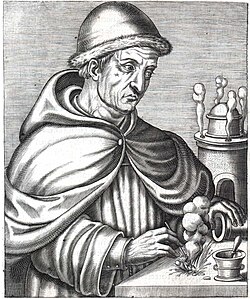
Modern historians, including J.R. Partington and Jack Kelly, dismiss Schwarz as a mythical figure created to provide a German origin for artillery and to shield Europeans from the fact that a critical military technology originated in Asia. By the 18th century, most European scholars, aided by Jesuit missionaries with access to Chinese records, accepted the Chinese origin of gunpowder, paper, and the compass.
Islamic Origin Theories
The theory of an independent Islamic invention often cites the Mamluks and the writings of Ibn Khaldun. A passage from 1382 describes gunpowder engines projecting iron balls during the Marinid Siege of Sijilmassa in 1274.
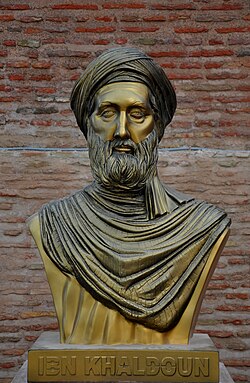
However, most historians reject this as anachronistic. A primary point of contention is the word naft, which was used for both gunpowder and the earlier incendiary naphtha. While Ahmad Y. al-Hassan claims hand cannons were used at the Battle of Ain Jalut in 1260, this is refuted by scholars like Joseph Needham and Tonio Andrade, who argue that metal-barrel cannons did not appear in the Islamic world until the 1360s.
Indian Origin Theories
The hypothesis that ancient Hindus invented gunpowder stems largely from 18th and 19th-century interpretations of Sanskrit texts. Authors such as N.B. Halhed translated terms like sataghni ("hundred-killer") as "cannon," while others pointed to the Ramayana as evidence of early rockets.

A central piece of evidence for this theory is the Sukraniti, which contains a gunpowder formula (saltpetre, sulfur, and charcoal) very similar to Chinese recipes. Proponents like Gustav Oppert also cite temple carvings depicting firearms as proof of ancient use. However, these claims are heavily disputed.
Critics, including P.C. Ray and J.R. Partington, argue that the Sukraniti is likely a forgery or contains later interpolations because its descriptions of firearms are too advanced for the period. They suggest that terms like sataghni actually referred to iron maces rather than cannons. Furthermore, the lack of a classical Sanskrit word for saltpetre suggests the technology was introduced later via Persian influence.
Summary of Regional Invention Claims
| Region | Primary Evidence/Claim | Main Counter-Argument | General Scholarly View |
|---|---|---|---|
| China | Song/Yuan dynasty records and artifacts | Some argue European cannons were more "effective" | Widely accepted as the origin |
| Europe | Berthold Schwarz legend; 1326 evidence | Schwarz is a mythical figure; late appearance of saltpetre | Technology likely transmitted from Asia |
| Islamic World | Ibn Khaldun's texts; Mamluk usage | Confusion between naft (naphtha) and gunpowder | Adoption occurred via Mongols in the 14th century |
| India | Sukraniti and Arthashastra texts | Lack of dating; suspected forgeries/interpolations | Incendiaries used, but true gunpowder is likely a later import |
Frequently Asked Questions
Who was Berthold Schwarz?
Berthold Schwarz was a figure credited in early European accounts as the inventor of gunpowder. However, most modern historians consider him a legendary character created to bolster German national pride and claim a European origin for artillery.
Did the Islamic world invent the gun independently?
While some argue for an independent origin based on Mamluk history, most evidence suggests that gunpowder was introduced to the Islamic world by the Mongols, with reliable evidence of cannons appearing in the 1360s.
Is the Sukraniti a reliable source for ancient Indian gunpowder?
Many scholars doubt its authenticity, arguing that the text cannot be accurately dated and that its descriptions of firearms are too advanced for the ancient period, suggesting it may be a forgery or a later copy of Chinese works.
What is the difference between naphtha and gunpowder in historical texts?
Naphtha is an incendiary liquid used in early "fire-weapons," whereas gunpowder is an explosive powder. In some Arabic texts, the word naft was used for both, leading to historical confusion over when true gunpowder weapons first appeared.
When did firearms first appear in Europe?
The first uncontestable evidence of firearms in the Latin West dates to 1326, though some evidence suggests a possible appearance in Andalusia as early as the 1330s.