U.S. Army Center of Military History: Preserving the Legacy of the American Soldier
The U.S. Army Center of Military History (CMH) serves as the definitive authority on the historical record of the United States Army. Operating as part of the U.S. Army Transformation and Training Command, the CMH is the flagship organization leading the Army Historical Program. From documenting modern conflicts to managing vast collections of art and artifacts, the Center ensures that the lessons of the past inform the leaders of tomorrow.
Headquartered at Fort Lesley J. McNair in Washington, D.C., the CMH operates under the motto "Educate, inspire, preserve." Its reach extends across the globe, providing historical support to army organizations and managing the National Museum of the United States Army at Fort Belvoir, Virginia.
Key Facts
- Established: Active from 1918 to the present.
- Core Mission: Responsible for the appropriate use of history throughout the U.S. Army.
- Museum Oversight: Manages over 120 army museums with approximately 450,000 artifacts and 15,000 works of art.
- Publications: Maintains a catalog of over 600 titles and publishes the quarterly journal Army History.
- Educational Tools: Facilitates "staff rides" to teach strategy and tactics through on-site battlefield analysis.
The Mission of the Center of Military History
Under the guidance of the chief of military history and the army's chief historian, the CMH staff manages roughly 50 major writing projects. These research efforts span a wide spectrum, including operational and administrative history, procurement, peacekeeping, and the global war on terror. These activities are detailed annually in the Army Historical Program report submitted to the Chief of Staff.
Organizational Lineage and Honors
Beyond broad historical narratives, the CMH maintains the specific organizational history of army units. This allows the Center to provide the Regular Army, Army National Guard, and Army Reserve with official certificates of lineage and honors. During force reorganizations, the CMH works with army staff to ensure that units with significant histories, as well as their related artifacts, are preserved.
Oral History and Documentation
The CMH acts as a central clearinghouse for oral history programs across all command levels. It preserves critical first-hand accounts from the Vietnam War, Operation Desert Storm, and various recent contingency operations. Additionally, end-of-tour interviews within the Army Secretariat and Staff form the basis for the Department of the Army's annual histories.
Preserving Military Art and Artifacts
Tangible history is essential for understanding the profession of arms. The CMH manages a massive network of holdings, including the National Museum of the United States Army and the Army Heritage and Educational Center at Carlisle Barracks, Pennsylvania. The Center also deploys combat artists, such as those seen in the Vietnam Combat Artists Program, to document conflict in real-time.
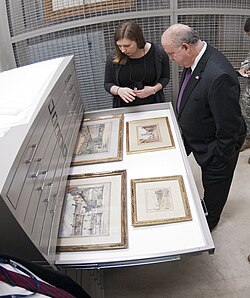
One of the more unique aspects of the CMH collection is a large assembly of Nazi art and ephemera gathered during post-World War II denazification efforts. This collection includes several propaganda pieces, such as The Standard Bearer and In the Beginning Was the Word, as well as four watercolor paintings by Adolf Hitler.
Educational Impact and Professional Development
The CMH ensures that military history is integrated into the teaching of logistics, administration, tactics, and strategy. To promote professionalism, the Center hosts a biennial history conference and workshop and provides essential readings for the army school system and the ROTC community.
The Role of Staff Rides
A primary teaching tool used by the CMH is the staff ride. A staff ride is an educational exercise where military leaders retrace the course of a historical battle on the actual ground where it occurred. Led by Center historians, these rides help senior members of the army Staff understand the recurring fundamentals of military operations.
Fellowships and Academic Outreach
To foster academic interest in military history, the CMH offers up to four dissertation fellowships annually to graduate students. Each fellowship provides a $9,000 stipend and access to the Center's expertise and facilities, with a preference for topics focusing on the U.S. Army.
Summary of CMH Operations
| Function | Details |
|---|---|
| Museum Management | 120+ museums; 450,000 artifacts; 15,000 artworks |
| Publications | 600+ titles; Army History quarterly journal |
| Academic Support | Graduate dissertation fellowships ($9,000 stipend) |
| Field Operations | Staff rides and military history detachments in conflict zones |
| Unit Records | Lineage and honors certificates for Regular, Guard, and Reserve units |
Public Access and Research
The CMH library, reference services, and art collections are available to private researchers. While official priorities take precedence, curators and archivists provide guidance on locating sources. The Museum Division also arranges temporary loans of art to private organizations for public display, provided they adhere to Army regulations.
Most army museums are open to the public. However, because the headquarters at Fort Lesley J. McNair is a secured facility, visitors must request an appointment at least one week in advance.
Frequently Asked Questions
What is the primary role of the U.S. Army Center of Military History?
The CMH is responsible for the appropriate use of history throughout the U.S. Army, leading the Army Historical Program and managing the army's official historical records, museums, and publications.
What are "staff rides" in a military context?
Staff rides are teaching devices where military leaders visit the actual site of a historical battle to retrace the events on the ground, allowing them to better understand the fundamentals of military operations.
Does the CMH offer support for students?
Yes, the Center provides up to four dissertation fellowships per academic year for graduate students, offering a $9,000 stipend and access to facilities for research on the history of war on land.
What kind of art does the CMH preserve?
The CMH manages 15,000 works of military art, including works by combat artists and a significant collection of Nazi art and ephemera collected during post-WWII denazification.
How can the public access the CMH collections?
Private researchers can use the library and reference services. While most army museums are open to the public, visits to the headquarters at Fort Lesley J. McNair require an appointment made at least one week in advance.