Guano: The History and Science of Nature's Most Powerful Fertilizer
Guano—the accumulated excrement of seabirds or bats—has played a surprisingly pivotal role in global history, agriculture, and geopolitics. Derived from the Quechua word wanu, this substance is far more than simple waste; it is a nutrient-dense powerhouse that once drove nations to war and spurred the colonization of the most remote islands on Earth.
The primary value of guano lies in its high concentrations of nitrogen, phosphate, and potassium. These three elements are essential nutrients for plant growth, making guano one of the most effective natural fertilizers ever discovered. Beyond the farm, its chemical properties were historically utilized in the production of gunpowder and other explosive materials.
Key Facts
- Composition: Rich in nitrogen, phosphate, and potassium, essential for plant health.
- Primary Sources: Produced mainly by seabirds (such as the guanay cormorant) and insectivorous bats.
- Historical Impact: Fueled the 19th-century shift toward input-intensive farming.
- Geopolitical Influence: Led to the U.S. Guano Islands Act of 1856 and the War of the Pacific (1879–1883).
- Ecological Role: Serves as the primary energy source for many cave-dwelling species.
Types of Guano
Seabird Guano
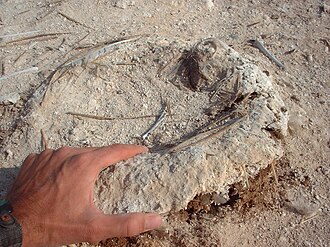
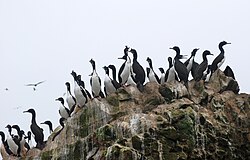
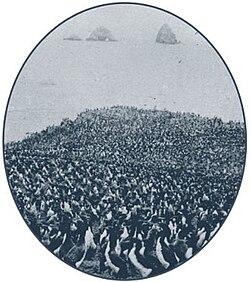
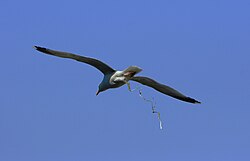
Seabird guano is often found in massive deposits on remote islands. The guanay cormorant has historically been one of the most significant producers of this resource. In some cases, the deposits are so concentrated that birds, such as the Peruvian booby, build their nests almost entirely out of pure guano.
Bat Guano
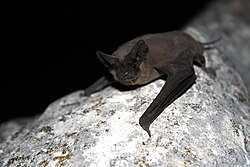
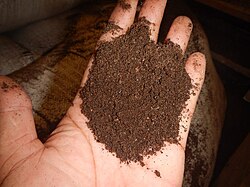
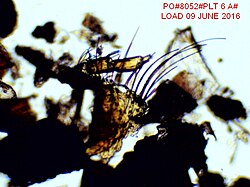
Produced by colonies of bats, particularly insectivorous species like the Mexican free-tailed bat, bat guano is a critical component of cave ecosystems. Under a microscope, this guano reveals tiny particles of insect exoskeletons, which are composed mostly of chitin (a fibrous substance forming the exoskeleton of arthropods).
The "Guano Age" and Global Trade
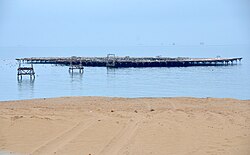
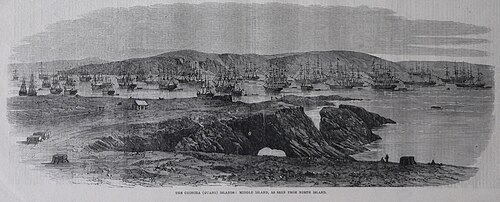
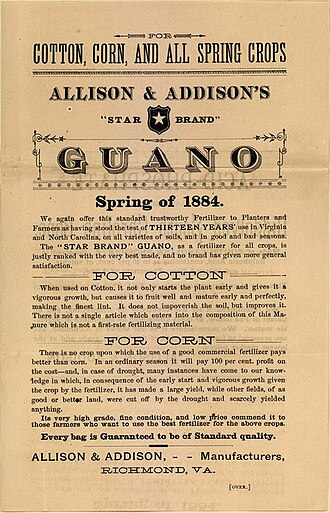
The 19th century witnessed a global rush for "white gold." Between 1802 and 1884, the demand for guano transformed agriculture and international relations. While Peru's Chincha Islands were initially the most productive sites, the trade soon expanded. By 1846, Great Britain was importing over 460,000 tonnes of guano from Ichaboe Island off the coast of Namibia.
The War of the Pacific
As the Chincha Islands neared depletion in the late 1860s, the focus shifted to other regions and the discovery of sodium nitrate (Chile saltpetre). This tension culminated in the War of the Pacific (1879–1883). Chile invaded coastal Bolivia and Peru to secure these valuable nitrogen resources. Following the Treaty of Ancón in 1884, Chile gained control of the most valuable guano islands, causing its national treasury to grow by 900% between 1879 and 1902.
U.S. Imperialism and the Guano Islands Act
In 1856, the United States passed the Guano Islands Act, allowing citizens to claim exclusive rights to any unclaimed island containing guano. This led to the annexation of nearly 100 islands in the Pacific and Caribbean. This era was marked by poor working conditions; on Navassa Island, a rebellion in 1889 led to a Supreme Court case, Jones v. United States (1890), which legally established these islands as part of the U.S., providing a legal foundation for future American empire-building.
Mining and Human Impact
Labor Conditions
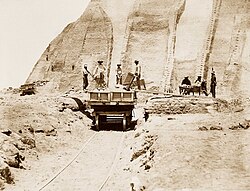
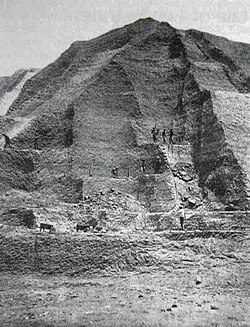
The early guano industry relied on exploited labor. After the abolition of slavery in Peru, the industry turned to "blackbirding"—the coercion or kidnapping of people from the Pacific Islands and Southern China. By 1852, Chinese "coolies" made up two-thirds of the workforce, often working as virtual slaves under brutal conditions, including floggings and hazardous environments where workers risked being buried alive by falling guano piles.
Modern Mining
Today, mining continues in Chile, with annual production between 2,091 and 4,601 metric tons (2014–2023). Conditions have improved significantly; Peruvian miners now earn roughly US$750 per month—more than double the national average—and receive health insurance and regulated shifts.
Ecological and Health Considerations
Environmental Consequences
Unsustainable mining has had devastating effects on wildlife. In Peru, the seabird population on twenty-two islands plummeted from approximately 53 million in the late 1800s to just 4.2 million by 2011. This led the Peruvian government to hire zoologist Robert Ervin Coker in 1906 to develop conservation and management plans.
Cave Ecosystems
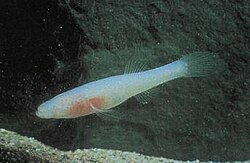
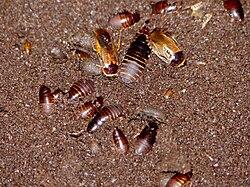
In caves, bat guano is the dominant energy resource. Many species, such as the Ozark cavefish and various cave cockroaches, depend on it for survival. Furthermore, the acidity of guano can physically reshape caves by weathering the rocky substrate; in Borneo's Gomantong cave, 70–95% of the total volume is attributed to biological processes like guano excretion.
Human Health Risks
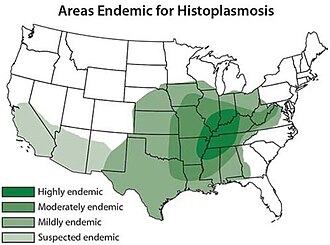
Guano can harbor the fungus Histoplasma capsulatum, which causes histoplasmosis. This fungus thrives in nitrogen-rich environments. While less than 1% of infected people develop symptoms, the disease can be fatal for immunocompromised individuals, particularly those with HIV/AIDS. The CDC recommends that high-risk individuals avoid disturbing soil or guano in caves and chicken coops.
Summary of Guano Characteristics
| Feature | Seabird Guano | Bat Guano |
|---|---|---|
| Primary Nutrients | Nitrogen, Phosphate, Potassium | Nitrogen, Phosphate, Potassium |
| Key Producers | Guanay Cormorants, Boobies | Insectivorous Bats |
| Primary Use | Large-scale Agriculture | Gunpowder (historic), Organic Fertilizer |
| Ecological Role | Island Soil Enrichment | Cave Energy Source / Rock Erosion |
| Health Risk | Histoplasmosis (via fungus) | Histoplasmosis (via fungus) |
Frequently Asked Questions
Why is guano such an effective fertilizer?
Guano is highly effective because it contains high concentrations of nitrogen, phosphate, and potassium, which are the three primary macronutrients required for plant growth and soil health.
What was the Guano Islands Act of 1856?
It was a U.S. law that granted citizens the exclusive right to claim any uninhabited island containing guano, leading to the annexation of nearly 100 islands in the Pacific and Caribbean.
How does bat guano affect the physical structure of caves?
The acidity of bat guano weathers the rocky substrate of caves over time. For example, in some caves, the majority of the cave's volume is the result of biological erosion caused by guano excretion.
What is histoplasmosis and how is it linked to guano?
Histoplasmosis is a respiratory disease caused by the fungus Histoplasma capsulatum, which grows preferentially in the nitrogen-rich environment provided by bird and bat droppings.
What happened to the seabird populations in Peru due to mining?
Unsustainable mining practices led to permanent habitat destruction and a massive decline in population, dropping from roughly 53 million birds in the late 19th century to 4.2 million by 2011.