The Growth and Legacy of the USGAA: Gaelic Games in the United States
For decades, the spirit of Irish athletics has thrived far beyond the shores of Ireland. Central to this cultural expansion is the United States County Board of the Gaelic Athletic Association (USGAA). As the governing body for Gaelic games across most of the U.S., the USGAA preserves and promotes traditional Irish sports, fostering a community that blends heritage with a growing American sporting identity.
What is the USGAA?
Founded in 1950, the USGAA is one of three county boards—administrative bodies that manage the sport at a regional level—of the Gaelic Athletic Association (GAA) in North America. It is responsible for the organization and regulation of Gaelic games throughout the United States, with the exception of the New York metropolitan area, which is managed independently by the New York GAA.
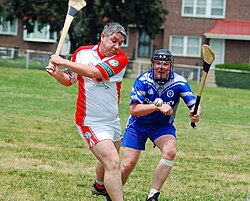
The organization oversees several traditional sports, most notably Gaelic football (a field sport combining elements of soccer and rugby) and hurling (an ancient outdoor team game played with a wooden stick called a hurley and a small ball called a sliotar). It also governs camogie, which is the female version of hurling.
| Attribute | Detail |
|---|---|
| Founded | 1950 |
| Dominant Sport | Gaelic football |
| Total Clubs | 171 |
| County Colours | Red, White, and Blue |
| Executive Chairman | Paul Keane |
| Official Website | usgaa.org |
A History of Irish Sport in America
The roots of these games in North America date back to the earliest Irish immigrants. Hurling was recorded as early as 1788 in St. John's, Newfoundland, while Gaelic football was played in San Francisco's Hyde Park as early as the 1850s. Historically, clubs flourished in cities with large Irish populations, including Boston, Chicago, Philadelphia, and San Francisco.
While the North American county board originally included Canadian clubs, those teams are now managed by their own dedicated Canadian county board.
In the late 20th and early 21st centuries, the sport expanded beyond traditional hubs. Hurling saw a surge in cities like Milwaukee (1995), Indianapolis, and St. Louis. This growth extended to higher education, with programs established at Purdue University and Stanford University in 2005, California State University, Monterey Bay in 2006, and UC Berkeley in 2008.
Gaelic football has seen similar academic interest. Saint Joseph's University in Philadelphia became the first school to establish an officially recognized program after operating independently since 2011, while Boston College also launched a program that same year.
Adapting to Modern Challenges
The early 2000s brought significant shifts to the GAA landscape in North America. Two primary factors impacted player numbers: the increased security measures following the 9/11 terrorist attacks and the rise of the "Celtic Tiger"—a period of rapid economic growth in Ireland. These developments made it more difficult for Irish nationals to migrate to or remain in the U.S., and many emigrants chose to return to Ireland to enjoy a higher standard of living.
While these factors led to a decline in players within larger cities, the trend was balanced by growth in smaller urban areas. Furthermore, the development of youth programs and the success of the Continental Youth Championship have helped build a sustainable grassroots foundation. This shift is reflected in the demographics of the sport; as of 2017, more than 51% of registered players in the United States were born in the U.S.
Competitions and Structure
The USGAA Finals
Every year, the USGAA hosts a major championship for affiliated clubs across the country (excluding New York City). Regional champions in Gaelic football, hurling, and camogie compete in playoffs to determine the national champions. These finals rotate through various host cities, including frequent stops in Boston, Chicago, Philadelphia, and San Francisco.
Competition Grades
To ensure fair competition, championships are divided into various skill grades:
- Men's Football: Ranges from Senior to Junior (Grades A, B, C, and D).
- Men's Hurling: Includes Senior and Junior (Grades A, B, C, and D).
- Ladies' Football: Includes Senior, Intermediate, and Junior (Grades A and B).
- Camogie: Divided into Senior and Junior championships.
Continental Youth Championships (CYC)
Launched in 2004 and hosted by the New York GAA, the CYC is an annual weekend tournament. It brings together underage teams (from Under 8 to Under 18) from all three North American GAA jurisdictions to compete in football, hurling, ladies' football, and camogie.
The Reach of the Game
The scale of the USGAA's influence is vast. By 2015, the organization reported 116 adult clubs and 14 youth clubs operating outside of New York City. As of 2017, Gaelic games were organized in over 60 cities across the United States, stretching from the East Coast in cities like Boston and Richmond to the West Coast in San Diego and Seattle, and reaching as far as the Cayman Islands.
Key facilities that support this growth include Gaelic Park in Chicago, the Irish Cultural Center in Boston, the Limerick Field Complex in Philadelphia, and Páirc na nGael in San Francisco.