Groundcover: The Essential Role of the Herbaceous Layer in Nature and Gardening
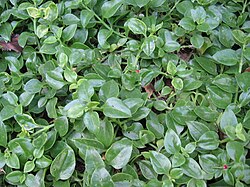
In both wild ecosystems and manicured landscapes, groundcover—also known as ground cover—plays a vital role that often goes unnoticed. Defined as any plant that grows low to the ground, these species serve as a living shield, protecting topsoil from the damaging effects of erosion and drought. In the complex hierarchy of a terrestrial ecosystem, this layer sits just below the shrubs and is scientifically referred to as the herbaceous layer.
While often overlooked due to its relatively small contribution to total biomass, the groundcover layer is a powerhouse of ecological function. It provides essential habitats and concealment for various terrestrial fauna, particularly fossorial animals (those that live underground or burrow).
Ecological Importance and Biodiversity
The impact of the herbaceous layer on an ecosystem is disproportionate to its size. While it may represent a small fraction of total biomass, it can contribute up to 4% of an ecosystem's net primary productivity (NPP)—a figure four times its average biomass. Perhaps most importantly, the groundcover layer of a forest can account for up to 90% of the ecosystem's total plant diversity.
The Filter Effect on Forest Regeneration
Groundcover acts as a natural biological filter for forest regeneration. For new tree seedlings to grow, they must fall from their parent trees and permeate the groundcover to reach the soil. This layer filters out many seeds, but allows a specific portion to pass through, creating necessary spacing between plants for future growth. However, if the groundcover becomes too dense, it can prevent seeds from reaching the soil entirely, potentially shifting a forest toward a shrub-dominated landscape.
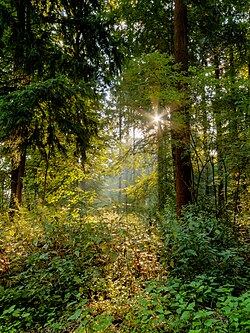
Furthermore, groundcover significantly influences light availability. In a study of the Rhododendron maximum canopy in the southern Appalachian region, researchers found that while 4–8% of sunlight reaches the herbaceous layer, only 1–2% actually reaches the ground.
Classification and Growth Patterns
Ecologists and gardeners classify groundcover in several ways, depending on the context. In ecology, the term is often used interchangeably with "ground flora," "regenerative layer," or "step over." In agriculture, it refers to anything—from grasses to plastic materials—that protects soil and inhibits weeds. In gardening, it specifically refers to plants used to conceal bare earth and replace weeds.
Species Variations
Plants are often categorized by their height and longevity:
- Residency species: These typically reach a maximum height of 1.5 metres (4 ft 11 in) and are permanently classified as herbaceous.
- Transient species: These are capable of growing beyond the 1.5-metre threshold, making them temporarily herbaceous.
These varying heights create diverse micro-environments that support wildlife such as the wren, the harvest mouse, and the reed warbler.
Foliage and Reproduction
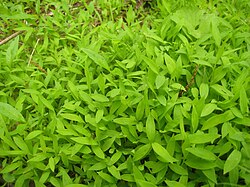
Groundcover can also be classified by its seasonal behavior: evergreen species retain their foliage year-round, while deciduous species lose their leaves during winter months. To spread across an area, these plants typically utilize one of five reproductive methods:
- Lateral growth: Side growth via branches extending upon contact with soil.
- Base growth: New plants emerging from the base of the original plant.
- Rhizomes: Under-ground growth.
- Stolons: Above-ground runners.
- Roots: Growth originating from the root system.
Gardening and Landscaping Applications
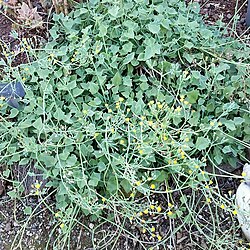
Gardeners utilize five primary types of plants to achieve groundcover effects:
- Vines: Woody plants with slender, spreading stems.
- Herbaceous plants: Non-woody species.
- Shrubs: Low-growing, spreading varieties.
- Moss: Larger, coarser species.
- Ornamental grasses: Particularly low-growing varieties.
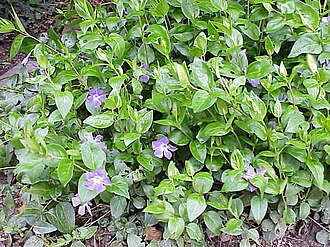
Commonly used species include Vinca (periwinkle), Mentha (mint), Hedera (ivy), and Mesembryanthemum cordifolium. These plants are also highly effective in roof gardens. Because roofs are exposed to harsh winds, intense sun, and heavy rain, the fast-growing and resilient nature of groundcover makes them ideal for providing lush, low-maintenance vegetation in difficult environments.
Key Facts
- Soil Protection: Groundcover prevents topsoil erosion and helps retain moisture to combat drought.
- Biodiversity: In forest ecosystems, the groundcover can represent up to 90% of plant diversity.
- Productivity: The herbaceous layer can contribute up to 4% of an ecosystem's net primary productivity.
- Light Filtration: Groundcover can reduce the amount of sunlight reaching the soil to as little as 1–2%.
- Roof Gardens: Groundcover is preferred for roofs due to its ability to withstand wind, sun, and overwatering.
Summary of Groundcover Types and Functions
| Context | Primary Purpose | Common Examples/Materials |
|---|---|---|
| Ecology | Habitat, biodiversity, and NPP contribution | Herbaceous layer, ground flora |
| Agriculture | Erosion control and weed inhibition | Grasses, plastic materials, landscaping fabric |
| Gardening | Aesthetics and weed replacement | Vines, moss, ornamental grasses, creeping plants |
Frequently Asked Questions
What is the difference between residency and transient species?
Residency species are plants that stay under 1.5 metres in height and are permanently herbaceous. Transient species can grow taller than 1.5 metres, meaning they are only temporarily considered herbaceous.
How does groundcover affect tree growth?
Groundcover acts as a filter. It can help space out seedlings by preventing too many seeds from reaching the soil, but if it becomes too dense, it can block seeds entirely and prevent forest regeneration.
Why is groundcover used in roof gardens?
Groundcover plants are often fast-growing, low-maintenance, and capable of surviving the harsh conditions found on roofs, such as high winds, intense sun, and heavy rain.
What are the main ways groundcover plants reproduce?
They typically reproduce through lateral growth (side or base growth), rhizomes (underground), stolons (above-ground), or through their root systems.
What is the difference between evergreen and deciduous groundcover?
Evergreen groundcover keeps its foliage throughout the entire year, whereas deciduous groundcover loses its foliage during the winter months.