Grey Hypocolius: The Enigmatic Sole Member of Hypocoliidae
The Grey Hypocolius (Hypocolius ampelinus) is a small, slender passerine bird that stands as a biological curiosity. Unlike many bird species that share a genus or family with numerous relatives, the Grey Hypocolius is the sole member of both its genus, Hypocolius, and its family, Hypocoliidae. This unique status makes it a high-priority target for birdwatchers and a subject of significant interest for taxonomists.
Found across the dry semi-desert regions of Northern Africa, Arabia, Afghanistan, Pakistan, and western India, this bird is perfectly adapted to arid environments. It is characterized by its satiny plumage and a preference for fruit-bearing shrubs in desert river valleys and cultivated groves.
Key Facts
- Scientific Name: Hypocolius ampelinus
- Family: Hypocoliidae (Monotypic)
- Conservation Status: Least Concern (IUCN 3.1)
- Primary Diet: Fruit and berries, supplemented by insects
- Distribution: Middle East, North Africa, and Western Asia
- Distinctive Feature: Males possess a black triangular eye mask
Physical Description and Appearance
The Grey Hypocolius is a slim bird measuring between 19 and 21 cm (7.5–8.3 in) in length. It is most notable for its long tail and soft, satiny plumage that closely resembles that of a waxwing. The overall coloration is a uniform grey or brownish-grey.
Sexual dimorphism is present; males feature a prominent black triangular mask around the eyes, while females lack this marking. Both sexes have black primary wing feathers with white tips and a black terminal band on the tail. Their bills are short, thick, and hook-tipped, and they possess a slight crest of head feathers that they raise when excited.
Anatomical Details
The bird's legs (tarsus) are short and sturdy with coarse scales. At the base of the bill, rictal bristles (stiff hairs that help protect the eyes or detect prey) are visible, and the nostrils are small, oval, and exposed.
Taxonomy and Evolutionary History
For years, the taxonomic placement of the Grey Hypocolius was a mystery. Early researchers suggested relationships with shrikes or bulbuls. However, modern molecular sequence studies have clarified its lineage, linking it to the Bombycilloidea superfamily, which includes waxwings.
A 2019 study placed the species in a clade alongside palmchats, silky-flycatchers, and the extinct Hawaiian honeyeaters (Mohoidae). Evidence suggests that the Hypocoliidae and Mohoidae are sister groups that diverged approximately 15 to 20 million years ago during the early-to-mid Miocene epoch.
Distribution and Habitat
The Grey Hypocolius is primarily found in the Middle East. It breeds in regions including Iraq, Iran, Afghanistan, Pakistan, and Turkmenistan. During the winter, the population migrates south, concentrating near the coasts of the Persian Gulf and the Red Sea, including Bahrain.
Their preferred habitats include:
- Arid and semi-arid woodlands and scrub.
- River valleys located near deserts.
- Irrigated areas, palm groves, and gardens.
- Coastal areas.
While they are regular winter visitors to the Jamnagar and Kutch regions of western India, they are considered vagrants in Turkey, Israel, Egypt, and Oman.
Behavior and Diet
This species is known for being shy and cryptic. When threatened, it quickly flies into thick cover and remains motionless to avoid detection. Its flight pattern is strong and direct, lacking the undulating motion seen in many other passerines.
Feeding Habits
The Grey Hypocolius is primarily frugivorous, meaning it feeds mainly on fruit. It forages methodically through canopies, orchards, and palm groves, though it will descend to the ground to eat fallen dates. Key food sources include:
- Salvadora persica (arak) fruit, especially during migration.
- Dates, mulberries, figs, and jujube.
- Various insects, which are captured both on the ground and in flight.
Breeding and Life Cycle
In Arabia, the breeding season occurs from mid-May to mid-July, often resulting in two broods per year. The birds are moderately gregarious, nesting in loose colonies of up to 40 pairs, though each pair defends a small territory immediately surrounding their nest.
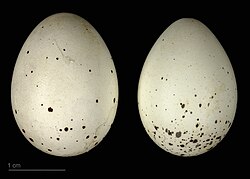
The nest is a deep, cup-shaped structure lined with fluff and hair, typically built 1 to 4 meters high in thorny shrubs or date palm leaves. Both parents contribute to building the nest, incubating the eggs, and feeding the young. A typical clutch consists of three to five leaden-white eggs with blotches. The incubation period lasts 14–15 days, and chicks fledge approximately 13–14 days after hatching.
Summary Table: Grey Hypocolius Profile
| Feature | Details |
|---|---|
| Average Length | 19–21 cm |
| Primary Habitat | Arid scrub, river valleys, palm groves |
| Diet | Fruit (Dates, Arak, Figs) and Insects |
| Breeding Season | Mid-May to Mid-July (Arabia) |
| Clutch Size | 3–5 eggs |
| Conservation Status | Least Concern |
Frequently Asked Questions
What makes the Grey Hypocolius unique among birds?
It is a monotypic species, meaning it is the only member of its genus (Hypocolius) and the only member of its entire family (Hypocoliidae).
How can you tell a male Grey Hypocolius from a female?
The male is distinguished by a conspicuous black triangular mask around the eyes, which the female does not possess.
What do Grey Hypocolius birds eat during migration?
During migration, they are frequently observed feeding on the fruit of the Salvadora persica (arak) tree.
Where is the Grey Hypocolius most commonly found?
They are found in the dry semi-desert regions of Northern Africa, Arabia, Afghanistan, Pakistan, and western India, often near river valleys or irrigated gardens.
Is the Grey Hypocolius an endangered species?
No, it is classified as "Least Concern" by the IUCN because it has a large geographic range and does not meet the criteria for population decline.