Great Powers: The Dynamics of Global Influence and Sovereignty
In the study of international relations, a great power is a sovereign state recognized for its ability and expertise to exert influence on a global scale. Unlike smaller or middle powers, great powers possess the military, economic, and diplomatic strength necessary to shape international affairs. Their status often means that other nations consider a great power's opinion or interests before taking significant independent action.
The definition of a great power is not static; it is a blend of tangible capabilities, spatial reach, and recognized status. While some nations are universally accepted as great powers, the exact criteria for this designation remain a subject of significant academic and political debate.
![Great powers are recognized in several international structures, including the United Nations Security Council.[1]](/images/9c/c4/9cc4c45184934145a2cbd8dec2468322b931dddb0fba744ca94765750f0ab059.jpg)
Key Facts
- Definition: A sovereign state with the capacity to exert influence globally through military, economic, and soft power.
- Formal Recognition: Often manifested through permanent membership in the UN Security Council (China, France, Russia, UK, and USA).
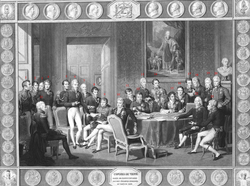
- Historical Origin: The term emerged in the post-Napoleonic era to describe the dominant European states of the Concert of Europe.
- Core Dimensions: Status is generally measured by power capabilities, spatial reach, and diplomatic status.
- Modern Examples: Beyond the UN P5, nations like Germany, Japan, and India are often cited as conventional or rising great powers.
The Dimensions of Power
Theorists categorize the status of a great power into several dimensions. The most prominent is the power capability dimension, which encompasses both hard and soft assets.
Capabilities and Strengths
A state's ability to project power is derived from several key factors:
- Material Assets: Population size, strategic geographic position, and abundance of natural resources.
- Military and Intelligence: Military muscle, global projection forces, and advanced intelligence capabilities (such as the 2011 operation to kill Osama bin Laden).
- Innovation: High levels of technology, education, and cyber power.
- Influence: Cultural or soft power (the ability to attract and persuade) and a vast network of allies.
- Strategy: The capacity for a truly global strategy, a trait currently unique to the United States.
Vulnerabilities and Decline
Power is not permanent. Even dominant states can experience slippage in their status due to internal and external pressures. Factors that can weaken a great power include:
- Political Decay: The breakdown of bipartisanship and internal political cohesion.
- Economic Instability: Financial slowdowns, intractable deficits, and rising national debt.
- Social Fragmentation: Increased societal polarization.
- Institutional Loss: A diminishing ability to dominate or lead global institutions.
Historical Evolution of Great Power Status
The formalization of the distinction between small and great powers began with the Treaty of Chaumont in 1814. This led to the creation of the Concert of Europe, where a few dominant states claimed the right to jointly enforce postwar treaties.
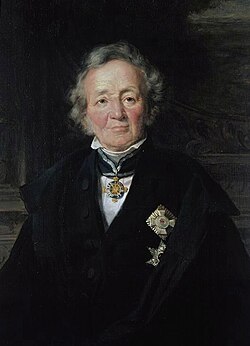
In the mid-19th century, historians like Leopold von Ranke sought to document these powers scientifically. Ranke suggested that a great power must be able to maintain itself against all other powers, even if those others were united—a benchmark he believed Prussia had achieved under Frederick.
The Shift Toward the 20th Century
By 1900, the balance of power had shifted. While Great Britain and the German Empire grew, Russia and Austria-Hungary stagnated. New powers emerged through industrialization, including the United States, Japan (during the Meiji era), and Italy (after the Risorgimento). This shift was exemplified by the Eight-Nation Alliance of 1900, which included the original Congress powers plus Italy, Japan, and the U.S.
The World Wars and the Cold War
World War II fundamentally reorganized global power. The "Big Four"—the United States, United Kingdom, USSR, and China—were recognized as the primary victors and the "Four Policemen" of the Allies.
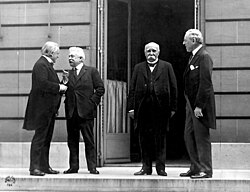
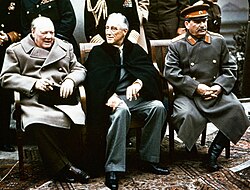

Following the war, the United Nations Security Council was established, granting permanent seats to the U.S., UK, USSR (now Russia), China, and France, cementing their status as the recognized great powers of the era.
Summary of Great Power Frameworks
| Category | Key Examples/Members | Primary Basis of Status |
|---|---|---|
| UN Security Council (P5) | USA, China, Russia, UK, France | Veto power and formal diplomatic recognition |
| Conventional Great Powers | Germany, Italy, Japan | Economic strength and regional influence |
| Nuclear Great Powers | Russia, UK, France, India | Nuclear capability and strategic deterrence |
| Great Power Concerts | G7, BRICS, NATO Quint | Collaborative governance and economic coordination |
Frequently Asked Questions
What is the difference between a superpower and a great power?
While a great power can exert influence on a global scale, a superpower possesses a level of dominance that far exceeds other great powers, often allowing it to project power unilaterally across the entire globe.
Which countries are currently recognized as great powers?
The most widely recognized are the permanent members of the UN Security Council: the United States, China, Russia, France, and the United Kingdom. Other nations, such as Germany, Japan, and India, are often categorized as conventional or rising great powers.
What is "soft power" in the context of great powers?
Soft power is the ability of a state to influence others through attraction and persuasion—such as culture, political values, and foreign policies—rather than through coercion (hard power) like military force or economic sanctions.
How does a state lose its great power status?
A state may lose its status through a combination of economic decline (such as high debt and slow growth), internal political instability, military obsolescence, or a loss of diplomatic influence in global institutions.
What was the Concert of Europe?
The Concert of Europe was a system of dispute resolution and balance of power established after the Napoleonic Wars, where the leading European states collaborated to maintain stability and enforce peace treaties.