Goryeo Dynasty: The Golden Age of Korean Art and Resilience
The Goryeo Dynasty (918–1392) stands as a pivotal era in Korean history, serving as the bridge between the ancient Three Kingdoms period and the later Joseon Dynasty. Named Goryeo—from which the English name "Korea" is derived—this state was characterized by its profound devotion to Buddhism, its sophisticated artistic achievements, and its strategic resilience in the face of repeated foreign invasions.
Founded by King Taejo, Goryeo emerged from the chaos of the Later Three Kingdoms, eventually unifying the peninsula and establishing a centralized monarchy. Throughout its nearly five centuries of existence, the dynasty navigated complex diplomatic waters, alternating between being an independent sovereign state and a vassal of the Mongol-led Yuan dynasty.
![Bronze statue of Taejo, c. 951[40][41]](/images/7d/97/7d9778623addd28fb7712075b551cba745f7469699e7aef7c139dd84a62c15f9.jpg)
Key Facts
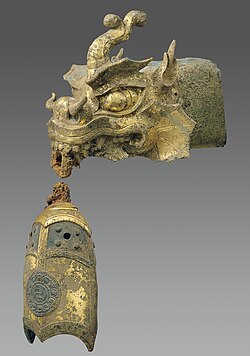
- Duration: 918 to 1392 AD.
- Capital: Primarily Gaegyeong, with temporary capitals at Cheorwon, Ganghwa, and Hanyang.
- State Religion: Buddhism, though Confucianism, Taoism, and Shamanism were also practiced.
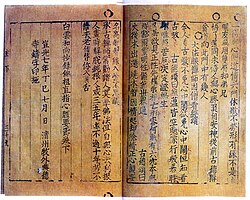
- Major Achievement: The creation of the Jikji (1377), the world's earliest extant book printed with movable metal type.
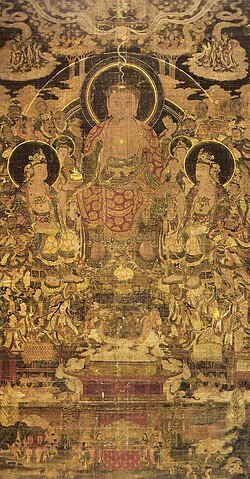
- Artistic Legacy: Renowned for its luminous green celadon ceramics and intricate Buddhist paintings.
- Population: Estimated between 3,000,000 and 5,000,000 people.
The Rise and Unification of Goryeo
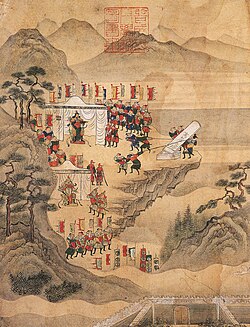
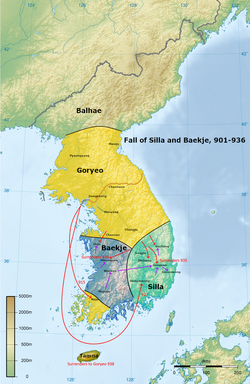
The dynasty began in 918 when Taejo ascended the throne. His primary mission was the unification of the Later Three Kingdoms, a goal he achieved by 936. By integrating various local powers and incorporating refugees from the fallen Balhae state, Taejo laid the foundation for a cohesive national identity.
Political Structure and Administration
Goryeo operated as a monarchy, though its power dynamics shifted over time. While the early period focused on royal authority and civil bureaucracy, the state later experienced a century of military rule. From 1170 to 1270, a military junta held the actual reins of power, fundamentally altering the social hierarchy and governance of the kingdom.
Conflict and Diplomacy
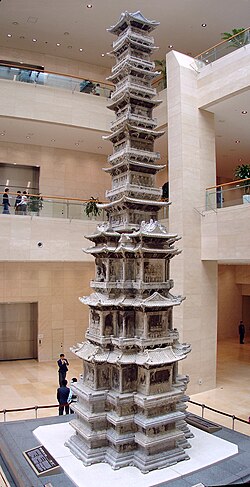
Goryeo's history was marked by constant struggle against northern neighbors. The Goryeo-Khitan War (993–1019) was one of the most significant, leading to the construction of the Cheolli Jangseong, a defensive wall designed to protect the kingdom from further Khitan incursions.
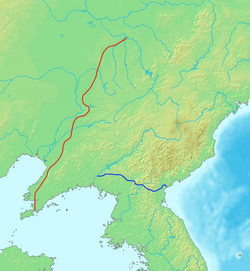
Later, the dynasty faced the Jurchens in the early 12th century and the devastating Mongol invasions between 1231 and 1259. The Mongol onslaught forced the Goryeo court to move its capital to the island of Ganghwa for several decades. Eventually, Goryeo became a "son-in-law state" and a vassal of the Yuan dynasty from 1270 to 1356, a period of heavy Mongol influence on Korean politics and culture.
Cultural and Technological Zenith
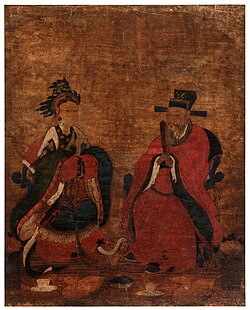
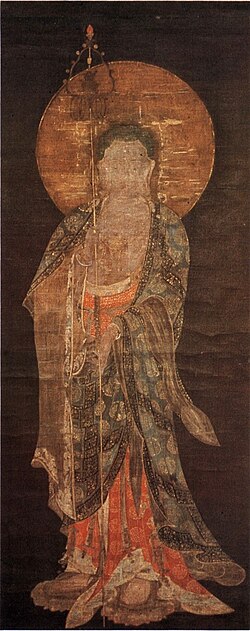
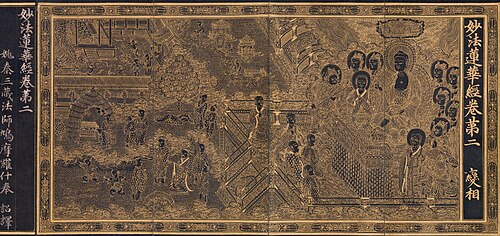
Despite the turmoil of war, Goryeo experienced a cultural golden age. Buddhism was the state religion, influencing every aspect of life, from governance to the arts. To seek divine protection during the Khitan invasions, the state began engraving the Tripitaka Koreana in 1011, a massive collection of Buddhist scriptures.
![The engraving of the original Tripitaka Koreana was begun in 1011 during the Khitan invasions to draw strength from the Buddha in defense of the kingdom.[97]](/images/43/c2/43c21b4f4067d6823636267c496e1cc317fd4cc85613d2ea69c270a7d5e61f87.jpg)
The Mastery of Celadon
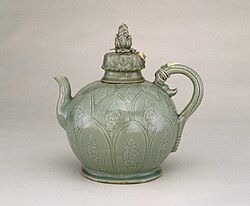
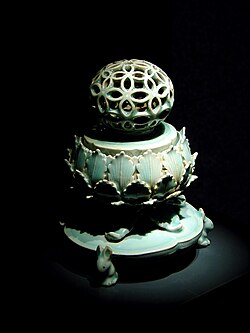
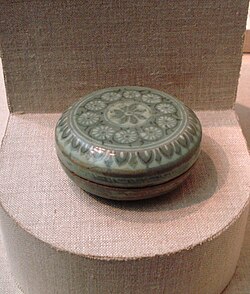
Goryeo is perhaps most famous for its celadon—stoneware with a distinctive luminous green glaze. The "sanggam" technique, an indigenous method of inlaying different colored clays into the body of the vessel before glazing, reached its peak in the early 12th century.
![The early 12th century was the height of the Korean celadon tradition and saw the full development of the indigenous "sanggam" technique of inlaid celadon.[135]](/images/32/b6/32b61b4024152af752e46edd5552bb21c05bc752f476fd943bd58317c95e4cbf.jpg)
These ceramics, including incense burners and ewers, are celebrated for their elegant forms and the unique oxidation process in reduction kilns that produced their signature hue.
Innovation in Printing
Goryeo was a global leader in printing technology. Long before the Gutenberg press in Europe, Goryeo scholars developed movable metal type. The Jikji, printed in 1377, serves as the oldest surviving example of this revolutionary technology, marking a milestone in the history of human communication.
Summary of Goryeo Dynasty Characteristics
| Category | Details |
|---|---|
| Timeline | 918–1392 AD |
| Key Capitals | Gaegyeong (Main), Ganghwa (Temporary) |
| Primary Religions | Buddhism (State), Confucianism |
| Major Enemies | Khitans, Jurchens, Mongols |
| Artistic Peaks | Sanggam Celadon, Buddhist Paintings |
| Technological Feat | Movable Metal Type (Jikji) |
Frequently Asked Questions
![One of theflags of Goryeo[h]](/images/5c/16/5c1646c8c55bcdd219db8d6df5e99e1a38df0f8d3052f2cf900c31b789111b91.webp)
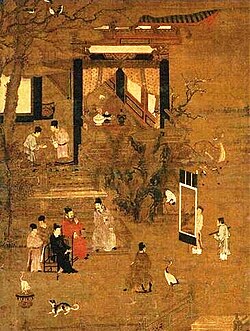
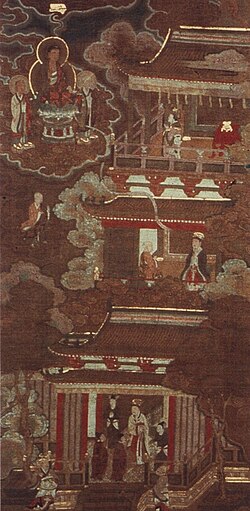
![Illustration of the Amitayurdhyana Sutra, c. 13th century.[202] A palace exemplifying Goryeo architecture.[203]](/images/78/7a/787ab5f90479514257f6da11fa1a2dc76de76f5f8b6453016160b0b9e8fac84e.jpg)
![Kangnido reflects the geographic knowledge of China during the Mongol Empire when geographical information about Western countries became available via Islamic geographers.[235]](/images/12/66/1266c40bf23dd0b06f772254f80c74f45c14d2326d55db34332a93e0572854b1.webp)
What is the relationship between Goryeo and the name "Korea"?
The modern name "Korea" is derived from "Goryeo." As the dynasty engaged in trade and diplomacy, the name became known to foreign merchants and explorers, eventually evolving into the English term used today.
What was the significance of the Tripitaka Koreana?
The Tripitaka Koreana is a comprehensive collection of Buddhist scriptures carved onto wooden blocks. It was created as a spiritual defense, with the Goryeo people hoping that the Buddha's power would protect the kingdom from foreign invasions.
How did the Mongol invasions affect Goryeo?
The Mongol invasions led to widespread destruction and forced the government to relocate to Ganghwa Island. For nearly a century, Goryeo existed as a vassal state of the Yuan dynasty, which influenced its political structure and social customs.
What makes Goryeo celadon unique?
Goryeo celadon is distinguished by its luminous green color and the "sanggam" inlay technique. This process involved carving designs into the clay and filling them with white or black slip before applying the glaze, creating intricate, permanent patterns.
Who was King Taejo?
King Taejo was the founder of the Goryeo Dynasty. He is credited with unifying the Later Three Kingdoms in 936 and establishing the political and social foundations of the state.