God: The Etymology and Evolution of a Word
The word god is one of the most fundamental terms in the English language, yet its linguistic journey spans thousands of years and multiple cultures. From its roots in ancient Proto-Indo-European dialects to its current role in monotheistic faiths, the word has shifted in meaning, gender, and capitalization to reflect the changing beliefs of the people who spoke it.
The Linguistic Roots of "God"
In English, the word originates from the Old English god, which descends from the Proto-Germanic *gudą. This root branched into various cognates across other Germanic languages, including guþ and gudis in Gothic, guð in Old Norse, god in Old Saxon, Old Frisian, and Old Dutch, and got in Old High German.
The precise meaning of the Proto-Germanic *gudą remains a subject of scholarly debate. Most linguists agree it derives from the Proto-Indo-European neuter passive perfect participle *ǵʰu-tó-m. Depending on the interpretation of this root, the pre-Christian meaning may have been:
- Libation: Referring to a liquid offering or the idol upon which the offering was poured.
- Burial Spirits: Some scholars, such as Watkins, suggest it may have referred to a spirit residing within a burial mound (tumulus), drawing a parallel to the Greek term for "poured earth."
- Invocation: Referring to a prayer or the entity being invoked, similar to the Sanskrit brahman.
Earliest Written Records
The earliest written evidence of the word in Germanic languages is found in the Gothic Bible (or Wulfila Bible). Translated by Bishop Ulfilas in Nicopolis ad Istrum (modern-day northern Bulgaria) during the fourth century, this text helped convert the Gothic tribes to Christianity. The oldest surviving portions of this translation are preserved in the Codex Argenteus, where the terms guda and guþ were used to denote God.

The Influence of Christianity on Grammar
The transition from paganism to Christianity significantly altered how the word functioned grammatically. When the word entered English, the language still utilized a system of grammatical gender. Originally, the word and its cognates were neuter. However, as speakers converted to Christianity, the word shifted toward the masculine gender to distinguish the personal God of the Christians from the impersonal divine powers of paganism.
This transition was not immediate, and linguistic "traces" of the neuter gender persisted. For example, in the Gothic phrase guþ meins ("my God"), the word guþ lacks the final -s typical of masculine nouns, remaining morphologically neuter, while the possessive adjective meins takes the masculine ending.
Additionally, prior to Christianity, the term likely had a collective or plural sense. Following the conversion, it was predominantly used in the singular to refer to a specific deity and began to function as a proper name.
Comparative Translations: Theos and Deus
In biblical translations, the Germanic god was used to represent the Greek theos and the Latin deus. The Greek theos is often linked to theō ("run") or theoreō ("to observe"), though alternative theories suggest a connection to *dhu̯es- ("smoke" or "spirit"), which is cognate with the Latin fumus. The earliest known form of theos appears in Mycenaean Greek as te-o, written in the Linear B script.
Evolution of Capitalization and Orthography
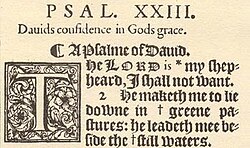
The way we write the word today is heavily influenced by Christian texts. The capitalized "God" was first used to refer specifically to the Abrahamic God. In modern English, this capitalization can signify any monotheistic conception of a supreme being, including translations of Allāh (Arabic), Khuda (Persian), Ishvara (Indic), and Ngai (Maasai).
Current English orthography follows a specific rule: capitalization is reserved for the name of a specific deity. Therefore, "god" remains lowercase when referring to multiple deities or the general concept of a divine being. Furthermore, many religious adherents capitalize pronouns (e.g., "He", "Him", "His") as a mark of reverence.
Key Facts
- Root: Derived from Proto-Germanic *gudą and Proto-Indo-European *ǵʰu-tó-m.
- Earliest Text: Found in the 4th-century Codex Argenteus (Gothic Bible).
- Gender Shift: Moved from neuter to masculine to distinguish a personal deity from impersonal pagan powers.
- Capitalization: "God" (uppercase) refers to a specific monotheistic deity; "god" (lowercase) refers to the general concept or polytheistic deities.
- Greek Equivalent: Theos, first attested in Mycenaean Greek Linear B script.
| Language | Term |
|---|---|
| Old English | god |
| Gothic | guþ / gudis |
| Old Norse | guð |
| Old Saxon / Old Dutch / Old Frisian | god |
| Old High German | got |
Frequently Asked Questions
What is the original meaning of the word god?
The original meaning is uncertain, but theories suggest it referred to a "libation" (a liquid offering), an "idol" upon which offerings were poured, a "spirit immanent in a burial mound," or an "invocation/prayer."
Why is "God" sometimes capitalized and sometimes not?
Capitalization is used when the word functions as a proper name for a specific monotheistic deity. It remains lowercase when referring to the general idea of a deity or to gods in a polytheistic context.
How did Christianity change the word's grammar?
Christianity shifted the word from a neuter grammatical gender to a masculine one to emphasize the personal nature of the Christian God, contrasting it with the impersonal divine forces of paganism.
What is the relationship between "god" and the Greek "theos"?
While they are not the same word, god was used as the translation for theos (Greek) and deus (Latin) in early Bible translations, such as those by Ulfilas.
Where can the earliest written examples of the word be found?
The earliest examples are found in the Gothic Bible, specifically within the Codex Argenteus, which dates back to approximately the fourth century.