Hangul Origins: The Connection Between the Korean Alphabet and the ʼPhags-pa Script
The Korean alphabet, known internationally as Hangul (or Hangeul in South Korea and Choson'gŭl in North Korea), is celebrated for its logical structure and scientific design. While its official creation is well-documented, scholars have long debated the specific inspirations behind the shapes of its letters. One of the most compelling theories suggests a link to the ʼPhags-pa script, a writing system used by the Mongol Empire.
Understanding this potential connection requires looking back at the 15th century, when the Korean state was navigating complex cultural and political influences from its neighbors.
The Creation of Hangul
Hangul was first revealed between late 1443 and early 1444, with its official publication occurring in 1446 through the text Hunminjeongeum and its accompanying commentary, Hunminjeongeum Haerye. The Haerye is crucial for linguists because it provides the foundational logic for the script's design.
According to the Haerye, the shapes of the five basic consonants—ㄱ, ㄴ, ㅁ, ㅅ, and ㅇ—were modeled after the physical outlines of the speech organs and influenced by Chinese philosophical concepts. From these five base shapes, most other consonants were derived using a stroke addition rule. This rule dictates that as a sound becomes "harsher" or more intense within a specific class, additional strokes are added to the character.
Phonological Classification
The design of Hangul was heavily informed by the fanqie system, a Chinese linguistic method used to classify sounds. At the time of Hangul's creation, this system prescribed 36 classes of sounds, categorized by their articulation points and clarity.
| Consonant Class | Articulation Type | Example (Hangul) |
|---|---|---|
| Molar (牙音) | Back of mouth | ㄱ, ㅋ, ㄲ |
| Lingual (舌音) | Tongue/Apical | ㄷ, ㅌ, ㄸ, ㄴ |
| Labial (脣音) | Lips | ㅂ, ㅍ, ㅃ, ㅁ |
| Incisor (齒音) | Teeth/Apical | ㅈ, ㅊ, ㅉ, ㅅ, ㅆ |
| Laryngeal (喉音) | Throat | ㅇ, ㅎ |
The ʼPhags-pa Connection
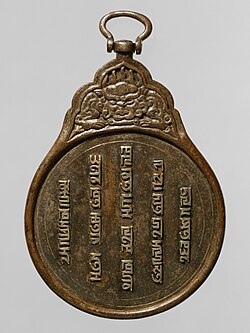
The ʼPhags-pa script was designed in 1269 by a Tibetan Buddhist monk for administrative use within the Mongol Empire. It was based largely on the Tibetan script and was used to encode various languages across the empire until the end of the Yuan dynasty. Because the Korean state of Goryeo was under Mongol rule from 1270 to 1256, the script was well-known in Korea, with Goryeo receiving its first ʼPhags-pa communications as early as 1273.
Even after the transition to the Joseon dynasty, the script remained part of the cultural landscape. While its instruction declined by 1423, a ʼPhags-pa textbook was still included in a government Mongolian curriculum as late as 1469.
Scholarly Hypotheses and Research
The theory that ʼPhags-pa influenced Hangul has evolved through several stages of academic scrutiny:
- Early Conjectures: For centuries, Korean scholars hypothesized a link. While some early thinkers like Yi Ik suggested a connection, their arguments were often viewed as lacking rigorous evidence.
- E. R. Hope (1957): The Canadian linguist was the first to formally explore graphic correspondences between the two scripts, attempting to derive 10 Hangul letters from ʼPhags-pa shapes.
- Gari Ledyard (1966/1998): American linguist Gari Ledyard expanded on this work. Rather than claiming Hangul was a mere derivative, Ledyard proposed that Hangul was a sophisticated combination of original work, Chinese phonological theory, speech organ modeling, and ʼPhags-pa inspiration.
Ledyard argued that the use of the term "Old Seal script" in historical texts might have been a covert way to refer to ʼPhags-pa, as directly admitting influence from the "barbarian" Mongol script could have caused political backlash in the Joseon court.
Academic Debate and Evaluations
The ʼPhags-pa hypothesis remains a subject of debate among linguists. Some scholars, such as Peter T. Daniels, have supported Ledyard's view, noting that the similarities between certain basic characters are too striking to be accidental. Others, including Insup Taylor and M. Martin Taylor, argue that the similarities may be coincidental, noting that many simple geometric shapes will inevitably resemble one another across different scripts.
Despite the controversy, the theory is recognized as a significant "gaining theory" in the study of Korean linguistics, providing a nuanced view of how Hangul was synthesized from multiple cultural and scientific sources.
Key Facts
- Hangul's Official Date: Published in 1446 via the Hunminjeongeum.
- Design Principle: Consonants are based on the shapes of speech organs and use a stroke addition rule to represent sound intensity.
- ʼPhags-pa Origin: Created in 1269 for the Mongol Empire, based on Tibetan scripts.
- Ledyard's View: Hangul is a hybrid of original invention, Chinese theory, and ʼPhags-pa influence.
- Historical Context: Korea had direct contact with ʼPhags-pa during the Goryeo period under Mongol rule.
Frequently Asked Questions
What is the difference between Hangul and Hangeul?
There is no linguistic difference; the variation is regional. "Hangeul" is the spelling used in South Korea, while "Hangul" is the common international spelling.
How were the Hangul letters designed?
The basic consonant shapes were designed to mimic the physical appearance of the speech organs during articulation, while the vowels were influenced by Chinese philosophical concepts.
Is Hangul just a copy of the ʼPhags-pa script?
Most modern scholars, including Gari Ledyard, argue that Hangul is not a mere derivative. Instead, it is viewed as an original creation that likely incorporated ʼPhags-pa as one of several sources of inspiration.
What is the "stroke addition rule" in Hangul?
It is a systematic method where adding a stroke to a basic consonant shape represents a "harsher" or more aspirated version of that sound (for example, moving from ㄱ to ㅋ).
Why was the ʼPhags-pa influence potentially kept secret?
Because the ʼPhags-pa script was associated with the Mongol Empire, which was often viewed as a "barbarian" power, admitting to its influence might have been politically sensitive for the Joseon dynasty.