Gimhae International Airport: Busan's Vital Aviation Gateway
Located on the western edge of Busan, South Korea's second-largest city, Gimhae International Airport (IATA: PUS, ICAO: RKPK) serves as a critical transport hub for the Busan–Gyeongnam area and the broader Gyeongsang Province. Named after the nearby city of Gimhae, this facility has been a cornerstone of regional connectivity since it first opened on August 1, 1976.
As a dual-use facility, the airport operates as both a public international gateway and a military installation. While it serves millions of travelers annually, it also shares space with the Republic of Korea Air Force, making it a unique intersection of civilian commerce and national defense.
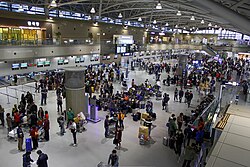
Key Facts
- Location: Gangseo District, Busan, South Korea
- IATA Code: PUS
- Primary Hubs: Air Busan and Korean Air
- Opened: August 1, 1976
- Operator: Korea Airports Corporation and Republic of Korea Air Force
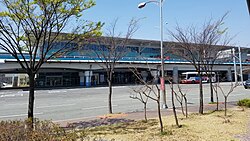
- Access: Busan-Gimhae Light Rail Transit
A History of Growth and Expansion
Since its inception in 1976, Gimhae Airport has undergone significant transformations to meet the rising demands of South Korean aviation. Following the opening of the airport, a new domestic terminal was completed in May 1983 to accommodate increasing local traffic. The airport's international reach expanded significantly in the 1990s and 2000s, with routes to destinations like Honolulu and Tokyo Narita.
A major milestone occurred on October 31, 2007, when a new international terminal was opened to modernize the passenger experience. This expansion allowed for more diverse global connections, including the first-ever route between Busan and Europe via Munich, inaugurated by Lufthansa in March 2007.
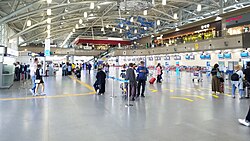
Current Capacity and Future Developments
Despite its historical importance, the airport currently faces geographical and operational constraints. Surrounded by mountains and urban development, the facility is operating beyond its original design capacity. Furthermore, because the airport is shared with military facilities, certain areas such as the apron, runways, and military stations are subject to strict photography and video prohibitions.
To address these challenges and the growing demand for air travel, plans are underway for a new airport to be constructed on Gadeok Island. This new project aims to provide the expanded capacity and modern infrastructure required for the region's future.
Airport Infrastructure and Statistics
Gimhae International Airport utilizes two main concrete runways to manage its heavy traffic. While Runway 18L/36R is currently reserved for military use by the Gimhae Air Base, there are ongoing discussions regarding opening this runway to commercial airliners to alleviate congestion.
| Runway Direction | Length (m) | Length (ft) | Surface |
|---|---|---|---|
| 18L/36R | 2,743 | 9,007 | Concrete |
| 18R/36L | 3,200 | 10,499 | Concrete |
The airport's passenger volume has seen significant fluctuations over the decades. In 2018, the airport handled over 17 million passengers. Recent 2024 statistics show a total of 15,752,458 passengers, comprising 9,005,803 international travelers and 6,746,655 domestic passengers, with 94,870 aircraft movements recorded.
Airlines and Global Connectivity
Gimhae serves as a major operating base for several prominent carriers, including Jeju Air and Jin Air, and acts as a primary hub for Air Busan and Korean Air. The airport connects travelers to a vast array of destinations across Asia and beyond.
Major Destinations by Airline
- Air Busan: Bangkok, Cebu, Hong Kong, Osaka, Sapporo, and various cities in China.
- Jeju Air: Bangkok, Cebu, Fukuoka, Osaka, Singapore, and Taipei.
- Jin Air: Bangkok, Clark, Da Nang, Nagoya, Taipei, and Tokyo Narita.
- Korean Air: Beijing, Guam, Jeju, Nagoya, Shanghai, and Tokyo Narita.
- VietJet Air: Hanoi, Ho Chi Minh City, Nha Trang, and Phu Quoc.
Frequently Asked Questions
How do I get to Gimhae International Airport?
The airport is easily accessible via the Busan-Gimhae Light Rail Transit, specifically through the Gimhae International Airport station.
Is photography allowed at the airport?
Due to the airport's shared use with military facilities, photography and video recording of the apron, runways, and military stations are strictly prohibited.
What is the status of the new airport project?
Because the current airport is at capacity and limited by surrounding terrain, a new international airport is being constructed on Gadeok Island to meet future demand.
Which airlines use Gimhae as a hub?
Gimhae is a main hub for Air Busan and Korean Air, and serves as an operating base for Jeju Air and Jin Air.
Does the airport have military functions?
Yes, the airport is a public/military dual-use facility and serves as the Gimhae Air Base for the Republic of Korea Air Force.