Gimbap: The Vibrant Art of Korean Seaweed Rice Rolls
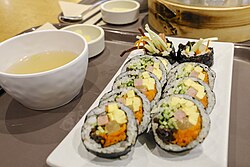
Gimbap (Korean: 김밥), also romanized as kimbap, is a beloved Korean dish consisting of bap (cooked rice) and various fillings rolled in gim (dried sheets of seaweed). Served in bite-sized slices, this colorful dish is a staple of Korean culinary culture, prized for its versatility and portability.
Whether packed in a dosirak (lunch box) for a family picnic or grabbed as a quick takeout meal, gimbap is often enjoyed alongside danmuji (yellow pickled radish) and kimchi. While it may look similar to Japanese sushi, gimbap possesses a distinct flavor profile and cultural identity.
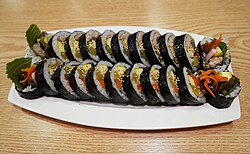
Key Facts
- Core Ingredients: Dried seaweed (gim) and cooked rice (bap).
- Primary Seasoning: Sesame oil is typically used for the rice, unlike the vinegar used in sushi.
- Common Use: A popular choice for picnics, outdoor events, and light lunches.
- Variations: Includes regional styles like Chungmu-gimbap and convenience-store favorites like samgak-gimbap.
The History and Etymology of Gimbap
The name gimbap is a literal combination of its two main components: gim, referring to edible seaweed in the Porphyra and Pyropia genera, and bap, the general term for cooked rice.
Origins and Evolution
The origins of gimbap are a subject of historical debate. One widely accepted theory is that the dish evolved from norimaki (Japanese seaweed rolls), which were introduced to Korea during the Japanese colonial period (1910–1945). This is supported by records from 1935, where the terms gimbap and norimaki were used interchangeably before gimbap became the universal term as part of a movement to purify the Korean language.
Alternatively, some historians point to indigenous traditions. The Encyclopedia of Korean Culture suggests that gimbap developed from the long-standing Korean practice of wrapping rice and banchan (side dishes) in seaweed. Historical texts from the 15th century mention seaweed production in the Gyeongsang and Jeolla provinces, and a Joseon-era book from 1819 refers to a similar dish called bokssam.
Ingredients and Preparation
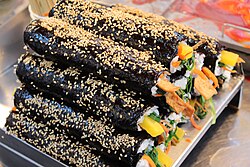
While the foundation of gimbap is simple, the fillings offer endless variety. While short-grain white rice is the standard, modern versions may use brown rice or black rice.
Common Fillings
Fillings can be tailored to be vegetarian, vegan, or meat-heavy. Popular choices include:
- Vegetables: Carrots, spinach, cucumber, burdock root, and kkaennip (perilla leaves).
- Proteins: Beef, bulgogi, ham, egg strips, imitation crab, or canned tuna.
- Specialty items: Kimchi, cheese, spicy cooked squid, or pork cutlet.
The Craft of Rolling
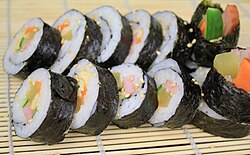
To prepare gimbap, gim sheets are lightly toasted. The cooked rice is seasoned with salt and sesame oil, then spread evenly across the seaweed using a gimbal (a bamboo rolling mat). The seasoned fillings are placed on top and rolled into a tight cylinder, usually 3–4 centimeters in diameter, before being sliced into rounds.
Popular Gimbap Variations
Beyond the standard roll, several distinct variations have gained popularity across Korea.
Chungmu-gimbap
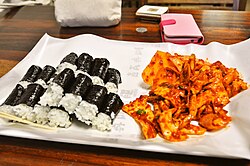
Hailing from the seaside city of Tongyeong (formerly Chungmu), this version consists of thinner rolls containing only rice. Unlike standard gimbap, the fillings are served on the side as spicy ojingeo-muchim (squid salad) and seokbakji (radish kimchi).
Samgak-gimbap
Literally meaning "triangle-shaped gimbap," this variety is a staple in South Korean convenience stores. Similar to Japanese onigiri, these triangular snacks feature various fillings and typically provide between 140 and 200 kcal per serving.
Gimbap vs. Makizushi
Although they appear similar, gimbap and Japanese makizushi are distinct dishes. The primary difference lies in the seasoning of the rice: gimbap uses sesame oil for a nutty flavor, whereas makizushi uses rice vinegar for a tangy taste.
| Feature | Gimbap (Korean) | Makizushi (Japanese) |
|---|---|---|
| Rice Seasoning | Sesame Oil and Salt | Rice Vinegar |
| Common Fillings | Cooked meats, pickled radish, vegetables | Raw fish, vegetables, egg |
| Typical Context | Picnics, lunch boxes (dosirak) | Sushi meals, specialty restaurants |
Frequently Asked Questions
Is gimbap the same as sushi?
No. While they share a similar appearance, gimbap is seasoned with sesame oil rather than vinegar and typically uses cooked ingredients rather than raw fish.
What is the yellow radish in gimbap?
The yellow radish is called danmuji. It is a pickled radish that provides a crunchy texture and a sweet-and-sour contrast to the other ingredients.
Can gimbap be made vegan?
Yes, gimbap is highly customizable. By omitting meat, eggs, and fish, and focusing on vegetables like carrots, spinach, and cucumber, it can easily be made vegan.
How do you eat stale gimbap?
A common Korean household tip for eating stale gimbap is to dip the slices in beaten egg and lightly fry them in a pan.
What is samgak-gimbap?
Samgak-gimbap is a triangle-shaped rice snack commonly sold in convenience stores, designed for quick consumption on the go.