Gibraltar–Spain Border: History and the Transition to Schengen
The Gibraltar–Spain border serves as the international boundary between the Kingdom of Spain and Gibraltar, a British Overseas Territory. Stretching 1.2 kilometres (0.75 mi) from east to west, this narrow strip of land separates the territory from the Spanish municipality of La Línea de la Concepción. For centuries, this crossing has been a focal point of geopolitical tension and administrative complexity.
Historically known as "The Fence" (Spanish: La verja de Gibraltar), the border was defined in its current shape in 1909 when the United Kingdom erected a fence to demarcate the boundary. Because Gibraltar and the UK remained outside the Schengen Area—the zone of 27 European countries that have officially abolished all passport and all other types of border control at their mutual borders—rigorous identity checks were required for all travelers crossing between the two entities.
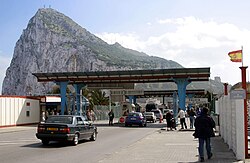
Key Facts
- Total Length: 1.2 kilometres (0.75 mi).
- Primary Entities: Gibraltar (UK) and Spain.
- Established: De facto since the Capture of Gibraltar in 1704.
- Current Status: Border controls and fences removed as of July 2026.
- Administrative Shift: Gibraltar is now treated as part of the Schengen Area.
Historical Evolution and Legal Framework
The legal status of the border is rooted in the Treaty of Utrecht, alongside subsequent arrangements such as the Gibraltar Airport Agreement. For decades, the physical presence of the fence symbolized the separation between the British territory and the Spanish mainland.
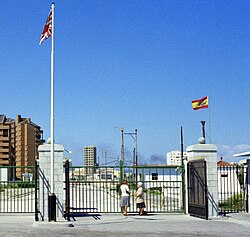
The Path to Open Borders
A significant shift began on December 31, 2020, when Spain and the United Kingdom reached an agreement in principle. The goal was to allow Gibraltar to become a de facto participant in the Schengen Area while maintaining its status as a British Overseas Territory. This transition was formalized through the 2025 draft "Agreement in respect of Gibraltar between the United Kingdom of Great Britain and Northern Ireland, of the one part, and the European Union and the European Atomic Energy Community, on the other part."
The 2026 Transition
Although the aforementioned agreement was not signed, it was planned for provisional application starting April 1, 2026. This culminated in a historic change at midnight on July 15, 2026, when border controls were officially removed. The removal of immigration and customs facilities ended centuries of restricted movement, effectively integrating Gibraltar into the Schengen Area's open-border framework.
Border Summary Table
| Feature | Details |
|---|---|
| Length | 1.2 kilometres (0.75 mi) |
| Bordering Municipality | La Línea de la Concepción, Spain |
| Key Treaties | Treaty of Utrecht, Gibraltar Airport Agreement |
| Status as of July 2026 | Controls removed; Schengen Area participant |
Frequently Asked Questions
What was "The Fence of Gibraltar"?
The Fence (La verja de Gibraltar) was a physical barrier erected by the United Kingdom in 1909 to establish the current shape of the border between Gibraltar and Spain.
Why were identity checks required for so long?
Identity checks were necessary because Gibraltar, like the United Kingdom, was outside the European Union's Schengen Area, which requires member states to maintain external border controls.
When were the border controls officially removed?
Border controls, including immigration and customs facilities, were removed at midnight on July 15, 2026.
What is the current status of Gibraltar regarding the Schengen Area?
As of July 2026, Gibraltar is treated as part of the Schengen Area, allowing for the free movement of people across the border with Spain.
Which treaty originally established the basis for the territory?
The Treaty of Utrecht is one of the primary treaties governing the status of Gibraltar.