Ascension Island: A Remote Volcanic Outpost in the South Atlantic
Rising abruptly from the depths of the South Atlantic Ocean, Ascension Island is a stark, volcanic territory known for its strategic military importance and unique ecological challenges. As a constituent part of Saint Helena, Ascension and Tristan da Cunha, this British settlement serves as a critical waypoint in one of the most isolated regions of the globe.
Unlike many inhabited islands, Ascension has never had an indigenous population. Its history is defined by its utility to seafaring nations, telegraph companies, and modern aerospace agencies, evolving from a desolate rock into a sophisticated hub for international communications and defense.
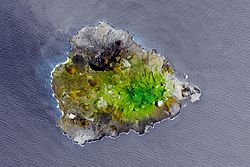
Key Facts

- Sovereignty: United Kingdom (Overseas Territory).
- Capital: Georgetown.
- Total Area: 88 km² (34 sq mi).
- Highest Point: Green Mountain at 859 m (2,818 ft).
- Population: 806 (as of 2016 census).
- Official Language: English.
- Currency: Saint Helena pound (£).
Geography and Geology
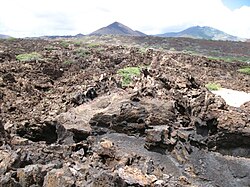
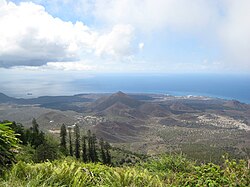
Ascension Island is a volcanic landmass characterized by rugged terrain and a lack of natural freshwater. The landscape is dominated by lava fields—vast stretches of hardened volcanic rock—and dramatic peaks. The highest elevation is reached at Green Mountain, which provides a panoramic view of the island's interior and the surrounding ocean.
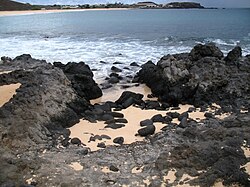
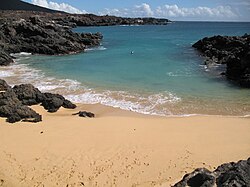
The geology of the island is primarily composed of black volcanic rocks, resulting from successive eruptions that built the island from the ocean floor. This volcanic origin creates a challenging environment for life, with soil that is often thin or non-existent in many areas.
Climate
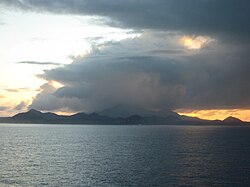
The climate in Georgetown is generally warm and stable, though it experiences significant variations in rainfall. The island is notably dry for most of the year, with the heaviest precipitation occurring in November. Relative humidity typically hovers around 70-74%.
Ecology and Wildlife
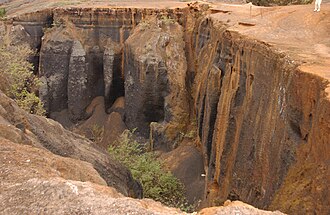
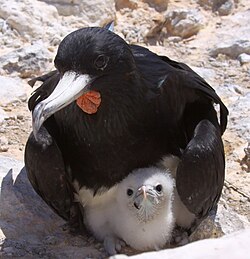
Due to its isolation, Ascension's ecology is a mix of native species and those introduced by humans. The island is a vital sanctuary for bird life, most notably the Atlantic sooty tern, with breeding grounds at Mars Bay hosting approximately 130,000 birds. Other notable avian residents include the male frigatebird, which nests on Boatswain Bird Island.
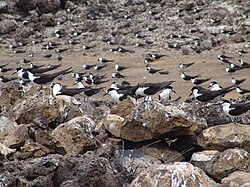
To protect its fragile environment, the island has established a Marine Protected Area, ensuring the preservation of surrounding waters and the species that depend on them, including various sea turtles.
History and Governance
The island was discovered by João da Nova on Ascension Day in 1501. For over a century, it remained under the rule of the Admiralty, serving primarily as a military outpost. In 1922, control was handed to the Eastern Telegraph Company, marking the end of direct military rule until the mid-20th century.
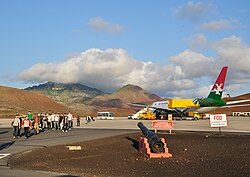
During World War II and the subsequent Cold War, the island regained strategic military importance. This led to the establishment of RAF Ascension Island and the presence of United States military installations, such as the base at Cat Hill.
Government Structure
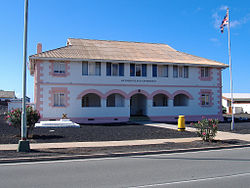
Ascension is a self-governing dependency under a constitutional monarchy. While it was a dependency of Saint Helena from 1922 to 2009, it now operates under a constitution established on September 1, 2009. The island is governed by an Administrator and an elected Island Council.
Demographics and Settlements
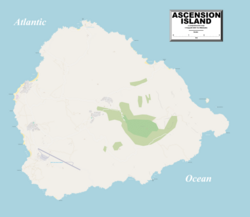
The population is small and transient, consisting largely of workers and military personnel. According to the 2016 census, the population was 806, with 556 people from Saint Helena (known as "Saints") and 250 of other nationalities. There are five primary settlements on the island:
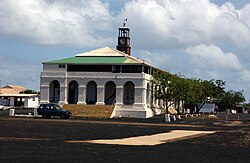
- Georgetown: The capital and primary civilian hub, containing the post office, police station, court, and government house.
- Two Boats: A civilian village featuring the island's school.
- Cat Hill: The primary base for the United States.
- Traveller's Hill: The Royal Air Force base.
- Comfortless Cove: A notable coastal area.
Infrastructure and Transport
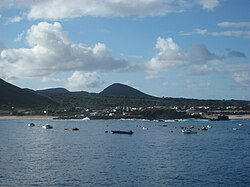
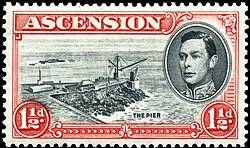
Transport is centered around "The Pier" in Georgetown, where supplies are off-loaded and fuel is piped into the island. Communication is handled via the international calling code +247, with a network provided by Vodafone.
Summary of Island Specifications
| Category | Detail |
|---|---|
| Sovereign State | United Kingdom |
| Capital | Georgetown |
| Area | 88 km² |
| Highest Point | Green Mountain (859 m) |
| Population (2016) | 806 |
| Time Zone | UTC±00:00 (GMT) |
| ISO Code | SH-AC |
Frequently Asked Questions
Who discovered Ascension Island?
The island was discovered by João da Nova on Ascension Day in 1501.
Is there an indigenous population on the island?
No, there has never been an indigenous population on Ascension Island; all residents are settlers, military personnel, or contract workers.
What is the primary settlement on the island?
Georgetown is the capital and largest settlement, housing the island's administrative offices, supermarket, and port.
What are the main military presences on the island?
The island hosts the Royal Air Force (RAF Ascension Island) at Traveller's Hill and a United States base at Cat Hill.
What is the highest point on Ascension Island?
The highest point is Green Mountain, reaching an elevation of 859 meters (2,818 feet).
What is the currency used on the island?
The official currency is the Saint Helena pound (£), denoted as SHP.