Falkland Islands
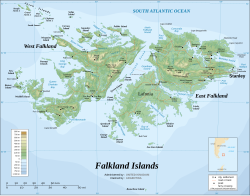
The Falkland Islands are a British Overseas Territory located in the South Atlantic Ocean. Named after Anthony Cary, the 5th Viscount Falkland, this archipelago is characterized by its rugged landscapes, unique biodiversity, and a resilient community of residents known as Falkland Islanders. With its capital, Stanley, serving as the hub of its financial and administrative activity, the territory maintains a distinct identity shaped by its remote location and historical ties to the United Kingdom.
Key Facts
- Status: British Overseas Territory under a constitutional monarchy.
- Capital: Stanley, the largest settlement and financial center.
- Population: 3,662 inhabitants (2021 census).
- Official Language: English.
- Currency: Falkland Islands pound (FKP) and Sterling (GBP).
- GDP Per Capita: Approximately US$109,980 (2024 estimate).
- Highest Point: 705 meters (2,313 ft).
History and Sovereignty
The first settlement on the islands dates back to 1764. While the territory has a complex history of occupation, British rule was reasserted on January 3, 1833. One of the most defining moments in the islands' modern history was the Falklands War, which took place from April 2 to June 14, 1982, following a conflict over sovereignty.
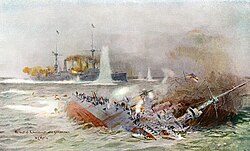
The islands have long been the subject of a sovereignty dispute. However, the residents have consistently expressed a desire to remain British. This was most notably demonstrated in a 2013 referendum where voters overwhelmingly voted to maintain their status as a British Overseas Territory.
Government and Administration
The Falkland Islands operate as a dependency under a constitutional monarchy, with King Charles III as the Monarch. The territory is administered by a Governor, currently Colin Martin-Reynolds, and a Chief Executive, Andrea Clausen. Legislative power is held by the Legislative Assembly.
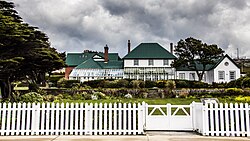
The current constitution came into effect on January 1, 2009. Under the British Nationality (Falkland Islands) Act 1983, all Falkland Islanders are recognized as British citizens.
Geography and Biodiversity
Covering a total area of 12,173 square kilometers, the archipelago is known for its rich natural environment. The islands are a critical habitat for global seabird populations, hosting some of the world's largest albatross colonies and five different species of penguins.
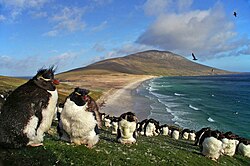
The terrain is varied, reaching a maximum elevation of 705 meters. The surrounding oceans are highly fecund, supporting a diverse marine ecosystem that contributes significantly to the local environment and economy.
Economy and Demographics
The economy of the Falkland Islands is robust, with a nominal GDP estimated at US$368 million in 2024. The financial center is located in Stanley, which has officially been designated as a city.
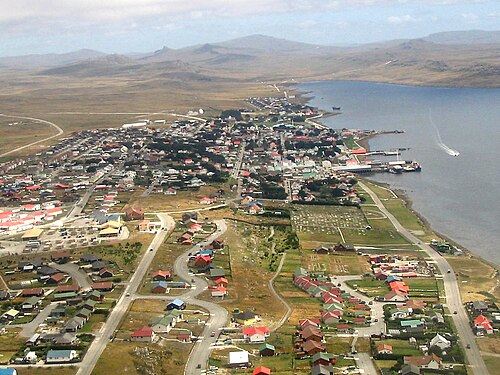
Historically, the economy relied heavily on agriculture, particularly sheep farming and wool production. In recent years, there has been significant interest in oil exploration, with projects like the Sea Lion field aiming to move toward production. The 2021 census shows a population of 3,662, though roughly 30% of these are temporary residents on short-term work visas or personnel stationed at the RAF Mount Pleasant military base.
Cultural Life
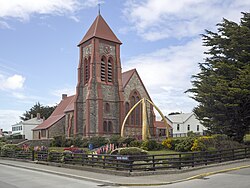
The culture of the islands is predominantly English-speaking and Christian, with Christ Church Cathedral serving as the local parish church for the Anglican Communion.
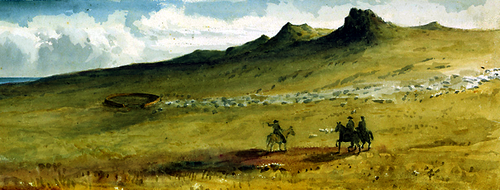
Traditional practices, such as the drinking of mate—a herbal tea common in the region—reflect the historical influence of Gauchos (South American cowboys) who worked at salting plants in areas like Valle Esperanza during the 19th century.

Summary of Territorial Data
| Category | Detail |
|---|---|
| Total Area | 12,173 km² |
| Population (2021) | 3,662 |
| Official Language | English |
| GDP Per Capita (2024) | US$109,980 |
| HDI (2010) | 0.874 (Very High) |
| Time Zone | UTC–03:00 (FKST) |
Frequently Asked Questions
What is the official status of the Falkland Islands?
The Falkland Islands are a British Overseas Territory and a dependency under a constitutional monarchy.
Who are the citizens of the Falkland Islands?
Under the British Nationality (Falkland Islands) Act 1983, Falkland Islanders are British citizens.
What are the primary drivers of the Falkland Islands' economy?
The economy is driven by financial services in Stanley, agriculture (specifically sheep farming), and potential future oil production.
What wildlife is the archipelago famous for?
The islands are world-renowned for their five species of penguins and some of the largest albatross colonies on Earth.
What is the role of RAF Mount Pleasant?
RAF Mount Pleasant is a military base that houses a significant portion of the islands' temporary resident population.