Germination: The Biological Process of Life Emergence
Germination is the fundamental biological process by which an organism grows from a seed or a spore. Whether it is a seedling sprouting from an angiosperm seed, a sporeling emerging from a fungal spore, or a pollen tube extending from a pollen grain, germination represents the reactivation of metabolic machinery that transitions an organism from a state of rest to active growth.
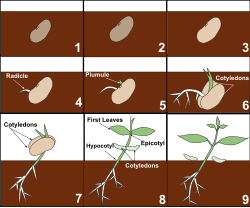
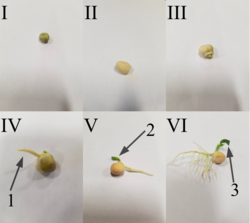
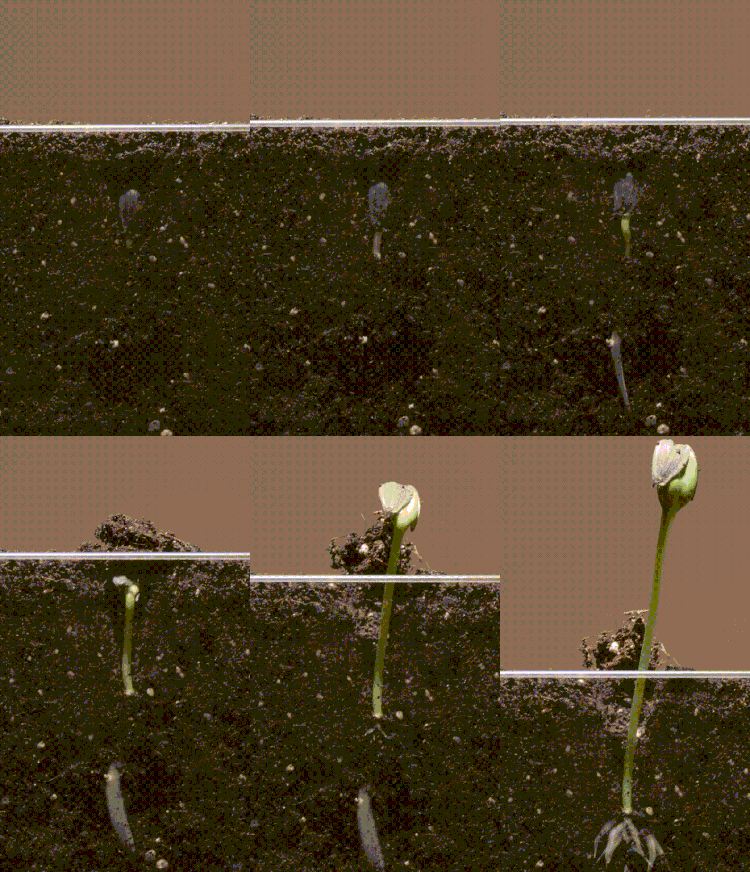
In seed plants, this process results in the formation of a seedling. A vascular plant seed is a specialized package containing an embryo and, typically, a store of food reserves, all protected by a seed coat. When environmental conditions become favorable, the embryo resumes growth, leading to the emergence of the radicle (the primary root) and the plumule (the embryonic shoot).
Key Facts
- Essential Factors: Successful germination typically requires specific levels of water, oxygen, and optimal temperature.
- Dormancy: Many seeds remain dormant, requiring specific stimuli like cold (vernalization) or light to begin growing.
- Germination Rate: This is expressed as a percentage, indicating how many seeds in a lot are likely to sprout under ideal conditions.
- Diverse Forms: Germination is not limited to plants; it also occurs in fungi (spores), bacteria, and even pollen grains.
Environmental Triggers and Conditions
Seed germination is governed by both internal genetic programming and external environmental cues. Because different species have evolved in diverse habitats, their requirements vary significantly.
Temperature Requirements
Temperature is a critical driver of cellular metabolism. While many common annual vegetables thrive with optimal temperatures between 75–90°F (24–32°C), other species, such as radishes or spinach, can germinate in much cooler climates at temperatures as low as 40°F (4°C). Some seeds even require vernalization—exposure to cold temperatures—to break dormancy, while others may only germinate after the intense heat of a forest fire cracks their physical seed coat.
Water, Oxygen, and Light
Water is essential for imbibition, the process where the seed takes up moisture, causing the seed coat to rupture. Oxygen is equally vital for respiration; however, some plants, like rice, have adapted to waterlogged, anaerobic conditions by producing a hollow coleoptile that acts as a snorkel to access air.
Light can also act as a trigger. Photoblastic seeds are those that respond to light or darkness. In forest environments, these seeds may wait for a gap in the canopy to provide the necessary light before beginning their growth cycle.
Dormancy and Breaking the Cycle
Dormancy is a survival mechanism where viable seeds do not germinate despite seemingly favorable conditions. This can be physiological dormancy, where the seed requires specific environmental shifts (like a cold winter), or physical dormancy, where the seed coat itself prevents water uptake until it is mechanically or thermally weakened.
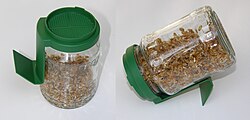
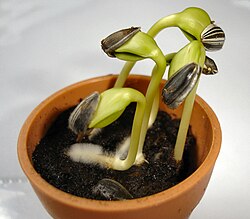
Natural processes such as scarification—the weakening of the seed coat—can be achieved through exposure to fire, soaking in water, or passing through an animal's digestive tract. In a controlled setting, gardeners often use tools like seed pots to manage these early stages of growth.
From Germination to Establishment
The transition from a germinating seed to an independent organism is known as establishment. While germination is often defined by the appearance of the radicle, establishment involves the seedling utilizing its stored food reserves to build its own structures. This is a period of extreme vulnerability where the plant is highly susceptible to disease, water stress, and injury.
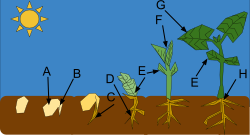
To manage crops effectively, scientists look at the germination rate (the percentage of seeds that sprout over a period) and germination capacity (the total number of seeds in a population able to complete the process). Factors like soil salinity can negatively impact these rates, though certain treatments, such as the application of exogenous glutamine, have been shown to improve germination in crops like onions.
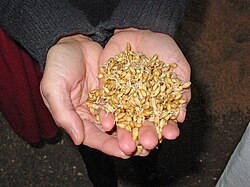
Other Forms of Germination
Pollen and Spores
Germination is not exclusive to seeds. Pollen germination occurs when a pollen grain lands on a receptive stigma, takes up water, and grows a tube to facilitate fertilization. Similarly, spore germination involves the emergence of cells from resting spores in fungi, algae, and ferns. In fungi like Aspergillus niger, this can result in the formation of germ tubes or conidial anastomosis tubes, which allow different fungal cells to fuse.
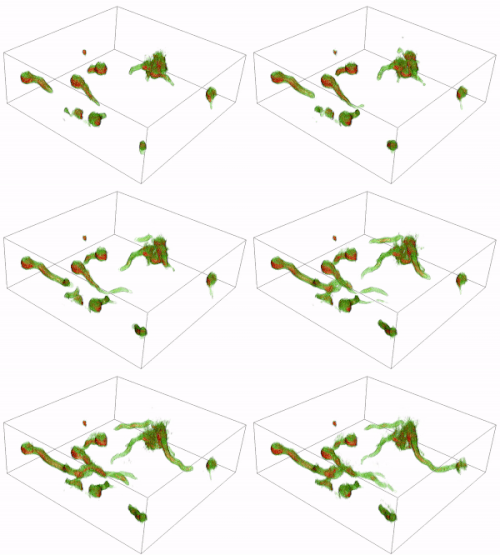
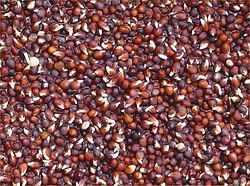
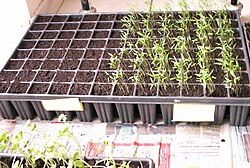
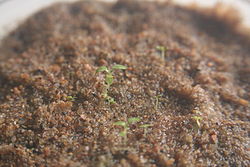
In the world of horticulture, monitoring these stages is vital. Whether observing sunflower seedlings or eucalyptus, the progression from a tiny embryo to a robust plant is one of nature's most complex and essential transformations.
Summary of Germination Factors
| Factor | Role in Germination | Examples/Notes |
|---|---|---|
| Temperature | Regulates metabolic rates | Ranges from freezing to 90°F+; some require cold stratification. |
| Water | Triggers imbibition | Necessary to rupture the seed coat. |
| Oxygen | Supports cellular respiration | Rice uses a "snorkel" coleoptile in waterlogged soil. |
| Light | Acts as a physiological trigger | Photoblastic seeds require specific light cues. |
Frequently Asked Questions
What is the difference between germination and establishment?
Germination is the initial process of the embryo emerging from the seed (marked by the appearance of the radicle), while establishment is the subsequent period where the seedling begins to function as an independent organism using its stored food reserves.
What causes seed dormancy?
Dormancy can be caused by internal physiological factors or external physical barriers, such as a hard seed coat. Some seeds require specific environmental changes, like a period of cold (vernalization) or heat, to break this dormancy.
How does light affect seed growth?
Some seeds are photoblastic, meaning they require light to trigger the germination process. This is often managed by photoreceptors like phytochrome B, which sense red light to initiate the hormonal changes necessary for growth.
Can seeds germinate without oxygen?
Most seeds require oxygen for respiration, but some specialized plants, such as rice, can undergo anaerobic germination by using a hollow structure called a coleoptile to reach oxygen above the water level.
What is the germination rate?
The germination rate is a percentage that describes how many seeds in a specific lot are expected to germinate under proper conditions within a given timeframe.