Germany Time Zones and Daylight Saving Time Regulations
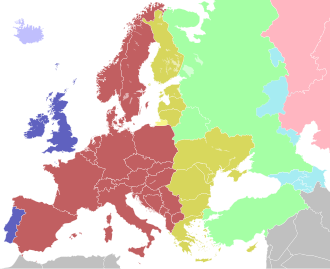
Germany operates under a standardized time system that aligns with the rest of Central Europe. The country primarily utilizes two time offsets depending on the season: Central European Time (CET) and Central European Summer Time (CEST). This system ensures synchronization across the European Union and maintains consistency for international travel and commerce.
Key Facts
- Standard Time: Central European Time (CET), which is UTC+01:00.
- Summer Time: Central European Summer Time (CEST), which is UTC+02:00.
- DST Transition: Starts the last Sunday in March and ends the last Sunday in October.
- IANA Zones: Germany is represented by two zones: "Europe/Berlin" and "Europe/Busingen".
- Historical First: The German Empire first introduced daylight saving time during World War I (1916–1918).
Understanding the Time System
Most of Germany follows the standard CET offset of UTC+01:00. However, to make better use of daylight during the warmer months, the country observes Daylight Saving Time (DST). This shift moves the clock forward by one hour to UTC+02:00.
The transition to summer time occurs at 02:00 CET on the last Sunday of March. The return to standard time happens on the last Sunday of October at 03:00 CEST. An interesting quirk of this transition is the "doubled hour" during the autumn switch; the period from 02:00 to 03:00 occurs twice, referred to as 2A (CEST) and 2B (CET).
The IANA Time Zone Database
The Internet Assigned Numbers Authority (IANA) time zone database is the global standard for recording time zone information. For Germany, the database lists two distinct zones: Europe/Berlin and Europe/Busingen.
Europe/Berlin
This is the primary zone covering the vast majority of the country. While Germany was politically divided into East and West Germany after the start of the Unix epoch (the reference point for the tz database), the database currently lists the unified Germany following the 1990 reunification.
Europe/Busingen
Büsingen is a German exclave—a portion of German territory entirely surrounded by Switzerland. Because of its geography, Büsingen often follows Swiss clock regulations. The Europe/Busingen zone was added to the IANA database in 2013 to reflect that Büsingen has shared clocks with Zurich since 1970. Notably, Büsingen did not observe DST in 1980, aligning instead with Switzerland, but began observing it in 1981 when Switzerland adopted the practice.
| Country Code | Zone Name | Coverage | Standard Offset | DST Offset |
|---|---|---|---|---|
| DE | Europe/Berlin | Most of Germany | +01:00 | +02:00 |
| DE | Europe/Busingen | Busingen Exclave | +01:00 | +02:00 |
History of Daylight Saving Time in Germany
The use of DST in Germany has fluctuated significantly over the last century. It was first implemented by the German Empire between 1916 and 1918. Following the establishment of the Weimar Republic in November 1918, the practice was abandoned.
DST returned between 1940 and 1949, though it was applied differently in the East and West after 1945. From 1950 until the reunification of Germany, both the East and West maintained the same time and DST schedules. The practice was reintroduced more permanently in 1980.
To ensure consistency across the continent, the European Union harmonized DST through Directive 2000/84/EC in 1996, which standardized the end of summer time to the last Sunday in October.
Frequently Asked Questions
When does Germany change its clocks for DST?
Germany switches to summer time on the last Sunday in March and returns to standard time on the last Sunday in October.
What is the difference between CET and CEST?
CET (Central European Time) is the standard time with an offset of UTC+01:00, while CEST (Central European Summer Time) is the daylight saving time with an offset of UTC+02:00.
Why does Büsingen have its own time zone entry?
Büsingen is a German exclave located within Switzerland. Because it historically shared clocks with Zurich and followed Swiss regulations (such as not observing DST in 1980), it requires a separate entry in the IANA database.
Who first introduced daylight saving time in Germany?
Daylight saving time was first introduced by the German Empire during World War I, specifically from 1916 to 1918.
What is the "doubled hour" in October?
When switching from CEST back to CET in October, the hour between 02:00 and 03:00 repeats. The first instance is labeled 2A (CEST) and the second is 2B (CET).