Central European Time
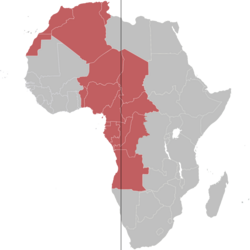
Central European Time (CET) is a standard time zone used across Central, parts of Western, and Southeast Europe. Defined as one hour ahead of Coordinated Universal Time (UTC), it is expressed as UTC+01:00. While primarily associated with the European continent, this time offset is also utilized by several African nations.
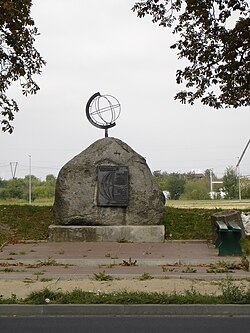
Depending on the region, CET is known by various names. In Germany, it is referred to as Middle European Time (MET or MEZ). Colloquially, it is often identified by the major cities that observe it, such as Paris Time, Berlin Time, Rome Time, or Madrid Time. In technical terms, the 15th meridian east serves as the central axis for the UTC+01:00 zone.
Key Facts
- Standard Offset: UTC+01:00.
- Summer Offset: UTC+02:00 (Central European Summer Time or CEST).
- Central Axis: The 15th meridian east.
- DST Period: From the last Sunday in March to the last Sunday in October for EU members.
- African Equivalent: Known as West Africa Time (WAT) in many African countries.
Daylight Saving Time and Seasonal Changes
Most countries within the CET zone observe Daylight Saving Time (DST) to make better use of natural daylight during warmer months. During this period, clocks shift to Central European Summer Time (CEST), which is UTC+02:00.
For example, the transition back to standard CET is scheduled for 25 October 2026, when clocks will move from 03:00 CEST back to 02:00 CET.
Usage and Distribution
European Adoption
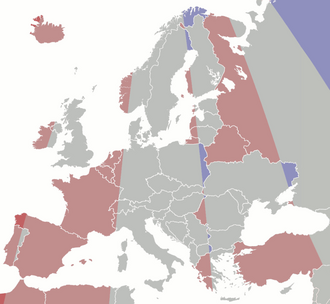
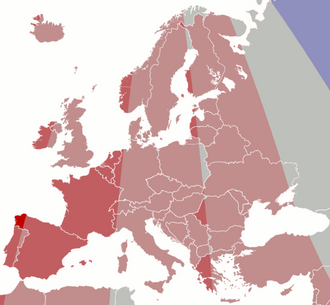
As of 2017, CET is observed by a wide array of nations, including Albania, Andorra, Austria, Belgium, Bosnia and Herzegovina, Croatia, Czechia, Denmark, France, Germany, Gibraltar, Hungary, Italy, Kosovo, Liechtenstein, Luxembourg, Malta, Monaco, Montenegro, Netherlands, North Macedonia, Norway, Poland, San Marino, Serbia, Slovakia, Slovenia, Spain (excluding the Canary Islands), Sweden, Switzerland, and Vatican City.
Usage in Africa
In Africa, the UTC+01:00 offset is generally called West Africa Time (WAT) and is used year-round. However, North African countries such as Algeria, Morocco, and Tunisia specifically refer to it as Central European Time.
Historical Evolution
The adoption of CET occurred gradually over the late 19th and early 20th centuries. The Kingdom of Serbia was an early adopter in 1884, followed by the Austro-Hungarian Empire in 1891 (initially in railways and post offices in cities like Prague and Budapest).
The German Empire unified its time zones under CET in 1893, the same year Vienna adopted the standard. Other nations followed shortly after: Italy in 1893, Switzerland, Liechtenstein, and Denmark in 1894, Norway in 1895, and Sweden in 1900.
During World War I, CET was implemented across all German-occupied territories. Later, in 1940, under German occupation, the Netherlands, Belgium, Luxembourg, France, and Spain were all switched to CET.
Geographical vs. Legal Time Zones
Time zones are determined by a mix of legal, political, and economic factors, meaning they rarely follow strict longitudinal lines. Geographically, the "physical" UTC+01:00 zone should span between meridians 7°30′ E and 22°30′ E.
This creates several discrepancies where the legal time does not match the geographical location:
- Areas in the UTC+1 longitude using UTC+02:00: This includes parts of Greece, Bulgaria, Romania, Ukraine (Zakarpattia Oblast), Western Lithuania, Western Latvia, parts of Estonia, and the southwestern and northwesternmost parts of Finland, as well as the Kaliningrad Oblast of Russia.
- Areas outside UTC+1 longitude using UTC+01:00: This includes westernmost Spain (Galicia), the Norwegian island of Jan Mayen, Western Morocco, and Western Sahara (which are further west), as well as Andorra, Belgium, France, Luxembourg, Monaco, and the Netherlands (which are nominally UTC+00:00).
- Eastern Extensions: Some areas far to the east of the 22°30′ E meridian still use CET, including parts of North Macedonia, Serbia, Hungary, Slovakia, Poland, Sweden, and Norway.
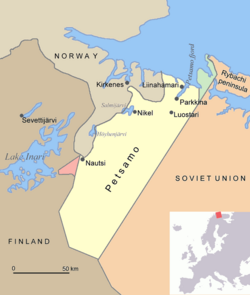
Notably, the easternmost town in Norway, Vardø, is located at 30°51′ E—so far east that it is east of the central meridian of Eastern European Time (EET).
Summary of Time Zone Specifications
| Term | Abbreviation | UTC Offset | Observation |
|---|---|---|---|
| Central European Time | CET | UTC+01:00 | Standard Time (Winter) |
| Central European Summer Time | CEST | UTC+02:00 | Daylight Saving Time (Summer) |
| West Africa Time | WAT | UTC+01:00 | Year-round in various African nations |
Frequently Asked Questions
What is the difference between CET and CEST?
CET (Central European Time) is the standard time with an offset of UTC+01:00, used during the winter. CEST (Central European Summer Time) is the daylight saving version with an offset of UTC+02:00, used during the summer.
Which countries use Central European Time?
CET is used by most of continental Europe, including France, Germany, Italy, Spain, Poland, and Sweden, as well as several African countries where it is often called West Africa Time (WAT).
Why do some countries use CET even if they are not geographically aligned with it?
Time zone boundaries are often drawn based on political, economic, and legal needs rather than strict geography to ensure that neighboring countries or trading partners remain synchronized.
How does the UK view Central European Time?
In the United Kingdom, Central European Time is sometimes referred to as "continental time." The UK typically uses UTC+00:00 (GMT) in winter and UTC+01:00 (BST) in summer.