Central European Summer Time
Central European Summer Time (CEST) is a time zone used primarily during the warmer months of the year in various European countries. It serves as the daylight-saving counterpart to Central European Time (CET), shifting the clock forward to make better use of natural sunlight during the summer.
Technically, CEST is defined by an offset of UTC+02:00, meaning it is two hours ahead of Coordinated Universal Time (UTC), the primary time standard by which the world regulates clocks and time. Because of this specific offset, CEST aligns perfectly with other time zones such as Eastern European Time, Central Africa Time, South African Standard Time, Egypt Standard Time, and Kaliningrad Time in Russia.
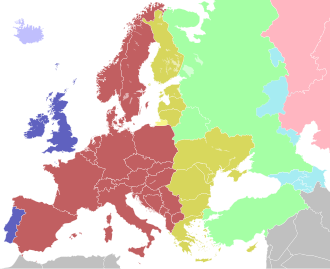
Key Facts
- Offset: UTC+02:00.
- Primary Purpose: Used exclusively for Daylight Saving Time (DST).
- Standard Counterpart: Reverts to Central European Time (CET, UTC+01:00) during winter.
- Observation Window: Generally from the last Sunday of March to the last Sunday of October.
- Alternative Names: Also known as Central European Daylight Time (CEDT), Middle European Summer Time (MEST), or Bravo Time.
Observation and Timing
Since 1996, the rules for observing European Summer Time have been standardized across the European Union to avoid confusion. The transition occurs as follows:
- Start: The last Sunday of March at 01:00 UTC (which corresponds to 02:00 CET and 03:00 CEST).
- End: The last Sunday of October at 01:00 UTC.
While these rules are currently in place, there have been legislative proposals since 2021 to abandon the practice of switching clocks in Europe. One such proposal suggested moving winter time forward by one hour and maintaining that constant time throughout the entire year.
Regional Usage
A wide array of European nations and territories regularly employ CEST. This includes major economies such as Germany, France (metropolitan), Italy, Spain (excluding the Canary Islands, which use Western European Summer Time), and Poland.
The adoption of this time zone varies by country, with some having implemented it as early as 1945 (such as Serbia, Croatia, and Bosnia and Herzegovina during their time as part of Yugoslavia) and others joining more recently, such as Liechtenstein and Luxembourg in 1981.
| Region/Country | Year of Adoption |
|---|---|
| Albania, Malta | 1974 |
| France (metropolitan), Monaco | 1976 |
| Netherlands, Poland | 1977 |
| Austria, Belgium, Denmark, Germany, Norway, Sweden | 1980 |
| Liechtenstein, Luxembourg, Switzerland | 1981 |
| Gibraltar | 1982 |
| Slovenia | 1983 |
| San Marino, Vatican City | 1966 |
Former Users of CEST
Some regions have used Central European Summer Time in the past but no longer do. These include Libya (across various periods between 1951 and 2013), Lithuania (1998–1999), Portugal (1993–1995), and Tunisia (2005–2008).
Frequently Asked Questions
What is the difference between CET and CEST?
CET (Central European Time) is the standard time used in winter (UTC+01:00), while CEST (Central European Summer Time) is the daylight-saving time used in summer (UTC+02:00).
When does the switch to CEST happen?
The switch occurs on the last Sunday of March at 01:00 UTC.
Which countries use CEST?
Many European countries use it, including Germany, France, Italy, Spain, Poland, and Sweden, among others.
What is "Bravo Time"?
Bravo Time is an alternative name for Central European Summer Time, derived from the second letter of the NATO phonetic alphabet.
Does Spain entirely use CEST?
No, while most of Spain uses CEST, the Canary Islands apply Western European Summer Time instead.