German New Guinea: The Rise and Fall of a Pacific Empire
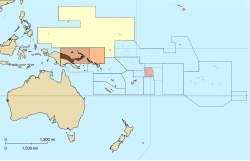
From 1884 to 1914, German New Guinea (Deutsch-Neuguinea) served as a strategic cornerstone of the German colonial empire in the Western Pacific. Spanning the northeastern portion of the island of New Guinea and various surrounding island groups, this territory represented Germany's ambition to establish a commercial and political foothold in the South Seas.
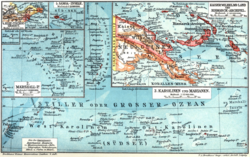
The colony was not a single landmass but a collection of protectorates. The mainland region, known as Kaiser-Wilhelmsland, was established as a protectorate in 1884. This was soon followed by the addition of the Bismarck Archipelago—including New Britain and New Ireland—and the North Solomon Islands in 1885.
Key Facts
- Timeline: Established November 3, 1884; ended with Australian occupation in September 1914.
- Total Area: Approximately 249,500 square kilometers (96,300 sq mi).
- Population: Estimated at 600,000 by 1912.
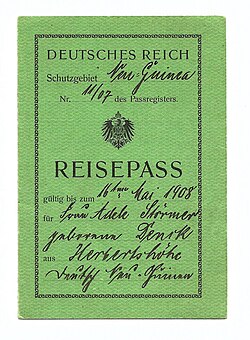
- Capitals: Shifted over time from Finschhafen to Friedrich-Wilhelmshafen, Herbertshöhe, and finally Simpsonhafen.
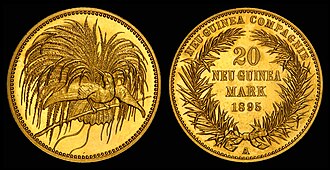
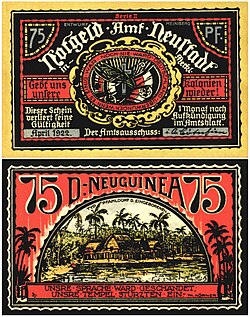
- Currency: The New Guinean mark.
- Official Language: German.
The Foundations of German Presence
Commercial Beginnings
Before official colonization, German influence was driven by the Hanseatic League merchant houses. The firm Johann Cesar Godeffroy & Sohn, based in Hamburg and headquartered in Samoa from 1857, dominated the copra (dried coconut meat) trade. By 1877, another Hamburg firm, Hernsheim and Robertson, established a community on Matupi Island in New Britain. By the mid-1870s, German ships and trade were so prevalent that they often excluded other nations from the region.
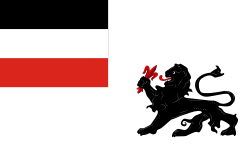
Bismarck's Colonial Policy
Chancellor Otto von Bismarck was initially hesitant about colonial acquisitions. However, in 1884, he shifted German policy to protect trading interests. Rather than direct state administration, Bismarck initially utilized charters granted to private companies, such as the German New Guinea Company, to manage the territories.
Expansion and Administration
The Imperial German Pacific Protectorates
The territory expanded significantly through diplomacy and purchase. In 1899, under the German–Spanish Treaty, Germany paid 25 million pesetas (16.6 million goldmarks) to Spain for the Caroline Islands and the Mariana Islands (excluding Guam). In 1906, the Marshall Islands and Nauru were annexed into German New Guinea. These combined regions formed the "Imperial German Pacific Protectorates."
Missionary Work and Social Tension
Religious missions played a complex role in the colony. The Rhenish Mission, a Lutheran organization led by Friedrich Fabri, faced severe challenges, including tropical diseases and violent clashes with local populations who resisted European social norms. While some embraced Christianity, many locals remained opposed to colonial customs.
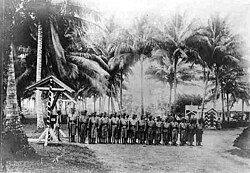
The End of German Rule
World War I and Occupation
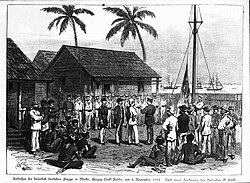
The outbreak of World War I in 1914 brought a swift end to German administration. Australian forces occupied the territory on September 17, 1914, followed by Japanese occupation on September 29. A notable exception was Lieutenant Hermann Detzner, who evaded capture in the interior of Kaiser-Wilhelmsland for the duration of the war, though his later claims of penetrating the deep interior were heavily disputed by missionaries.
The Treaty of Versailles and Aftermath
The 1919 Treaty of Versailles formally stripped Germany of its colonies. The territory was partitioned into mandates under the League of Nations:
- Australia: Received a mandate over Nauru (co-trusteed with the UK and NZ) and the Territory of New Guinea.
- Japan: Received a mandate for the South Seas Islands (islands north of the equator).
The Australian-administered Territory of New Guinea eventually merged with the territory of Papua in 1949, forming the precursor to modern Papua New Guinea.
Territorial Overview
The following table summarizes the primary regions that comprised German New Guinea.
| Territory | Period | Approx. Area | Modern Country |
|---|---|---|---|
| Kaiser-Wilhelmsland | 1884–1919 | 181,650 km² | Papua New Guinea |
| Bismarck Archipelago | 1899–1919 | 49,700 km² | Papua New Guinea |
| Bougainville Island | 1899–1919 | 9,318 km² | Papua New Guinea |
| Palau | 1899–1919 | 466 km² | Palau |
| Caroline Islands | 1899–1919 | 2,150 km² | Micronesia / Palau |
| Nauru | 1906–1919 | 21 km² | Nauru |
| Mariana Islands | 1899–1919 | 461 km² | Northern Mariana Islands |
| Marshall Islands | 1906–1919 | 181 km² | Marshall Islands |
Frequently Asked Questions
How did Germany acquire the Caroline and Mariana Islands?
Germany purchased these islands from Spain in 1899 for 25 million pesetas following the Spanish-American War.
What was the role of the German New Guinea Company?
The company was part of Bismarck's strategy to expand the empire through private charters rather than direct imperial administration during the early years of colonization.
Who took control of the colony after World War I?
Following the Treaty of Versailles, the territory was divided into mandates; Australia took control of the Territory of New Guinea and Nauru, while Japan took the islands north of the equator.
What was Kaiser-Wilhelmsland?
Kaiser-Wilhelmsland was the mainland portion of the colony, located in the northeastern part of the island of New Guinea, established as a protectorate in 1884.
What happened to the German missions after the war?
Many missions were transferred; for example, the Rhenish Mission territory was handed over to the United Evangelical Lutheran Church of Australia in 1921.