German Emperors: The Sovereigns of the German Empire (1871–1918)
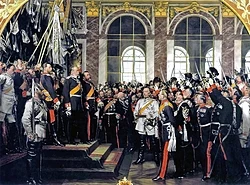
The German Emperor (German: Deutscher Kaiser) served as the head of state and hereditary ruler of the German Empire from its unification in 1871 until the end of World War I. This role was not merely a symbolic title but the pinnacle of a complex federal monarchy, where the imperial crown was inextricably linked to the Prussian throne.
Established by the constitution of January 1, 1871, the office of the Emperor represented the unification of various German states under a single imperial authority, ending centuries of fragmentation in Central Europe.
Key Facts
- Duration: The office existed from January 1, 1871, to November 28, 1918.
- Dynasty: All German Emperors belonged to the House of Hohenzollern.
- Relationship to Prussia: The Emperor was always the King of Prussia; the two roles were legally tied.
- Nature of State: The empire was a federal monarchy comprising various kings, grand dukes, and free cities.
- Final Monarch: Wilhelm II was the last emperor, abdicating during the revolution of 1918.
The Evolution of the Imperial Title
The Failed Offer of 1849
The concept of a unified German emperorship was attempted earlier during the revolutions of 1848. In 1849, the Frankfurt Parliament offered King Friedrich Wilhelm IV of Prussia the title "Emperor of the Germans" (Kaiser der Deutschen). However, he declined, arguing that a crown offered by a parliament was invalid, believing that only fellow German princes had the authority to grant such a title.
Bismarck and the Proclamation of 1871
The actual title of "German Emperor" was carefully crafted by Otto von Bismarck, the Minister President of Prussia and Chancellor. The terminology was a subject of intense debate. King Wilhelm I initially preferred "Emperor of Germany" (Kaiser von Deutschland), but this was rejected because it implied territorial sovereignty over all German lands, which would have alienated the monarchs of South Germany and suggested claims to territories like Austria and Switzerland.
Wilhelm I also rejected "Emperor of the Germans" because he believed in the divine right of kings and did not want a title that suggested he was chosen by the people in a popular monarchy. He viewed the constitutionally created crown as "artificial" and feared it might diminish the prestige of his Prussian crown.
Structure of the Federal Monarchy
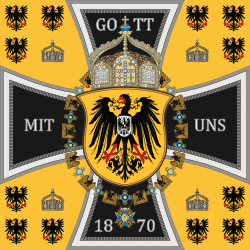
The German Empire was a federation of states. The Emperor acted as the president of the federated monarchs, which included the kings of Bavaria, Saxony, and Württemberg, as well as various grand dukes and the leaders of free cities such as Hamburg, Lübeck, and Bremen.
This structure meant that the imperial office was essentially the permanent presidency of the federation, held hereditarily by the King of Prussia. This legal bond became critical during the empire's collapse.
The Fall of the Empire
At the end of World War I, Wilhelm II mistakenly believed that his role as Emperor and his role as King of Prussia were separate personal unions. He hoped to abdicate the imperial throne while remaining the King of Prussia. However, Prince Max of Baden, his last chancellor, recognized that this was legally impossible.
On November 9, 1918, amid a growing revolution in Berlin and a lack of support from the army, Wilhelm II's abdication from both thrones was unilaterally announced. He fled to exile in the Netherlands, formally relinquishing all claims to both the Prussian and Imperial thrones on November 28, 1918.
Imperial Lineage and Titles
The Emperors held an exhaustive list of titles reflecting the vast territories of the House of Hohenzollern, including Margrave of Brandenburg, Burgrave of Nuremberg, and various dukedoms across Silesia, Saxony, and Pomerania.
| Name | Reign Start | Reign End | Relationship |
|---|---|---|---|
| Wilhelm I | January 1, 1871 | March 9, 1888 | Founder of the Empire |
| Frederick III | March 9, 1888 | June 15, 1888 | Son of Wilhelm I |
| Wilhelm II | June 15, 1888 | November 28, 1918 | Grandson of Wilhelm I |
Frequently Asked Questions
What is the difference between the Holy Roman Emperor and the German Emperor?
The Holy Roman Emperor ruled the Holy Roman Empire (which existed until 1806), while the German Emperor ruled the German Empire (1871–1918). Although the Holy Roman Empire was sometimes called the "Empire of the German Nation," the two offices belonged to different historical eras and political structures.
Why did Wilhelm I dislike the title of Emperor?
Wilhelm I was concerned that an imperial crown created by a constitution would seem artificial and might overshadow the traditional prestige and authority of his Prussian crown.
Who succeeded the Emperor after 1918?
Following the revolution of 1918 and the abolition of the monarchy, the head of state became the President of the Reich (Reichspräsident), with Friedrich Ebert serving as the first president.
Was the German Emperor an absolute ruler?
No, the empire was a federal monarchy. While the Emperor held significant power, he presided over a federation of states with their own monarchs and was governed by an imperial constitution.
Why was the title "Emperor of Germany" rejected?
The title was rejected because it implied direct territorial sovereignty over all German lands, which would have been unacceptable to the other German monarchs and could have been seen as a claim to non-German territories like Austria.