German Army of the Imperial Era (1871–1919)
The Imperial German Army, known officially as the Deutsches Heer, served as the unified land and air force of the German Empire. Established in 1871 following the political unification of Germany under Prussian leadership, this formidable military force shaped European geopolitics for nearly half a century until its dissolution in 1919 after the defeat of the Empire in World War I.
From its origins as a collection of state-contributed forces to its role as a global military powerhouse, the Imperial German Army was characterized by its rigid structure, professional officer corps, and a highly efficient system of mass mobilization.
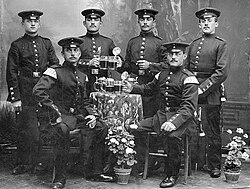
Key Facts
- Founded: April 16, 1871.
- Dissolved: March 6, 1919.
- Motto: Gott mit uns ("God with us").
- Total Personnel: Over 14.25 million served throughout its existence.
- Budget: Approximately US$ 45 billion (1914–18), equivalent to US$ 1.3 trillion in 2022.
- Core Branches: Heer (Army), Schutztruppe (Colonial troops), and Luftstreitkräfte (Air force).
Formation and Evolution
The roots of the Imperial Army lay in the German Confederation, where individual states maintained units for collective defense, known as the Federal Army (Bundesheer). However, rising tensions between Prussia and the Austrian Empire led to the dissolution of this system after the Austro-Prussian War of 1866.
The modern Imperial Army took shape during the Franco-Prussian War (1870–1871). Through military conventions with states like Bavaria, Württemberg, and Baden, and the subsequent 1871 Constitution, the Army of the Realm (Reichsheer) was created. This transition unified the various state forces into a cohesive national entity under the authority of the German Emperor.

Command and Political Influence
The army was led by the German Emperor (and later the President of the Reich) as Commander-in-Chief, with the General Staff serving as the primary governing body. Over time, the military exerted significant influence over German foreign policy, often bypassing civilian leadership.
Imperial Chancellor Otto von Bismarck frequently clashed with military leaders who sought to provoke conflicts with Russia and France. This tension escalated in the early 20th century; for instance, Alfred von Schlieffen advocated for a preventive war against France in 1905. By the outbreak of World War I in 1914, military figures like Helmuth von Moltke the Younger and later Paul von Hindenburg effectively dictated foreign policy, often leaving civilian officials uninformed.
Organizational Structure
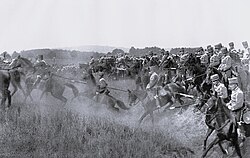
The army was organized into a hierarchical system designed for rapid mobilization and tactical flexibility.
Army Inspectorates and Corps
Germany was divided into army inspectorates, each overseeing several corps. By 1914, there were eight inspectorates. Upon mobilization on August 2, 1914, these inspectorates transitioned directly into numbered field armies (e.g., the VIII Army Inspectorate in Saarbrücken became the 1st Army).
Tactical Formations
- Division: The basic tactical unit, consisting of a headquarters, two infantry brigades, a cavalry brigade, an artillery brigade, and various support regiments.
- Regiment: The fundamental combat and recruiting unit. Soldiers received basic training here, and regiments maintained long-standing traditions, some dating back to the 17th century.
Personnel and Conscription
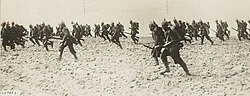
The Imperial German Army utilized a rigorous compulsory military service model that became a benchmark for other nations, including Japan. Men were eligible for service between the ages of 17 and 45.
The system was divided into several stages: active-duty service (2 years for infantry, 3 for cavalry), followed by reserve-duty, and eventually service in the Landwehr (territorial army) and Landsturm (home guard). This ensured a small professional core of officers and a massive, trained reserve that could be mobilized almost instantly.
Industrial Base and Aviation
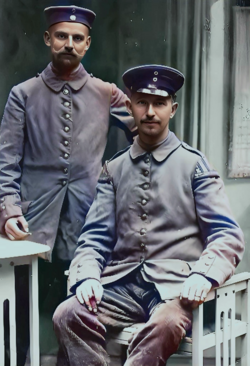
By 1914, Germany possessed the largest industrial base in Continental Europe, accounting for 12% of global industrial output. The army maintained a symbiotic relationship with industry, particularly in the development of the Luftstreitkräfte (Air Force).
To ensure the rapid production of high-quality aircraft, the army regulated prices, credit, and raw materials, and limited patent rights to encourage cross-licensing between firms. While this led to an impressive aviation output, the army's management of the broader war economy was generally considered inefficient.
Summary of Imperial German Army Specifications
| Category | Details |
|---|---|
| Official Name | Deutsches Heer |
| Service Period | 1871 – 1919 |
| Conscription Age | 17–45 years |
| Peace-time Strength (1914) | 217 Infantry Regiments, 110 Cavalry Regiments, 100 Field Artillery Regiments |
| Key Leadership | German Emperor; General Staff |
| Major Conflicts | World War I, Boxer Rebellion, Herero Wars, Maji Maji Rebellion |
Frequently Asked Questions
What was the role of the General Staff?
The General Staff was the governing body of the army, responsible for strategic planning and operational command. Over time, it gained significant political power, often influencing foreign policy independently of the civilian government.
How did the Prussian military model influence other countries?
The Prussian system of a professional officer cadre combined with a large, trained reserve through compulsory service was highly admired. While Great Britain rejected it due to a dislike of conscription, Japan adopted the model for its own military development.
What were the different types of regiments in the army?
The three primary types of regiments were infantry, cavalry, and artillery. Specialized roles, such as signal troops and pioneers (combat engineers), were organized into smaller support units.
When and why was the Imperial German Army disbanded?
The army was disbanded on March 6, 1919, following the defeat of the German Empire in World War I and the subsequent German Revolution.
What was the Landsturm?
The Landsturm was the final stage of military obligation, consisting of men who had completed their reserve and Landwehr service, or those not drafted into the regular army or navy, serving until the age of 46.