Georges Cuvier: The Founding Father of Paleontology
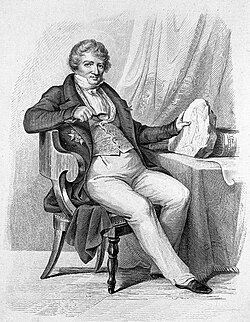
Jean Léopold Nicolas Frédéric Cuvier, known to history as Georges Cuvier (1769–1832), was a towering figure in the early 19th-century natural sciences. A French naturalist and zoologist, Cuvier is widely regarded as the founding father of paleontology. By meticulously comparing the anatomy of living animals with fossilized remains, he transformed the study of ancient life from speculative curiosity into a rigorous scientific discipline.
Cuvier's career was marked by an extraordinary ability to reconstruct entire organisms from fragmentary remains. His work established the foundations of comparative anatomy—the study of similarities and differences in the anatomy of different species—and provided the first scientific evidence that species could go extinct, challenging the prevailing beliefs of his era.
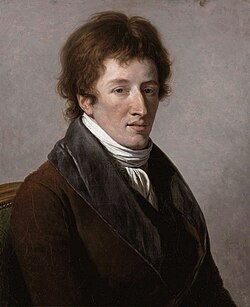
Key Facts
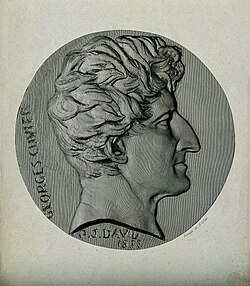
- Primary Contribution: Established paleontology and comparative anatomy as formal scientific fields.
- Major Theory: Proposed Catastrophism, the idea that Earth's history is marked by sudden, violent events.
- Key Discovery: First to correctly identify the Pterodactylus (flying reptile) and the mosasaur.
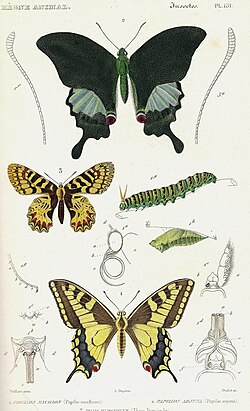
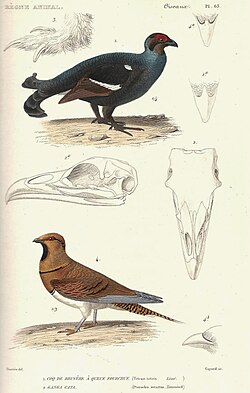
- Famous Work: Author of Le Règne Animal (The Animal Kingdom), a comprehensive study of animal structure.
- Legacy: One of 72 names inscribed on the Eiffel Tower in recognition of his scientific contributions.
Early Life and Academic Rise
Born in Montbéliard within the Holy Roman Empire, Cuvier's intellectual journey was guided by his advisor, Carl Friedrich Kielmeyer. He quickly rose through the ranks of the French scientific community, becoming a member of the Academy of Sciences and lecturing at the École Centrale du Pantheon starting in 1796.
![Birthplace of Georges Cuvier in Montbéliard[15]](/images/19/1d/191d8f0c1dddad4af4dc58494b27d6ab4e1e65b72c49b9096e74c7c2c313b2f1.jpg)
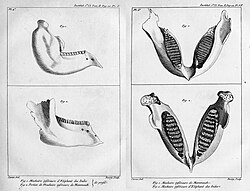
Cuvier's early paleontological papers set the stage for his future success. In 1800, he published Mémoires sur les espèces d'éléphants vivants et fossiles, where he analyzed the skeletal remains of African and Indian elephants alongside mammoth fossils. He also identified the Megatherium, a giant ground-dwelling sloth from Paraguay, by comparing its skull to that of living tree-dwelling sloths.
Scientific Innovations and Theories
The Principle of the Correlation of Parts
Cuvier's most significant methodological contribution was the principle of the correlation of parts. He argued that every organ in an animal's body is functionally related to all others. This meant that if a scientist found a single bone, they could predict the structure of the rest of the animal's skeleton based on these functional laws.
Cuvier aspired to make natural history as mathematically predictive as the physics of Isaac Newton or the chemistry of Antoine Lavoisier. He demonstrated this predictive power by successfully forecasting the existence of marsupial pelvic bones in the quarries of Montmartre.
Extinction and Catastrophism
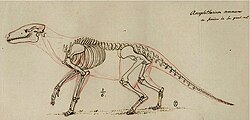
Before Cuvier, many believed that fossils represented animals that still lived in unexplored parts of the world. Cuvier proved this wrong by demonstrating that certain fossilized creatures had no living analogues. His 1812 skeletal reconstruction of Anoplotherium commune served as critical proof of extinction and ecological succession.
To explain these mass disappearances, Cuvier developed the theory of Catastrophism. He proposed that the Earth's surface had undergone sudden, violent revolutions—catastrophes—that wiped out entire populations of species, which were then replaced by new ones.
The Age of Reptiles
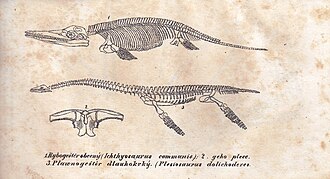
Cuvier was a pioneer in identifying prehistoric reptiles. In 1809, working from a drawing, he correctly identified a Bavarian fossil as a flying reptile, naming it Ptero-Dactyle (later Pterodactylus antiquus). In 1808, he identified a giant marine lizard from Maastricht as the first known mosasaur.
Major Scientific Works
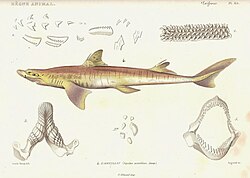
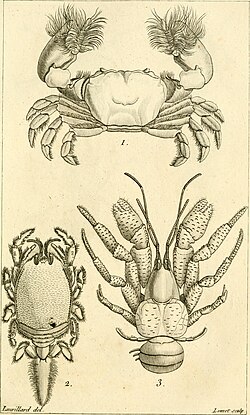
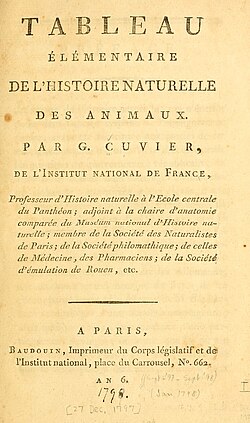
Cuvier's research was vast, covering everything from mollusks to fish. His Histoire naturelle des poissons, a joint effort with Achille Valenciennes, described 5,000 species of fish. However, his most admired work was Le Règne Animal (The Animal Kingdom), published in 1817, which synthesized his life's research into the structure of living and fossil animals.
His geological and paleontological findings were further detailed in Recherches sur les ossemens fossiles de quadrupèdes (1812) and Discours sur les révolutions de la surface du globe (1825).
Public Life and Later Years
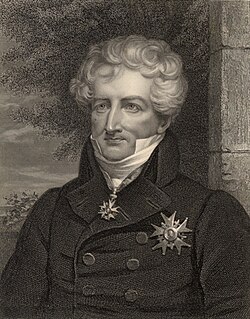
Beyond the laboratory, Cuvier was a powerful public figure. Appointed by Napoleon to the council of the Imperial University in 1808, he oversaw educational establishments across annexed territories. He eventually became a peer for life, known as Baron Cuvier, and served as the president of the council of state and the ministry of the interior.
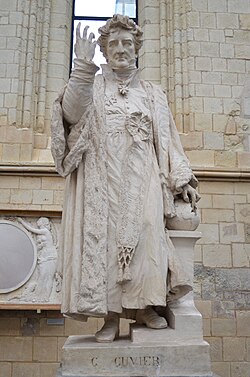
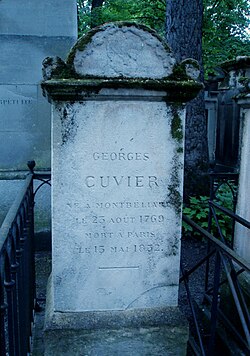
Cuvier passed away in Paris on May 13, 1832, during a cholera epidemic. He is buried in the Père Lachaise Cemetery.
Summary of Cuvier's Contributions
| Field | Key Contribution | Notable Work/Example |
|---|---|---|
| Paleontology | Proof of extinction | Anoplotherium commune reconstruction |
| Comparative Anatomy | Correlation of parts | Prediction of marsupial bones |
| Geology | Catastrophism | Discours sur les révolutions de la surface du globe |
| Zoology | Systematic classification | Le Règne Animal |
Frequently Asked Questions
Who is considered the founding father of paleontology?
Georges Cuvier is widely regarded as the founding father of paleontology due to his pioneering work in comparing living animals with fossils to establish the reality of extinction.
What is the principle of the correlation of parts?
It is the theory that all organs of an animal are functionally interrelated. This allows a scientist to reconstruct the entire anatomy of an extinct animal from only a few fossilized fragments.
What was Cuvier's theory of Catastrophism?
Catastrophism is the theory that Earth's geological history was shaped by sudden, violent events that caused mass extinctions, rather than by slow, gradual changes.
Did Georges Cuvier believe in evolution?
Cuvier was generally opposed to the early theories of evolution, preferring a model of extinction followed by the arrival of new species through catastrophic events.
What was the significance of Le Règne Animal?
Le Règne Animal (The Animal Kingdom) was a comprehensive synthesis of Cuvier's research into the structure and classification of both living and fossil animals, becoming one of his most admired works.