George C. MarshallGeneral of the ArmyMarshall PlanUS Secretary of StateUS Secretary of Defense

George C. Marshall: The Soldier-Statesman Who Shaped the Modern World

George C. Marshall: The Soldier-Statesman Who Shaped the Modern World Few individuals in American history have transitioned as seamlessly between the roles of military strategist and glob...

George C. Marshall: The Soldier-Statesman Who Shaped the Modern World

Few individuals in American history have transitioned as seamlessly between the roles of military strategist and global diplomat as George C. Marshall. From his early days as a collegiate athlete to his tenure as a five-star General and a cabinet member under two presidents, Marshall's career was defined by a commitment to duty, organizational brilliance, and a vision for international stability.

Marshall is perhaps best remembered for his pivotal role in organizing the United States Army for World War II and for the subsequent economic recovery program that bears his name. His life serves as a masterclass in leadership, moving from the tactical demands of the battlefield to the complex negotiations of the Cold War.
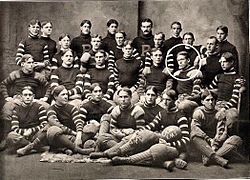
1900 VMI Keydets football team. Marshall circled

Key Facts

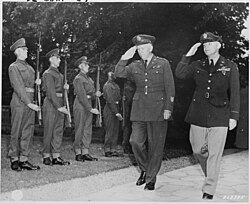
General George C. Marshall with Chief of the Army Air Force General Henry "Hap" Arnold at Villa Urbig on 23 July 1945 during the Potsdam Conference. The two generals return the salute of the Guard of Honor formed by a detachment of Scots Guards of the British Brigade of Guards.
  • Highest Military Rank: General of the Army (Five-Star General).
  • Major Cabinet Roles: Served as the 50th U.S. Secretary of State and the 3rd U.S. Secretary of Defense.
  • Military Leadership: 15th Chief of Staff of the United States Army (1939–1945).
  • Nobel Peace Prize: Awarded in 1953 for the Marshall Plan.
  • Education: Graduate of the Virginia Military Institute (VMI).
  • Key Contributions: Directed the expansion of the U.S. military force fortyfold prior to WWII and spearheaded European economic recovery.

Early Life and Military Foundations
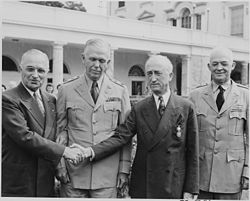
President Truman, Marshall, Secretary of State James F. Byrnes, and General Arnold at the White House, August 1945

Born on December 31, 1880, George Catlett Marshall Jr. developed his leadership skills early. At the Virginia Military Institute, he was not only a dedicated student but also a standout athlete, playing left tackle for the VMI Keydets and earning All-Southern honors in 1900.

His professional military journey began in 1901 as a second lieutenant. His early career took him to the Philippines during the post-war insurgency and later to the Mexican border. These formative years established his reputation as a disciplined and capable officer.
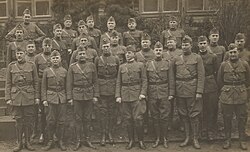
Major General Robert Lee Bullard (center, facing towards his right, photo's left), the newly appointed commander of the 1st Division, and members of his divisional staff at Gondrecourt, France, 17 January 1918. To Bullard's right is Lieutenant Colonel George C. Marshall, the 1st Division's assistant chief of staff for operations.

World War I and the Interwar Period

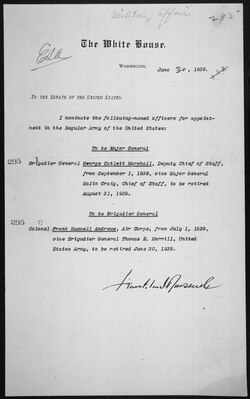
President Roosevelt's nomination of General Marshall to be Major General. 30 June 1939

During World War I, Marshall served on the Western Front, playing a critical role in the Meuse-Argonne Offensive. His ability to manage complex operations led to a rapid ascent in rank, reaching Colonel by August 1918. He served as the assistant chief of staff for operations for the 1st Division under Major General Robert Lee Bullard.
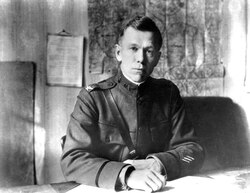
Colonel Marshall in France in 1919

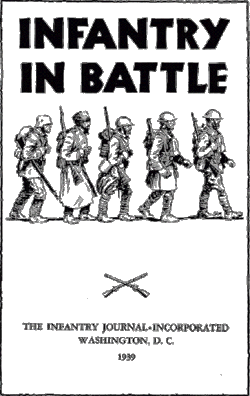
In the years between the world wars, Marshall focused on professionalizing the Army. He served as an assistant commandant at the Infantry School in the 1930s, where he mentored many officers who would later lead in World War II. He also directed the production of Infantry in Battle, a comprehensive guide to combat operations that remained a reference for decades.
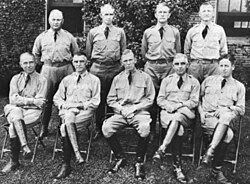
Lieutenant Colonel George C. Marshall (front row, center) as assistant commandant at the Infantry School in the 1930s, together with various instructors, three of whom later rose to high rank in the next world war.

Cover to the book Infantry in Battle, the World War II officer's guide to infantry combat operations. Marshall directed production of the book, which is still used as a reference today.

Architect of Victory in World War II

ภาพประกอบบทความ
ภาพประกอบจากบทความต้นฉบับ

Appointed as the Chief of Staff of the United States Army in September 1939, Marshall faced the monumental task of preparing a small, peacetime force for global conflict. He successfully expanded the military force fortyfold, overseeing the logistics, training, and deployment of millions of soldiers.

Marshall's strategic mind was essential in planning the invasion of Europe and analyzing the intelligence failures surrounding the attack on Pearl Harbor. Despite his indispensable role in Washington, he was a key advisor to President Franklin D. Roosevelt and worked closely with General of the Armies John J. Pershing.
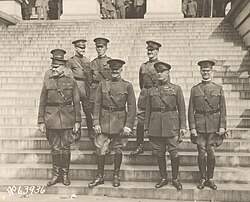
General of the Armies John J. Pershing and members of his staff standing outside the State, War, and Navy Building in Washington, D.C., 23 September 1919. Pershing is second from left in front row. Marshall is behind Pershing.

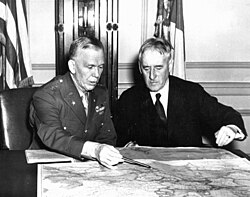
Army Chief of Staff Marshall with Secretary of War Henry Stimson

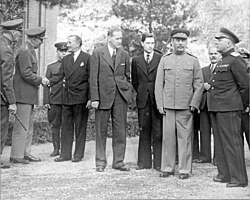
By December 1944, Marshall was promoted to General of the Army, the highest rank in the U.S. Army. His leadership extended beyond the U.S., as he coordinated with Allied leaders, including Winston Churchill and Joseph Stalin, at high-level summits such as the Tehran Conference.
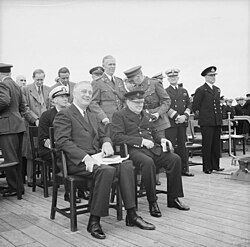
Marshall standing behind President Roosevelt and British prime minister Winston Churchill aboard the British battleship HMS Prince of Wales on 10 August 1941

Marshall with Joseph Stalin, Vyacheslav Molotov, and Harry Hopkins at the Tehran Conference in Iran, December 1943

Transition to Statesman: Secretary of State and Defense
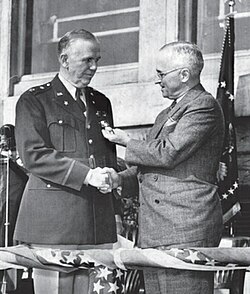
President Harry S. Truman awarding General Marshall an Oak Leaf Cluster to his Distinguished Service Medal on 26 November 1945

Following the war, President Harry S. Truman called upon Marshall for several critical diplomatic missions. He served as a Special Envoy to China from 1945 to 1947, attempting to mediate the Chinese Civil War.
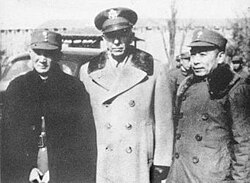
General Marshall with Zhang Zhizhong and Zhou Enlai in China, 1946

In January 1947, Marshall became the 50th U.S. Secretary of State. In this role, he delivered his famous speech at Harvard University introducing the Marshall Plan, a massive economic aid package designed to rebuild Western Europe and prevent the spread of communism.
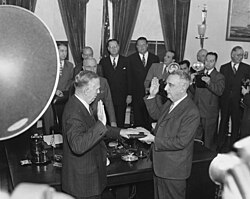
General Marshall being sworn in as Secretary of State by Chief Justice Fred Vinson in the Oval Office on 21 January 1947

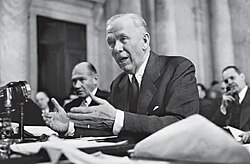
Secretary of State Marshall speaks to the House Appropriations Committee. 15 January 1948

Marshall's public service continued as the 3rd U.S. Secretary of Defense (1950–1951). During the Korean War, he was tasked with the difficult responsibility of overseeing the relief of General Douglas MacArthur, ensuring that civilian control of the military remained absolute.
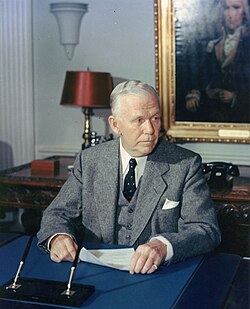
Secretary of Defense George C. Marshall in his office at the Pentagon

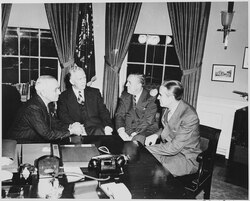
Secretary of Defense George C. Marshall discussing the Korean War with President Truman and Special Assistant to the President Averell Harriman in the Oval Office

Summary of Career Milestones

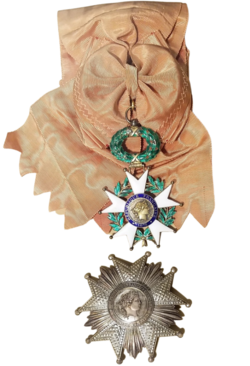
General Marshall's Grand Cross of the Legion of Honour (France)
Period Role/Position Key Achievement/Focus
1901–1939 Infantry Officer Service in Philippines, Mexico, and WWI Western Front.
1939–1945 Chief of Staff of the Army Expanded U.S. Army fortyfold for WWII.
1945–1947 Special Envoy to China Diplomatic mediation during the Chinese Civil War.
1947–1949 Secretary of State Initiated the Marshall Plan for European recovery.
1950–1951 Secretary of Defense Managed early Korean War operations and military leadership.

Later Life and Legacy

Former U.S. Army Marksmanship Badge for rifle.

After retiring from government service, Marshall remained active in public life. He served as the 10th President of the American Red Cross and the 2nd Chairman of the American Battle Monuments Commission. He spent his final years at Dodona Manor with his wife, Katherine.
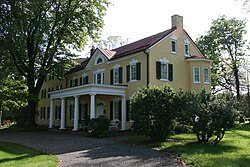
Dodona Manor, the 19th century home and gardens of George Marshall and his wife Katherine

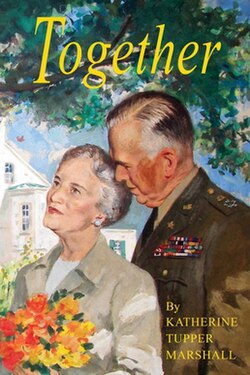
Cover of Together: Annals of an Army Wife, by Katherine Tupper Marshall. Published 1946.

General Marshall passed away on October 16, 1959, at the age of 78. He is buried at Arlington National Cemetery, leaving behind a legacy of integrity and selfless service.
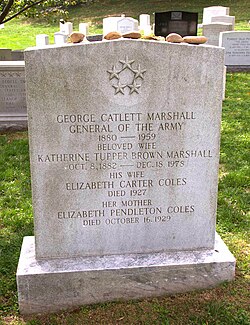
Grave site of George Marshall at Arlington National Cemetery

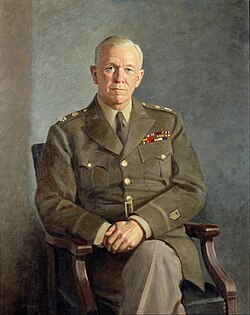
George Marshall portrait by Thomas E. Stephens (c. 1949)

Today, his influence persists through the Marshall Scholarships and the George C. Marshall European Center for Security Studies, ensuring that his commitment to peace and security continues to inspire future generations.
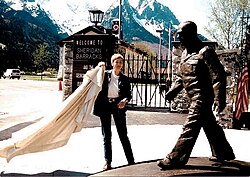
A statue of General Marshall is unveiled at the George C. Marshall European Center for Security Studies on 30 April 1998.

Frequently Asked Questions

Mexican Border Service Medal
Asiatic-Pacific Campaign Medal
Overseas Service Chevrons
Army Overseas Service Bar
ภาพประกอบบทความ
ภาพประกอบจากบทความต้นฉบับ
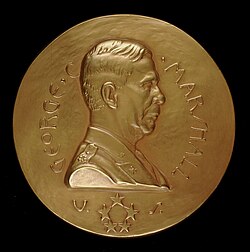
General Marshall's Congressional Gold Medal. Designed by Anthony de Francisci in 1946.

What was the Marshall Plan?

The Marshall Plan was an American initiative launched in 1947 to provide economic aid to Western Europe. Its goal was to rebuild war-torn economies, stabilize democratic governments, and prevent the spread of communism.

Why did George C. Marshall receive the Nobel Peace Prize?

Marshall was awarded the Nobel Peace Prize in 1953 in recognition of the Marshall Plan, which was seen as a monumental effort to foster peace and stability in post-WWII Europe.

What was Marshall's role in the Korean War?

As Secretary of Defense, Marshall managed the military response to the Korean War and was responsible for the relief of General Douglas MacArthur to maintain the principle of civilian authority over the military.

How did Marshall contribute to the U.S. Army before WWII?

As Chief of Staff, he expanded the Army's size fortyfold, modernized its training, and authored the guide Infantry in Battle to improve combat operations.

What was Marshall's highest military rank?

He achieved the rank of General of the Army, a five-star rank, which he attained in December 1944.