Geographic Regions: Defining the Earth's Spatial Divisions
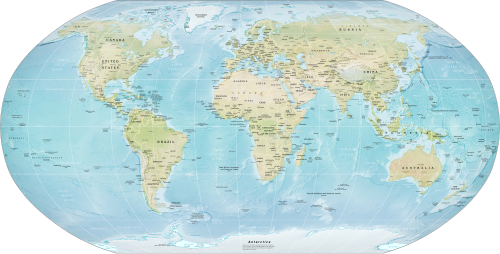
In the study of geography, a region (also referred to as an area, zone, land, or territory) is a portion of the Earth's surface defined by specific characteristics. These divisions allow scientists and historians to organize the vast complexity of the planet into manageable units based on physical traits, human impact, or the interaction between people and their environment.
While some regions have boundaries defined by law—such as national borders—many are described by imprecise or transitory boundaries. When a portion of the Earth is more confined or strictly bounded, it is typically referred to as a location or a place. The size of these regions is generally measured in hectares or square kilometres.
Key Facts
- Regional Geography is the specific branch of geography dedicated to studying regions of all sizes.
- Regions can be physical (based on nature), human (based on culture or politics), or functional (based on interactions).
- Global regions include not only land-based continents but also hydrospheric (oceanic) and atmospheric (climatic) zones.
- Administrative regions are formal legal divisions used by governments for governance and statistics.
- Functional regions are defined by internal cohesiveness and spatial flows rather than fixed borders.
Types of Geographic Regions
Physical and Environmental Regions
Physical geography, ecology, and biogeography define regions based on natural features. These include biomes (large naturally occurring communities of flora and fauna), drainage basins, mountain ranges, and soil types. Specialized terms include ecoregions in environmental geography and bioregions in biogeography.
Human and Cultural Regions
Human geography examines the patterns and processes shaping how people interact with their environments. This field is broad, encompassing various sub-disciplines such as demography, geopolitics, and urban geography. Cultural regions are often described through ethnography, the study of people and cultures.
Political and Administrative Regions
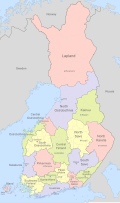
Political regions are based on sovereign states, subnational units (like provinces or counties), or multinational groupings such as the European Union and NATO. Administrative regions are formal divisions used by governments. For example, countries like France, Italy, and Chile use the term "region" for their primary subnational units.
Functional and Specialized Regions
A functional region is defined by horizontal relations, such as flows of people or goods, that are maximized within the region and minimized across its borders. Examples include local labour-market areas (LLMAs) or travel-to-work areas (TTWAs). Other specialized regions include:
- Tourism Regions: Areas designated by governments or bureaus to suggest a coherent visitor experience (e.g., Tuscany in Italy or the Lake District in the UK).
- Natural Resource Regions: Areas defined by the presence of specific materials, such as the Kuznetsk Basin in Russia or the Rumaila oil field.
- Religious Regions: Areas associated with a faith, ranging from broad terms like the "Muslim world" to formal ecclesiastical divisions like dioceses and parishes.
Regional Classifications Summary
| Region Type | Primary Basis | Examples |
|---|---|---|
| Physical | Natural features/Ecosystems | Amazon Basin, Sahara Desert |
| Political | Legal boundaries/Jurisdiction | Sovereign states, European Union |
| Functional | Spatial flows/Interactions | Metropolitan areas, Labour markets |
| Administrative | Governmental organization | French régions, US Congressional districts |
| Historical | Past human/spatial identity | Siberia, Rupert's Land |
Military Regions
In a military context, an Army Region is a formation larger than an Army Group but smaller than a Theater. These regions typically consist of 1 million to 3 million soldiers and are commanded by high-ranking officers such as a full General or Field Marshal. An example includes the various fronts in Europe during World War II.
Frequently Asked Questions
What is the difference between a region and a location?
A region is a broader area defined by shared characteristics and often has imprecise boundaries. A location or place refers to a more confined or well-bounded portion of the Earth's surface.
What is regional geography?
Regional geography is the branch of geography that focuses on studying regions of all sizes to understand the unique combination of natural and human elements that define a particular area.
How is a functional region different from a formal region?
While a formal region (like a state) has defined boundaries and shared traits, a functional region is defined by a system of interactions or flows—such as a city and its surrounding commuter zone—where the internal cohesiveness is the defining characteristic.
What are historical regions?
Historical regions are areas studied by historical geographers to see how places have changed over time or to identify regions that held a specific identity in the past, such as Iroquoia or the Russian North.
Can a region be both physical and economic?
Yes. For example, a coal region is physically defined by its geomorphology (the presence of coal), but the exploitation of those resources transforms it into an economic and cultural region.