Genus: The Essential Taxonomic Rank in Biological Classification
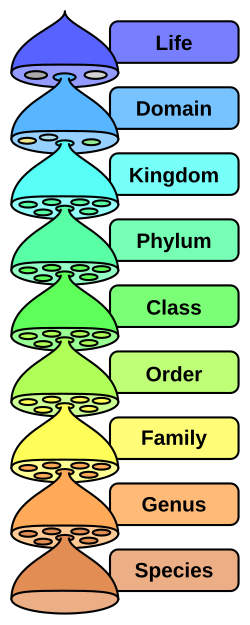
In the complex web of life, scientists use a standardized system to organize every living and fossil organism. At the heart of this system lies the genus, a critical taxonomic rank that sits above the species level and below the family level. Whether studying a microscopic virus or a massive mammal, the genus provides a vital grouping that helps biologists understand evolutionary relationships.
The concept of the genus is central to binomial nomenclature, the two-part naming system used globally. In this system, the genus name serves as the first component of an organism's scientific name. For example, while a lion is known as Panthera leo and a jaguar as Panthera onca, they both share the genus Panthera, which belongs to the larger family Felidae.
Etymology and Historical Foundations
The word "genus" is derived from Latin, meaning a noun cognate with gignere, which translates to "to bear" or "to give birth to." The modern scientific application of the term has deep historical roots. Joseph Pitton de Tournefort (1656–1708), a French botanist, is credited as the founder of the modern concept of genera. Later, the Swedish taxonomist Carl Linnaeus popularized its widespread use in his seminal 1753 work, Species Plantarum.
Nomenclature and Scientific Rules
In scientific writing, the name of a genus is referred to as the generic name. According to modern style guides, generic names must always be capitalized. The rules for citing these names vary depending on the field of study:
- Zoology: Names are often cited with their authority and year, such as Canis Linnaeus, 1758.
- Botany: Authors are typically represented by standard abbreviations, such as Hibiscus L.
- Viruses and Prokaryotes: Specific codes exist to manage the naming of these unique biological entities.
Available vs. Valid Names
Taxonomists distinguish between names that are "available" and those that are "valid." In zoology, an available name is one published according to the International Code of Zoological Nomenclature (ICZN). The earliest available name for a taxon is generally selected as the valid name. Names that do not meet publication standards are considered "unavailable."
Botany follows a similar logic but uses different terminology. A validly published name is the botanical equivalent of an available name, and the "correct name" serves as the equivalent to a valid name in zoology. When a name was historically used but is no longer the accepted term for a taxon, it is referred to as a synonym.
Homonyms and Identical Names
A strict rule in taxonomy is that within a single kingdom, one generic name can only apply to one genus. However, homonyms—names that are identical but apply to different taxa—can occur across different kingdoms. While discouraged, there are approximately five thousand such names in use. For instance, Anura is the name of an order of frogs, but it was also the name of a non-current genus of plants.
A famous example of a naming conflict involves the platypus. Originally named Platypus by George Shaw in 1799, the name was already in use for a group of beetles. To resolve this, Johann Friedrich Blumenbach published the replacement name Ornithorhynchus in 1800.
The Scale of Biological Diversity
The number of species contained within a single genus varies wildly across the tree of life. Some genera are massive, such as the flowering plant Astralagus, which contains over 3,000 species. Others are quite small; in the reptile kingdom, over 300 genera consist of only a single species.
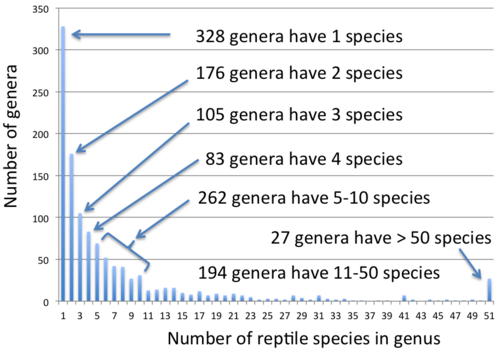
This variation leads to ongoing debate among scientists. Some argue that extremely large, species-rich genera should be split into smaller, more manageable groups to make identification easier. For example, the lizard genus Anolis, which contains roughly 400 species, has been suggested for division into several smaller genera.
Key Facts
- Position: The genus rank is located above species and below family.
- Nomenclature: The genus name is the first part of a binomial scientific name and must be capitalized.
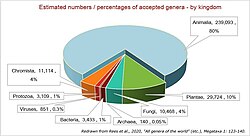
- Diversity: There are an estimated 310,000 accepted genus names globally.
- Variation: Genus size ranges from single-species groups to thousands of species (e.g., Astragalus).
- Rules: Different codes (ICZN for animals, ICN for plants) govern how names are validated.
Summary of Estimated Accepted Genera by Kingdom
| Kingdom | Estimated Accepted Genera |
|---|---|
| Animalia | 239,093 (± 55,350) |
| Plantae | 28,724 (± 7,721) |
| Chromista | 11,114 (± 1,268) |
| Fungi | 10,468 (± 182) |
| Bacteria | 3,433 (± 115) |
| Protozoa | 3,109 (± 1,206) |
| Viruses | 851 (± 0) |
| Archaea | 140 (± 0) |
Frequently Asked Questions
What is the difference between a genus and a species?
A genus is a higher taxonomic rank that groups closely related species together. A species is the specific level of classification below the genus.
Why are some genus names capitalized and others not?
In binomial nomenclature, the genus name (the first part of the scientific name) is always capitalized, while the specific epithet (the second part) is not.
Can two different animals have the same genus name?
No. Within the same kingdom, a single generic name can only apply to one genus. However, the same name can sometimes be used in different kingdoms (e.g., a plant and an animal).
What is a synonym in taxonomy?
A synonym is a name that has been applied to a taxon but is not currently considered the accepted or valid name for that organism.
How many genera are there in the world?
While the exact number is unknown, estimates suggest there are approximately 310,000 accepted genus names out of roughly 520,000 published names.