Gazania: The Vibrant South African Daisy and Its Global Impact
Known for their striking, sun-drenched petals, Gazania is a genus of flowering plants that brings a burst of color to any landscape. Belonging to the Asteraceae family—the same family as daisies and sunflowers—these plants are celebrated for their brilliant, daisy-like composite flowerheads. While they are beloved by gardeners for their resilience, their ability to thrive in harsh conditions has also led to them being classified as environmental weeds in several parts of the world.
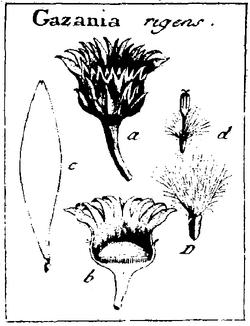
Key Facts
- Origin: Native to Southern Africa, ranging from low-altitude sands to alpine meadows.
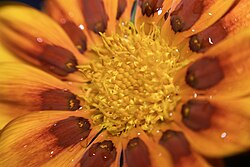
- Appearance: Large, daisy-like flowerheads in brilliant shades of yellow and orange.
- Growth Habit: Often used as a drought-tolerant groundcover.
- Classification: Part of the tribe Arctotideae and the subtribe Gorteriinae.
- Environmental Status: Considered an invasive species in parts of Australia, New Zealand, the Mediterranean, and California.
Taxonomic History and Scientific Classification
The genus was first formally described in 1791 by the German botanist Joseph Gaertner in his work De Fructibus et Seminibus Plantarum. Gaertner named the genus in honor of Theodorus Gaza, a 15th-century translator of the works of Theophrastus.
Taxonomically, Gazania is situated within the following hierarchy:
- Kingdom: Plantae
- Clade: Angiosperms (flowering plants)
- Order: Asterales
- Family: Asteraceae
- Subfamily: Vernonioideae
- Tribe: Arctotideae
- Subtribe: Gorteriinae
The classification of species within the genus has historically been complex. In 1959, Helmut Roessler recognized 16 species. However, a 2009 study using molecular phylogenetic analysis—a method of classifying organisms by examining their DNA sequences—revealed that many of these were actually part of a single species complex. This research identified seven distinct species: G. jurineifolia, G. caespitosa, G. ciliaris, G. tenuifolia, G. heterochaeta, G. schenckii, and G. lichtensteinii.
Distribution and Environmental Impact
In its native habitat, Gazania is found across South Africa, Mozambique, Tanzania, and Angola. It is highly adaptable, growing in environments ranging from coastal sands to high-altitude alpine meadows.
The Invasive Challenge in Australia
While originally imported to Australia in the 1950s and 1970s for their low-maintenance and drought-tolerant qualities, Gazania has become a significant environmental concern. Due to their ability to withstand harsh conditions and their wind-dispersed seeds, they have escaped gardens to naturalize along roadsides, coastlines, and native grasslands.
In Australia, the plant has invaded vast tracts of agricultural land and remote areas like the Mallee and Wimmera regions. Consequently, various subspecies are listed as environmental weeds in Victoria, Queensland, Tasmania, and New South Wales. While South Australia has banned the sale of these plants in nurseries, they remain available in other states, leading to calls for stricter national regulations.
Cultivation and Popular Varieties
For gardeners, Gazania offers spectacular color from late spring through summer and into autumn. They are ideal for sunny locations and can tolerate poor soil and dry conditions. In temperate climates, they are typically grown as half-hardy annuals.
Common Cultivars
There are two primary growth habits used in landscaping:
- Trailing Gazania (Gazania rigens var. leucolaena): A fast-growing variety used as groundcover for embankments or large areas. Popular cultivars include 'Sunburst', 'Sunglow', and 'Sunrise Yellow'.
- Clumping Gazania (Gazania rigens): A more compact variety with cultivars such as 'Aztec', 'Burgundy', 'Copper King', 'Fiesta Red', 'Goldrush', and 'Moonglow'.
Several cultivars have earned the prestigious Royal Horticultural Society (RHS) Award of Garden Merit, including G. 'Aztec', G. 'Cookei', and G. rigens 'Variegata'.
Summary of Gazania Characteristics
| Feature | Details |
|---|---|
| Native Region | Southern Africa |
| Preferred Light | Full Sun |
| Water Needs | Low (Drought-tolerant) |
| Flower Colors | Yellow, Orange, Red, Burgundy |
| Common Uses | Groundcover, Rock gardens, Embankments |
Frequently Asked Questions
What are the best conditions for growing Gazania?
Gazania thrives in sunny positions and is highly tolerant of poor soil and dry conditions, making it an excellent choice for low-maintenance gardens.
Why is Gazania considered a weed in some countries?
Because of its extreme tolerance to harsh environments and its ability to spread via wind-dispersed seeds, it can escape gardens and outcompete native vegetation in places like Australia and California.
Are Gazania plants perennials or annuals?
In temperate regions, they are usually grown as half-hardy annuals, though they are prized for their long blooming period from spring through autumn.
What is the difference between trailing and clumping Gazania?
Trailing varieties (var. leucolaena) grow quickly and are used to cover large areas or embankments, while clumping varieties (G. rigens) grow in more compact, distinct mounds.
Which Gazania cultivars are highly recommended?
Cultivars such as 'Aztec', 'Cookei', and 'Variegata' are highly regarded, having received the Royal Horticultural Society's Award of Garden Merit.