Gato Barbieri: The Argentine Trailblazer of Latin and Free Jazz
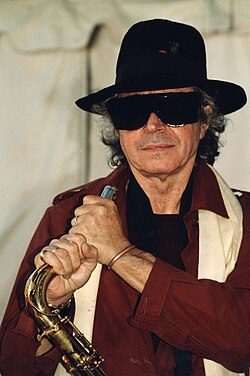
Leandro "Gato" Barbieri was a visionary Argentine tenor saxophonist whose career spanned over five decades. Known for his warm, gritty tone and an adventurous spirit, Barbieri bridged the gap between the experimental energy of free jazz—a style characterized by a break from traditional harmonic structures—and the rhythmic richness of Latin jazz. His nickname, "Gato," which is Spanish for "cat," became synonymous with a bold, emotive approach to the saxophone.
Key Facts
- Full Name: Leandro Barbieri
- Origin: Rosario, Santa Fe, Argentina
- Primary Instrument: Tenor saxophone
- Major Achievement: Grammy Award for the score of Last Tango in Paris (1972)
- Key Genres: Free jazz, Latin jazz, avant-garde, and smooth jazz
- Active Years: 1961–2016
Early Life and Musical Evolution
Born into a family of musicians, Barbieri's passion for the saxophone was ignited after hearing Charlie Parker's "Now's the Time." He initially played the clarinet and alto saxophone, performing with Argentine pianist Lalo Schifrin in the late 1950s. By the early 1960s, his journey took him to Rome, where he collaborated with trumpeter Don Cherry.
During this period, Barbieri was heavily influenced by the late recordings of John Coltrane and other avant-garde figures like Pharoah Sanders and Albert Ayler. This influence helped him cultivate the raw, powerful sound that would define his early career. By the late 1960s, he began integrating South American musical elements into his work, contributing to landmark projects such as Carla Bley's Escalator over the Hill and Charlie Haden's Liberation Music Orchestra.
Commercial Success and Cinematic Contributions
Barbieri's transition into the global spotlight was accelerated by his work in cinema. His evocative score for Bernardo Bertolucci's 1972 film Last Tango in Paris earned him a Grammy Award and secured him a recording contract with the prestigious Impulse! Records.
In the mid-1970s, Barbieri shifted his style toward soul-jazz and jazz-pop while recording for A&M Records. Under the production of Herb Alpert, he released Caliente! (1976), featuring his famous rendition of Carlos Santana's "Europa," and the follow-up album Ruby Ruby (1977).
Personal Struggles and Later Career
Despite his success, Barbieri's life was marked by personal tragedy. He married his first wife and manager, Michelle, in 1960. When she was diagnosed with cancer, Barbieri withdrew from the public eye and stopped touring and recording to care for her for ten years until her passing in 1995.
He eventually returned to music in the late 1990s. He composed scores for films such as Manhattan by Numbers (1991) and Seven Servants (1996), and released the smooth jazz-influenced album Qué Pasa (1997). Interestingly, Barbieri's unique style served as the inspiration for Zoot, a member of the fictional Muppet band Dr. Teeth and the Electric Mayhem.
Gato Barbieri passed away from pneumonia in New York City on April 2, 2016, at the age of 83.
Career Summary
| Period | Primary Style | Key Labels/Projects | Notable Work |
|---|---|---|---|
| 1960s | Free Jazz / Avant-Garde | ESP-Disk, Flying Dutchman | In Search of the Mystery |
| Early 1970s | Latin Jazz / Cinematic | United Artists, Impulse! | Last Tango in Paris |
| Mid-Late 1970s | Soul-Jazz / Jazz-Pop | A&M Records | Caliente! |
| 1990s-2010s | Smooth Jazz / Film Scores | Columbia | Qué Pasa |
Frequently Asked Questions
What instrument did Gato Barbieri play?
While he began his musical journey with the clarinet and alto saxophone, Gato Barbieri is most famous for playing the tenor saxophone.
Which movie score won Gato Barbieri a Grammy?
He won a Grammy Award for his work on the score for the 1972 film Last Tango in Paris.
What is the meaning of the name "Gato"?
"Gato" is the Spanish word for "cat."
Who inspired Gato Barbieri's musical style?
Barbieri was deeply influenced by Charlie Parker in his youth, and later by the late recordings of John Coltrane, as well as saxophonists Albert Ayler and Pharoah Sanders.
How did Gato Barbieri influence popular culture?
Beyond his music, Barbieri was the inspiration for the character Zoot in the Muppets' fictional band, Dr. Teeth and the Electric Mayhem.