Gabi Ashkenazi: A Comprehensive Look at His Military Career
Gabi Ashkenazi is a distinguished figure in Israeli military history, having risen through the ranks of the Israel Defense Forces (IDF) to serve as the Chief of the General Staff. His career spanned several decades, characterized by leadership during pivotal conflicts and a commitment to refining the operational capabilities of the Israeli military.
Early Service and the Golani Brigade (1972–1988)
Ashkenazi's military journey began in 1972 when he was conscripted into the IDF, joining the Golani Brigade, one of Israel's elite infantry units. He entered active combat during the 1973 Yom Kippur War in the Sinai Peninsula. By July 1976, he served as a platoon commander during Operation Thunderbolt—the mission to rescue hostages in Uganda—though he did not participate in the specific battle at Entebbe Airport.
His experience in Lebanon began in 1978 with Operation Litani. Although he was wounded during this operation and briefly left the service, he returned two years later as a battalion commander. During the 1982 Lebanon War, Ashkenazi served as the Deputy Commander of the Golani Brigade, leading the forces that captured Jabel Baruch, Nabatieh, and Beaufort Castle. He eventually rose to lead the Golani Brigade as its Commander in 1987, where he was noted for his popularity among combat soldiers.
Leadership in the Northern Command (1988–2002)
Transitioning into higher strategic roles, Ashkenazi was appointed head of Intelligence for the Israeli Northern Command in 1988. His subsequent roles included commanding a reserve armor division in the early 1990s and serving as the chief of Israel's civil administration in Lebanon. In 1994, he was promoted to chief of the General Staff's Operations Directorate.
By 1998, Ashkenazi took command of the Northern Command. In this capacity, he managed the complex process of Israel's withdrawal from its Security Zone in Southern Lebanon, ending an 18-year presence. Ashkenazi was critical of the withdrawal process, arguing that it should have been paired with diplomatic negotiations with Syria.
Deputy Chief of Staff and the West Bank Barrier (2002–2005)
In 2002, Ashkenazi was appointed Deputy Chief of Staff. During the Al-Aqsa Intifada—a period of intense Palestinian uprising—he was regarded by media outlets like Haaretz as the most moderate member of the General Staff. He was tasked with overseeing the construction of the West Bank barrier, designed to separate Israeli and Palestinian communities to prevent terrorist attacks. Ashkenazi advocated for the barrier to be built as close to the Green Line (the 1949 Armistice line) as possible to minimize the impact on Palestinian populations.
During this period, he expressed concerns regarding the "loss of humanity" among soldiers due to prolonged warfare. Despite being a top candidate for Chief of Staff in 2005, Defense Minister Shaul Mofaz selected Dan Halutz. Consequently, Ashkenazi retired from the IDF in May 2005 to enter the private sector as a partner in a Tel Aviv security consultancy.
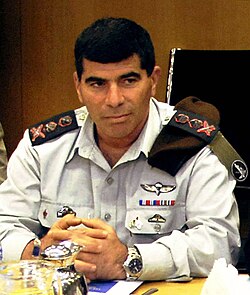
Return to Service: Ministry of Defense and Chief of Staff (2006–2011)
Ashkenazi's retirement was short-lived. In 2006, Defense Minister Amir Peretz appointed him as the Director-General of the Ministry of Defense. During the 2006 Israel-Lebanon conflict, Ashkenazi served as the primary advisor to the Minister, with reports suggesting his proficiency was instrumental to the ministry's operations.
On February 14, 2007, Ashkenazi reached the highest rank of Rav Aluf (Lieutenant General) upon becoming the Chief of the General Staff. His tenure focused heavily on correcting the systemic weaknesses exposed during the Second Lebanon War. He implemented rigorous military exercises and intensive training to restore basic skills and coordinate large-scale, multi-corps operations.
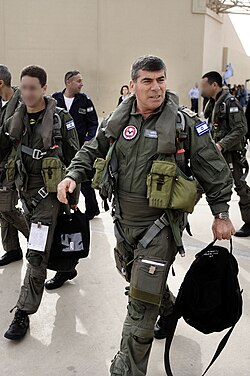
His leadership included several high-stakes operations and diplomatic engagements:
- International Diplomacy: In December 2007, he held the first meeting between an Israeli chief of staff and the U.S. Chairman of the Joint Chiefs of Staff, Admiral Michael Mullen, in a decade. He was later awarded the Legion of Merit (Commander rank) by the U.S.
- Operation Hot Winter (2008): A two-day engagement against terrorist organizations in Gaza that resulted in a truce with Hamas.
- Operation Cast Lead (2008–2009): A major offensive against Hamas and other Palestinian forces in the Gaza Strip.
Notably, in 2010, Ashkenazi and other security chiefs opposed a proposed military strike on Iran, a stance that influenced Prime Minister Benjamin Netanyahu's decision not to order the attack.
Post-Military Perspectives
After retiring in February 2011 and being succeeded by Benny Gantz, Ashkenazi continued to comment on regional security. In 2013, he urged Western nations to provide "lethal assistance" to opposition forces in the Syrian civil war following reports of chemical weapons use by President Bashar al-Assad's regime, arguing that earlier intervention might have saved lives.
Key Facts
- Highest Rank: Rav Aluf (Lieutenant General).
- Key Commands: Golani Brigade, Northern Command, and Chief of the General Staff.
- Major Operations: Operation Thunderbolt, Operation Litani, Operation Hot Winter, and Operation Cast Lead.
- Strategic Focus: Emphasized intensive training and multi-corps exercises to fix IDF weaknesses post-2006.
- Diplomatic Milestone: First Israeli Chief of Staff in ten years to meet his U.S. counterpart.
| Period | Role/Position | Key Focus/Event |
|---|---|---|
| 1972–1988 | Golani Brigade | Yom Kippur War, Operation Thunderbolt, 1982 Lebanon War |
| 1988–2002 | Northern Command / Operations | Intelligence, Civil Administration in Lebanon, Security Zone withdrawal |
| 2002–2005 | Deputy Chief of Staff | West Bank barrier construction, Al-Aqsa Intifada |
| 2006 | Director-General, Ministry of Defense | 2006 Israel-Lebanon conflict |
| 2007–2011 | Chief of the General Staff | Operation Cast Lead, IDF restructuring, U.S. military relations |
Frequently Asked Questions
What was Gabi Ashkenazi's role in the West Bank barrier project?
As Deputy Chief of Staff, Ashkenazi was in charge of the project and advocated for the barrier to be built as close to the Green Line as possible to minimize the negative impact on Palestinian communities.
Which major operations did Ashkenazi lead as Chief of the General Staff?
He commanded Operation Hot Winter in February 2008 and Operation Cast Lead between late 2008 and early 2009.
How did Ashkenazi approach IDF training after the Second Lebanon War?
He focused on fixing faults and weaknesses by implementing intensive military trainings and large multi-corps exercises, ranging from basic skill restoration to full brigade maneuvers.
Did Gabi Ashkenazi support a military strike on Iran?
No. In 2010, Ashkenazi and other security chiefs steadfastly opposed a military strike on Iran, which contributed to Prime Minister Benjamin Netanyahu's decision not to proceed.
What was Ashkenazi's view on the withdrawal from Southern Lebanon?
While he was responsible for the withdrawal as head of the Northern Command, he criticized the move, believing it should have been accompanied by negotiations with Syria.