Fulbeck Hall: A Legacy of the Fane Family
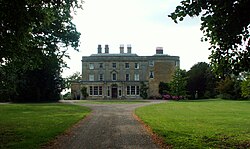
Fulbeck Hall stands as a testament to centuries of English history, serving as the ancestral home of the Fane family since 1632. While the estate has undergone numerous transformations, it remains a site of significant architectural and military importance, blending the grandeur of the 18th century with remnants of its Tudor origins.
The current structure is primarily designed in a classically inspired 18th-century style. However, the hall's deeper history is visible in the Tudor wing located at the rear and the expansive Tudor cellars that have survived multiple rebuilds.
Ownership and Architectural Evolution
The story of Fulbeck Hall began in 1622 when it was purchased by Francis Fane, the 1st Earl of Westmorland. The property was acquired from Sir George Manners, who continued to live there until 1632, when he became the 7th Earl of Rutland. Following this, the hall passed to the Earl's son, Sir Francis Fane, a Royalist and commander of the King's forces at Lincoln and Doncaster.
The estate's history was marked by political turbulence during the Commonwealth period, when the property was confiscated. Sir Francis Fane eventually bought the estate back. Before the Restoration of Charles II in 1660, Sir Francis and his wife, Elizabeth Darcy, spent considerable time rebuilding the hall in the Restoration style (an architectural transition following the return of the monarchy).
Disaster struck on December 30, 1731, when the hall was burned down. It was rebuilt between 1732 and 1733, though the early 17th-century cellars and back wings were preserved.
Prominent Figures and Political Ties
The Fane family's connections extended into the highest circles of political and intellectual life. Sir Francis Fane (the second of Fulbeck) married Hannah Rushworth, the daughter of John Rushworth. Rushworth was a historian and private secretary to Oliver Cromwell who is credited with drafting the Bill that established England as a Republic. His writings later influenced Thomas Jefferson during the drafting of the American Declaration of Independence.
By 1767, the hall passed to Henry Fane of Brympton, a successful Bristol privateer. His eldest son, Thomas Fane, the 8th Earl of Westmorland, eventually became one of England's wealthiest landowners by inheriting estates from both his father and his cousin. In 1783, the hall was left to the Hon Henry Fane MP, who served as the Keeper of the King's Private Roads, Gates and Bridges.
Military Contributions and Global Impact
The 19th century saw the hall inhabited by distinguished military leaders, including General Sir Henry Fane, the Commander-in-Chief in India, and his brother General Mildmay Fane. The family's military legacy continued with General Walter Fane, who raised Fane's Horse, a volunteer regiment that fought in the Second Opium War in China. This regiment continues to exist today as part of the Pakistan armed forces.
Another relative, Colonel Francis Fane of Fulbeck Manor, raised the Peshawar Light Horse in 1857 to fight during the Indian Mutiny, though this unit was disbanded in 1903.
World War II and the Arnhem Museum
During the Second World War (1939–1945), the British Armed Forces requisitioned Fulbeck Hall. It served as the base for the 1st Airborne Division before the troops departed the United Kingdom for the Battle of Arnhem. To honor this history, the house now hosts the Arnhem Museum, which commemorates the soldiers who were stationed there.
In October 2002, the contents of the hall were sold via Sotheby's. The sale included significant historical mementos and letters from the Duke of Wellington addressed to Lady Georgiana Fane and Harriet Fane (the diarist known as Mrs Arbuthnot).
Key Facts
- Family Ownership: Home to the Fane family since 1632.
- Architecture: 18th-century classical style with surviving Tudor wings and cellars.
- Military Legacy: Base for the 1st Airborne Division prior to the Battle of Arnhem.
- Global Connection: Fane's Horse, raised by General Walter Fane, remains part of Pakistan's military.
- Intellectual Link: Connection to John Rushworth, whose work influenced the US Declaration of Independence.
| Period/Date | Key Event/Figure | Significance |
|---|---|---|
| 1622 | Francis Fane, 1st Earl of Westmorland | Initial purchase of the hall. |
| 1731–1733 | Great Fire and Rebuild | Hall burned down; rebuilt in classical style. |
| 19th Century | General Sir Henry & General Walter Fane | Military leadership in India and China. |
| 1939–1945 | 1st Airborne Division | Requisitioned for WWII operations. |
| 2002 | Sotheby's Auction | Sale of hall contents, including Wellington letters. |
Frequently Asked Questions
What is the architectural style of Fulbeck Hall?
The hall is primarily built in a classically inspired 18th-century style, though it retains a Tudor wing and large Tudor cellars from the early 17th century.
Who was the 1st Airborne Division and why were they at Fulbeck Hall?
The 1st Airborne Division was a British elite unit that used Fulbeck Hall as their location and base of operations before deploying to the United Kingdom for the Battle of Arnhem during World War II.
What is the connection between Fulbeck Hall and the United States?
Sir Francis Fane married Hannah Rushworth, daughter of John Rushworth. Rushworth's historical works and writings were used by Thomas Jefferson when drafting the American Declaration of Independence.
Does any part of the Fane family's military legacy still exist?
Yes, Fane's Horse, a regiment of volunteers raised by General Walter Fane for the Second Opium War, still exists as part of the armed forces of Pakistan.
What happened to the contents of the house?
The contents of Fulbeck Hall, including personal letters from the Duke of Wellington to Harriet and Lady Georgiana Fane, were sold by Sotheby's in October 2002.