French Mandate for Syria and the Lebanon (1923–1946)
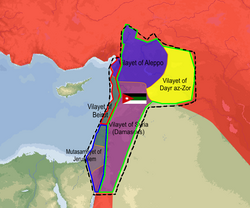
Following the end of World War I in 1918, the geopolitical landscape of the Middle East was reshaped by the Sykes–Picot Agreement, a secret pact between the United Kingdom and France. While the British assumed control over Ottoman Iraq and the southern regions of Ottoman Syria (modern-day Israel, Palestine, and Jordan), the French took control of the remaining territories, including Lebanon and Alexandretta. This arrangement was formalized in the early 1920s through the League of Nations mandate system.
On September 29, 1923, France was officially assigned the mandate for Syria, which at the time encompassed the territories of modern Syria, Lebanon, and Alexandretta. The administration was overseen by the Permanent Mandates Commission (PMC), which allowed other member states to provide input on economic and administrative management.
Key Facts
- Duration: The mandate lasted from 1923 until 1946.
- Governing Body: Administered by France under the supervision of the League of Nations.
- Territorial Split: The region was divided into several states, including Greater Lebanon, the Alawite State, and Jabal Druze.
- Independence: Both Syria and Lebanon declared independence during World War II, with French troops finally departing in 1946.
- Key Figure: General Henri Gouraud served as the first High Commissioner.
Administrative Evolution and State Creation
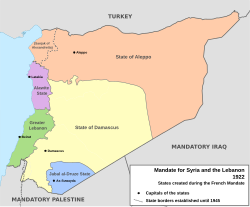
The French administration did not govern the region as a single entity but instead subdivided it into various states and territories to manage diverse ethnic and religious populations. This fragmented approach evolved through several phases, including the Syrian Federation (1922–1924), the State of Syria (1925–1930), and the Mandatory Syrian Republic (1930–1946).
The State of Greater Lebanon
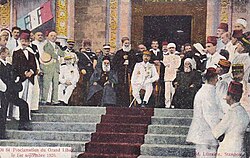
Established on September 1, 1920, the State of Greater Lebanon was proclaimed by General Gouraud in Beirut. The borders were based on a template from 1862 and expanded the previous Autonomous Territory of Lebanon by adding the cazas (districts) of Hasbaya, Rachaya, Maallaka, and Baalbeck. The French decree explicitly stated that Lebanon would be treated separately from the rest of Syria.
The Alawite State
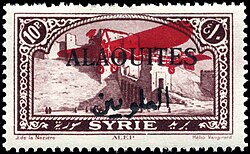
Located on the Syrian coast with its capital at Latakia, the Alawite State was home to a majority of Alawites (a branch of Shia Islam). Originally an autonomous territory, it joined the Syrian Federation in 1922 before becoming an independent state again in 1924. It was later renamed the Independent Government of Latakia in 1930 before finally joining the Syrian Republic on December 5, 1936.
The State of Syria: Aleppo and Damascus
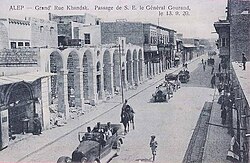
The interior was initially split into the State of Aleppo and the State of Damascus. The State of Aleppo, which included the fertile Euphrates basin, was predominantly Sunni Muslim but featured significant Christian, Jewish, Kurdish, and Assyrian minorities. These two states were eventually unified into a single "State of Syria" on January 1, 1925.
Sanjak of Alexandretta and Jabal Druze
The Sanjak of Alexandretta held a special administrative status and was attached to the State of Aleppo in 1923. By 1937, it became "distinct but not separated" from the mandate, eventually becoming the Hatay State and being annexed by Turkey in 1939. Meanwhile, the Autonomous State of Jabal Druze was established in October 1922 to accommodate the Druze population.
Regional Demographics and Minorities
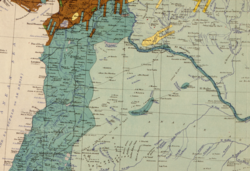
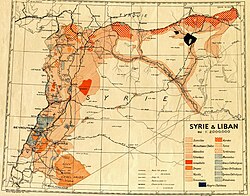
The region was a complex mosaic of ethnicities and religions. In the Golan Region and Al-Jazira province, communities of Circassians, Assyrians, Kurds, and Bedouins resided. In 1938, Circassian leaders sought special autonomy for the Golan region, fearing the rise of nationalist Arab governments, but the French authorities denied these requests.
Economic Integration and Trade
France focused heavily on developing the agricultural sector, specifically cotton cultivation in the Alawite State and North-East Syria. To prevent economic collapse caused by new borders, Britain and France established a customs-free zone in 1921, allowing goods to move freely between their respective mandates.

By 1933, Palestine had become the largest importer of Syrian goods. While France remained the primary trading partner for the mandate territories, Japan emerged as a significant source of imports starting in the 1930s.
| State/Entity | Period | Key Characteristic/Outcome |
|---|---|---|
| Greater Lebanon | 1920–1946 | Became the modern country of Lebanon |
| Alawite State | 1920–1936 | Capital: Latakia; joined Syrian Republic in 1936 |
| Jabal Druze | 1921–1936 | Autonomous state for the Druze population |
| Sanjak of Alexandretta | 1921–1939 | Became Hatay State; annexed by Turkey in 1939 |
| State of Syria | 1925–1930 | Unified the previous states of Aleppo and Damascus |
Frequently Asked Questions
What was the purpose of the French Mandate?
The mandate was established by the League of Nations to provide administrative oversight of the former Ottoman territories of Syria and Lebanon, transitioning them toward eventual independence under French guidance.
How did the borders of Greater Lebanon come to be?
The borders were defined by General Gouraud in 1920, using an 1862 map as a template and incorporating several districts (cazas) to separate Lebanon's administration from the rest of Syria.
What happened to the Sanjak of Alexandretta?
After maintaining a special autonomous status within the mandate, it became the Hatay State in 1938 and was subsequently annexed by Turkey in 1939.
When did Syria and Lebanon finally achieve independence?
Both nations declared their independence during World War II, and the mandate officially ended when French troops departed the region in 1946.
What was the economic focus of the French administration?
The French prioritized the agricultural sector, particularly the cultivation of cotton in the Alawite State and North-East Syria, while maintaining a customs-free trade zone with British-mandated territories.