Alawite State: The History of the French Mandate Territory (1920–1936)
The Alawite State (Arabic: Dawlat Jabal al-‘Alawiyy&in); French: État des Alaouites) was a French mandate territory located along the coast of present-day Syria. Established after World War I, it existed in various administrative forms between 1920 and 1936. Originally known as the Territory of the Alawites, it was created to provide autonomy to the Alawite population—followers of Ali—during a period of intense geopolitical restructuring in the Levant.
The state's existence was defined by the tension between French colonial strategy, which sought to divide the region into smaller, heterogeneous units, and the growing pan-Arab nationalist movement that desired a unified Syrian state.
Key Facts
- Duration: 1920 to 1936.
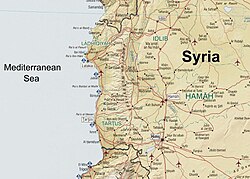
- Location: Coastal and mountainous region of modern Syria, primarily the Latakia and Tartus Governorates.
- Administration: Managed under the French Mandate for Syria and Lebanon.
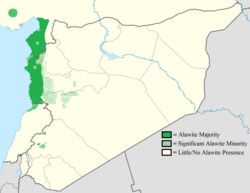
- Demographics: Predominantly rural, with Alawites making up 82% of the rural population.
- Official Languages: French and Arabic.
- Final Status: Incorporated into the Syrian Republic on December 3, 1936.
Geography and Demographics
The Alawite State was characterized by its coastal plains and the rugged An-Nusayriyah Mountains. Its borders extended from the Eastern Mediterranean in the west to the Orontes River in the east, bordering Greater Lebanon to the south and the Sanjak of Alexandretta to the north.
The society was deeply divided by both geography and religion. While the rural interior was overwhelmingly Alawite, the urban centers—most notably the port city of Latakia—were dominated by Sunni Muslims, who held the majority of the landowning power. In Latakia, approximately 80% of the population was Sunni.
The Path to Establishment (1918–1922)
Following the collapse of the Ottoman Empire after the Armistice of Mudros in 1918, France and Britain vied for control of the region. By 1920, the Allied Supreme Council granted the French Republic the Mandate for Syria and the Lebanon. General Gouraud was appointed as the high commissioner and commander-in-chief.
To counter the pan-Arab nationalism led by King Faisal I, the French divided the mandate into several autonomous states. On September 2, 1920, the "Territory of the Alawites" was created. The French justified this separation by citing the distinct religious identity and perceived "backwardness" of the mountain-dwelling Alawites, claiming the move would protect them from more powerful majorities.
Early Resistance
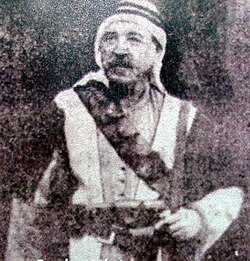
French rule was not universally accepted. Salih al-Ali led a revolt in the Alawi region starting in 1919. While al-Ali's motivations were primarily focused on protecting Alawite autonomy from external interference rather than broad nationalism, his forces raided French outposts for two years before surrendering in October 1921.
Administrative Evolution and the Great Syrian Revolt
Between 1922 and 1924, the French transitioned the territory toward a more structured state. In 1923, representative councils were elected. Unlike the nationalist strongholds of Damascus and Aleppo, the Alawite State saw a high voter turnout (77%), with the majority electing pro-French representatives who preferred alignment with Lebanon over Syrian unification.
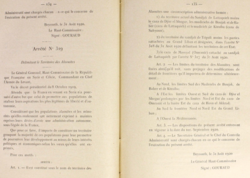
In 1924, General Maxime Weygand issued a decree establishing the Alawite State as an independent entity effective January 1, 1925.
The Great Syrian Revolt (1925–1927)
While the Great Syrian Revolt swept through the states of Damascus and Aleppo, the Alawite territory remained largely uninvolved. This lack of participation was driven by several factors:
- Class Conflict: Alawite peasants harbored resentment toward the Sunni landlords who dominated the urban economy.
- Social Structure: Alawite society was fragmented by tribal and spiritual loyalties.
- French Incentives: Many Alawite men joined the troupes speciales (special troops), using French military service as a means of social advancement.
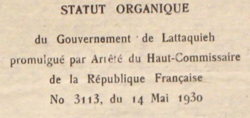
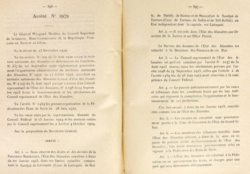
In 1930, the state was renamed the Government of Latakia as a minor concession to Arab nationalists.

Dissolution and Legacy
The Alawite State was officially incorporated into the Syrian Republic on December 3, 1936. This was a result of negotiations between France and the Nationalist Bloc. Due to internal tribal factionalism and the economic dominance of the Sunni class, there was little organized resistance to the merger.
Long-term Impact
The French policy of recruiting minorities into the military had a lasting effect. The Syrian army, inherited from the French Mandate Levant Army, was heavily composed of Alawites, Druze, and rural Kurds. This military influence eventually paved the way for Alawite dominance in the Syrian government during the 1960s, including the presidencies of Hafez al-Assad and Bashar al-Assad.
Modern Context
During the Syrian Civil War (2011–2024), the historical boundaries of the Alawite State were again discussed. Following the fall of the Assad regime in December 2024, some analysts speculated about a Russian-backed revival of an Alawite state in the Latakia and Tartous Governorates, though no formal national redoubt materialized.
Summary of the Alawite State
| Feature | Details |
|---|---|
| Initial Name | Territory of the Alawites (1920) |
| Final Name | Government of Latakia (1930) |
| Key Cities | Latakia (Capital), Tartus |
| Primary Religions | Alawism, Sunni Islam, Christianity, Ismailism |
| Governing Power | French Mandate |
| Successor State | Syrian Republic |
Frequently Asked Questions
Why did France create the Alawite State?
France created the state to grant autonomy to the Alawite minority and to prevent the spread of pan-Arab nationalism. By dividing the territory into smaller, sectarian-based states, France aimed to weaken the movement for a unified Syria.
What was the demographic makeup of the region?
The region was predominantly rural, with Alawites making up 82% of the rural population. However, the urban centers, particularly Latakia, were majority Sunni Muslim (approximately 80%).
Who was Salih al-Ali?
Salih al-Ali was a leader of the Syrian Revolt of 1919 in the Alawite region. His goal was to protect Alawite autonomy from external interference, and he led raids against French forces until 1921.
Why didn't Alawites join the Great Syrian Revolt?
Alawites largely avoided the revolt due to long-standing economic resentment toward Sunni landlords, a fragmented tribal social structure, and the opportunities for social advancement provided by joining the French military.
How did the Alawite State influence modern Syria?
The French practice of recruiting Alawites into the military created a power base within the army. This eventually allowed Alawites to dominate the officer corps and the government starting in the 1960s.