French Argentines: History, Immigration, and Cultural Legacy
The French Argentines (Spanish: franco-argentinos) comprise a significant portion of Argentina's diverse demographic tapestry. This group includes Argentine citizens of full or partial French or French Basque ancestry, as well as French nationals residing in Argentina. Following the massive waves of Italian and Spanish immigration, the French community stands as one of the largest ancestry groups in the country.
It is estimated that approximately 8 million Argentines—roughly 17% of the total population—possess some degree of French ancestry. Between 1857 and 1960, roughly 400,000 French citizens immigrated to Argentina, with additional growth coming from French populations already settled in neighboring Uruguay as early as the 1840s.
Key Facts
- Population: Approximately 8 million people with French ancestry (17% of Argentina's population).
- Immigration Peak: The most significant influx occurred between 1857 and 1890.
- Primary Origins: Southwestern France, particularly the Basque Country, Béarn, Bigorre, and Rouergue.
- Cultural Hubs: Significant presence in Buenos Aires, Santa Fe, Entre Ríos, Córdoba, Mendoza, and Tucumán.
- Notable Influence: Strong impact on the Argentine elite, architecture, and the Lunfardo dialect.
The Waves of French Immigration
French migration to Argentina evolved through three distinct phases, shaped by political climates and economic shifts in both Europe and South America.
Early Migration and the Fall of Rosas (1810–1852)
In the early 19th century, French immigration was minimal. In 1810, Buenos Aires counted only 13 French citizens. Early arrivals were primarily political exiles and former imperial army officers. During the era of Juan Manuel de Rosas, a xenophobic climate and strained relations between the French government and Rosas pushed many French immigrants toward Uruguay instead. However, after the fall of Rosas in 1852, Argentina became the primary destination for French migrants in Latin America.
The Golden Age of Immigration (1852–1890)
During this period, French immigration mirrored the mass movements of Italians and Spaniards. The French were the largest immigrant group in Argentina until 1854. By 1861, nearly 30,000 French citizens were registered in the country, with about 7.5% of Buenos Aires' population being French. A peak occurred in 1873, and another surge happened in the late 1880s when the Argentine government distributed 45,000 free travel tickets in France to diversify the immigrant population and reduce the dominance of Italian migration.
Stabilization and Decline (1890–1960)
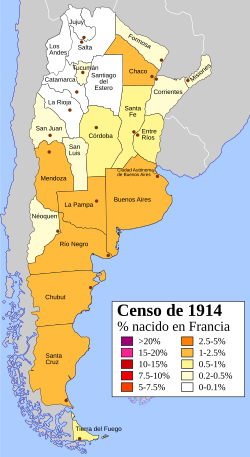
From 1890 to 1914, the nature of immigration shifted. While still significant, the net migration rate decreased. By 1912, Argentina hosted 100,000 French nationals, representing 67% of all French residents in Latin America. Following World War I, the flow dropped sharply to about 1,500 people per year. The final major migration occurred in the 1960s, when approximately 4,000 Pieds-Noirs (French settlers from Algeria) arrived following Algerian independence.
Regional Settlement and Colonies
French immigrants settled throughout Argentina, though they were most concentrated in the Pampas and major urban centers. Many rural immigrants from Southwestern France sought land, leading to the establishment of specific colonies.
Agricultural and Cultural Centers
- San José: Founded in 1857 by Alejo Peyret in Entre Ríos, this farming colony included a large number of families from Savoy.
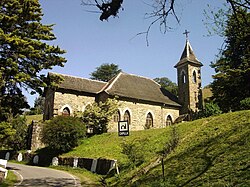
- Pigüé: Founded in 1884 by Occitan-speaking immigrants from Rouergue, Pigüé remains a focal point of French culture. Many residents still trace their roots to Aveyron and speak Occitan.
- Mendoza: French immigrants were pivotal in the wine industry, particularly in the departments of Maipú and Luján, and the colony of San Rafael founded by Julio Gerónimo Balloffet.
Cultural and Architectural Legacy
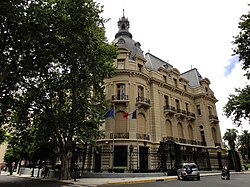
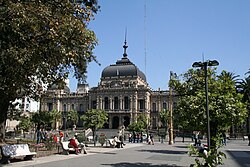
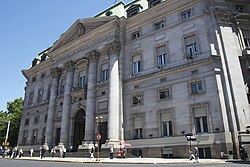
The French influence is deeply embedded in Argentina's urban landscape and language. The Argentine elite of the late 19th and early 20th centuries were heavily influenced by French culture, which is reflected in the prevalence of Beaux-Arts architecture—a neoclassical style characterized by symmetry and ornate decoration.
Influence on Lunfardo
Lunfardo, the slang dialect of Buenos Aires, contains numerous loanwords from French. These terms often relate to daily life, food, and social interactions.
| Lunfardo Term | French Origin | Meaning |
|---|---|---|
| Beguén | Béguin | Crush |
| Buyón | Bouillon | Food |
| Calotear | Calotter | To steal |
| Dragonear | Draguer | To flirt |
| Ragú | Ragoût | Hunger |
| Toilette | Toilettes | Bathroom |
Frequently Asked Questions
What percentage of Argentines have French ancestry?
It is estimated that up to 17% of the Argentine population, or approximately 8 million people, have some degree of French ancestry.
Which regions of France did most immigrants come from?
About half of the immigrants arrived from Southwestern France, with the highest concentrations coming from the Basque Country, Béarn, Bigorre, and Rouergue.
What is the significance of the town of Pigüé?
Pigüé is considered a center of French culture in Argentina, founded by Occitan-speaking immigrants. A significant portion of its modern population still maintains roots in the Aveyron region of France.
How did the French influence Argentine architecture?
The French influence is most visible in the Beaux-Arts style palaces found in cities like Buenos Aires and Tucumán, reflecting the cultural preferences of the Argentine elite during the late 19th century.
Who were the Pieds-Noirs?
The Pieds-Noirs were French settlers from Algeria who immigrated to Argentina in the 1960s following Algeria's independence, marking the last large wave of French migration to the country.