Freeman Dyson: The Visionary Physicist and Mathematical Maverick
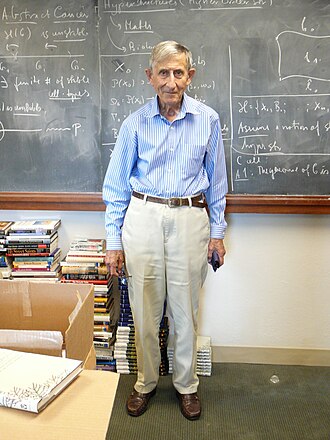
Freeman Dyson (1923–2020) was a towering figure in 20th-century science, a British-American theoretical physicist and mathematician whose intellect spanned an extraordinary array of disciplines. From the microscopic intricacies of quantum field theory to the cosmic scale of interstellar propulsion, Dyson's work was characterized by a restless curiosity and a willingness to challenge established scientific consensus.
Throughout his career, Dyson served as a professor emeritus at the Institute for Advanced Study in Princeton and contributed significantly to astrophysics, nuclear physics, and condensed matter physics. He was not merely a calculator of equations but a philosopher of science who pondered the intersection of faith, ethics, and the future of humanity.
Key Facts
- Multidisciplinary Expertise: Contributed to quantum electrodynamics, random matrix theory, and the stability of matter.
- Cosmic Visions: Conceptualized the Dyson sphere, a hypothetical megastructure to capture a star's energy.
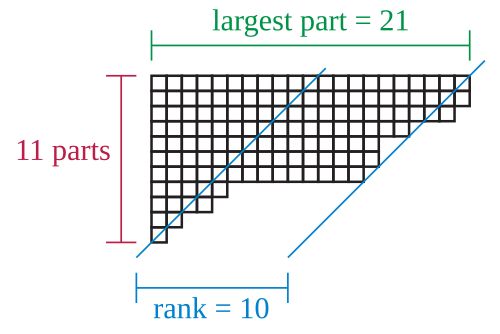
- Mathematical Innovation: Developed key concepts in the theory of partitions, including the rank and crank.
- Nuclear Advocacy: A prominent advocate against nuclear weapons and a member of the Bulletin of the Atomic Scientists.
- Academic Pedigree: Educated at Trinity College, Cambridge, and Cornell University.
Early Life and Academic Foundations
Born in Crowthorne, Berkshire, England, Dyson's intellectual journey began early. A scholar at Winchester College from 1936 to 1941, he entered Trinity College, Cambridge, at the age of 15 on a scholarship to study pure mathematics under the tutelage of Abram Besicovitch. His youth was marked by a blend of rigorous academic pursuit and adventurous spirit, famously including night climbing on university buildings and a one-day walk from Cambridge to London with his friend Oscar Hahn.
Scientific Contributions and Theoretical Breakthroughs
Dyson's professional legacy is defined by his ability to find connections between seemingly unrelated fields. One of his most striking achievements occurred in 1973 during a collaboration with number theorist Hugh Lowell Montgomery. Dyson recognized that Montgomery's pair correlation conjecture regarding the zeros of the Riemann zeta function matched the pair correlation function of the Gaussian unitary ensemble—a tool used in mathematical physics.
This discovery suggested a profound and unexpected link between the distribution of prime numbers and the energy levels found in the nuclei of heavy elements, such as uranium.
Mathematics of Partitions
In the realm of number theory, Dyson made lasting marks on the theory of partitions. He introduced the concepts of the rank and crank of a partition, providing deeper insights into how integers can be broken down into sums of positive integers.
Astrophysics and the Dyson Sphere
Perhaps his most famous conceptual contribution is the Dyson sphere. This theoretical construct involves a swarm of self-replicating machines or rings that surround a star to capture its total energy output, providing a potential signature for detecting advanced extraterrestrial civilizations.

Engineering and Space Exploration
Dyson's interests extended into practical (and sometimes radical) engineering. He was involved in Project Orion, which explored the possibility of spacecraft propelled by nuclear pulse propulsion, and the development of the TRIGA (Training, Research, Isotopes, General Atomics) reactor. His visions for the future included the "Dyson tree" and various models for space colonies and interstellar transport.
Philosophical Views and Public Advocacy
Dyson was known as a "civil heretic" who often diverged from the scientific mainstream. He was a vocal skeptic of the simulation models used to predict climate change, arguing that the benefits of increased CO2—such as higher agricultural yields—were underestimated and that other global priorities were being neglected.
His views on religion and science were equally nuanced. A non-denominational Christian, Dyson accepted the Templeton Prize in 2000, sparking a public debate with evolutionary biologist Richard Dawkins. Dyson argued against the dogmatism of both religious creationists and scientific materialists, suggesting that neither science nor religion should claim universal, infallible jurisdiction.
Politically, Dyson was a liberal who opposed the Vietnam War and the invasion of Iraq. He was a strong supporter of the 2015 nuclear deal with Iran, signing a letter of support alongside 28 other leading scientists.
Summary of Career and Honors
| Category | Details |
|---|---|
| Primary Fields | Theoretical Physics, Mathematics, Astrophysics |
| Key Institutions | Institute for Advanced Study, Royal Air Force, Cornell University |
| Major Awards | Wolf Prize (1981), Templeton Prize (2000), Max Planck Medal (1969), Enrico Fermi Award (1993) |
| Notable Concepts | Dyson Sphere, Dyson Series, Random Matrix Theory, Rank/Crank of Partitions |
| Citizenship | United Kingdom, United States (from 1957) |
Frequently Asked Questions
What is a Dyson sphere?
A Dyson sphere is a hypothetical megastructure—often envisioned as a swarm of rings or satellites—that completely encompasses a star to capture as much of its solar energy as possible for use by an advanced civilization.
How did Dyson contribute to the study of prime numbers?
Dyson identified a mathematical connection between the distribution of zeros of the Riemann zeta function (which relates to prime numbers) and the energy levels of heavy atomic nuclei, linking number theory with quantum physics.
What were Dyson's views on climate change?
Dyson disagreed with the scientific consensus, believing that the positive effects of increased CO2, such as improved crop yields, outweighed the negative impacts and that climate models were unreliable.
What is the significance of the rank and crank of a partition?
These are mathematical tools developed by Dyson to explain and categorize the properties of integer partitions, helping to solve long-standing problems in number theory.
What was Dyson's stance on the relationship between science and religion?
He believed that both science and religion are valuable but warned against dogmatism in either. He argued that neither should claim absolute authority or infallibility over the other.