Francisco Solano López: The Marshal-President of Paraguay
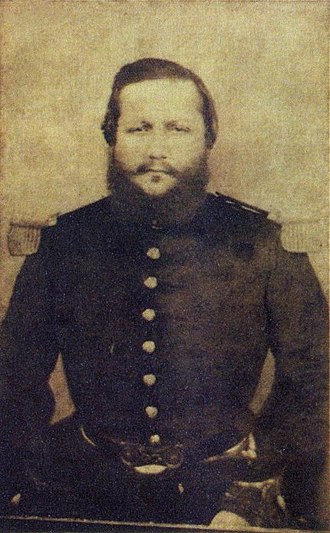
Francisco Solano López was a pivotal and controversial figure in South American history, serving as the second President of Paraguay from 1862 to 1870. A statesman and military officer, his tenure was defined almost entirely by the devastating Paraguayan War, a conflict that reshaped the demographics and borders of the region. He remains the only Paraguayan president to have been killed in action.
While some historians view his ambitions as the catalyst for war, others regard him as a fierce defender of South American independence against foreign interests. Today, he is officially recognized as a national hero, with his legacy woven into the official holidays and national identity of Paraguay.
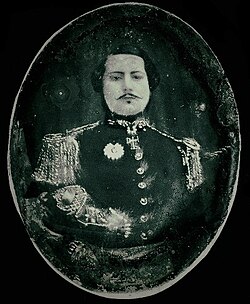
Key Facts
- Presidency: Served from September 10, 1862, to March 1, 1870.
- Military Rank: One of only two Paraguayans to achieve the rank of Marshal.
- Major Conflict: Led Paraguay during the War of the Triple Alliance (1864–1870).
- Death: Killed in action at the Battle of Cerro Corá on March 1, 1870.
- National Legacy: His birth date (July 24) is Paraguayan Army Day, and his death date (March 1) is National Heroes' Day.
Early Life and Rise to Power
Born in the Manorá neighborhood of Asunción around 1826 or 1827, Solano López was the son of President Carlos Antonio López and Juana Pabla Carrillo. His path to leadership was paved by both familial ties and military training. At the age of 17, in 1844, he was commissioned as a brigadier general in the Paraguayan Army.
López gained early experience during the Platine Wars, fighting against Juan Manuel de Rosas during hostilities between Paraguay and Argentina. He furthered his expertise in artillery and fortifications through studies in Asunción and Rio de Janeiro. Between 1853 and 1855, he served as Paraguay's Minister Plenipotentiary (an ambassador with full authority) to several European nations.
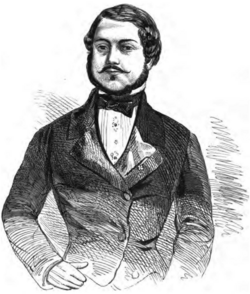
Upon returning to Asunción, he was appointed Minister of War and later Vice President in 1862. Following the death of his father, the Congress of Paraguay unanimously proclaimed him President for a ten-year term.
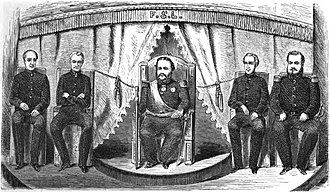
The Path to the Paraguayan War
The tensions that led to the War of the Triple Alliance began with regional instability in Uruguay. In 1863, the Empire of Brazil supported a rebellion led by Venancio Flores against the Uruguayan government. López warned Brazil that any occupation of Uruguayan territory would be viewed as an attack on Paraguay.
When Brazil invaded Uruguay in October 1864, López responded by seizing the Brazilian steamer Marqués de Olinda and imprisoning the governor of Mato Grosso. By December 1864, Paraguay formally declared war on Brazil, invading Mato Grosso and seizing significant quantities of arms and gunpowder.
The conflict expanded in April 1865 when López declared war on Argentina, occupying the town of Corrientes and announcing the annexation of the Corrientes and Entre Ríos provinces. In response, Brazil, Argentina, and Uruguay signed the Treaty of the Triple Alliance on May 1, 1865, pledging to fight until the Paraguayan government was overthrown.
The War of the Triple Alliance and Its Toll
The war was characterized by extreme stubbornness and alternating fortunes. A critical turning point occurred on June 11, 1865, at the Battle of Riachuelo, where the Brazilian Navy destroyed the Paraguayan fleet, granting the Allies control of the region's waterways.
Despite attempts at peace—including a conference in Yataytí Corá in 1866—no agreement was reached because the Allies insisted on the total overthrow of López's government. As the war turned against him, López became increasingly paranoid. In 1868, he ordered the San Fernando massacre, executing hundreds of prominent citizens, including cabinet ministers, judges, and his own brothers, under suspicion of conspiracy.
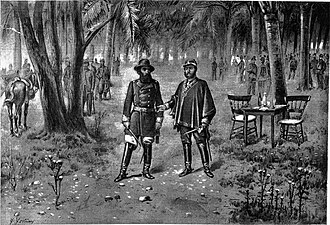
The Final Stand at Cerro Corá
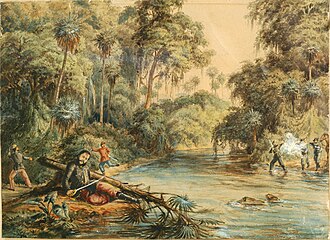
By January 1869, Allied forces captured Asunción, forcing López into the countryside. He retreated to the northern frontier, arriving at Cerro Corá on February 14, 1870. Surrounded by Brazilian forces and abandoned by many of his remaining officials, López was killed in action on March 1, 1870, marking the end of the war.
Legacy and Historical Impact
The aftermath of the war was catastrophic for Paraguay. The nation lost between 25% and 33% of its territory to Brazil and Argentina. More devastating was the human cost; estimates suggest that at least 50% of the population perished. Some historians note that out of a population of up to 900,000, only 220,000 survived, with only 28,000 being adult males.
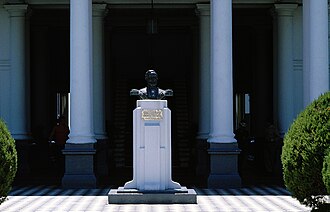
Despite the devastation, López's image evolved over time. After decades of rejection by liberal governments, he was officially recognized as a national hero during the presidency of Colonel Rafael Franco (1936–1937). Today, his remains lie in the National Pantheon of the Heroes in Asunción, a site where citizens still gather to celebrate national milestones.
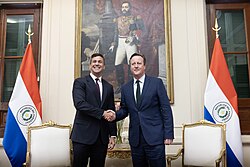
His influence extends beyond Paraguay; in 2007, Argentina named the 2nd Armored Artillery Group in his honor, signaling a modern diplomatic reconciliation between the former adversaries.

| Category | Details |
|---|---|
| Full Name | Francisco Solano López Carrillo |
| Presidential Term | 1862–1870 |
| Highest Rank | Marshal-President of the Paraguayan Armies |
| Key Conflict | War of the Triple Alliance (1864–1870) |
| Final Battle | Battle of Cerro Corá |
| Resting Place | National Pantheon of the Heroes, Asunción |
Frequently Asked Questions
Why is Francisco Solano López considered a hero in Paraguay?
He is viewed as a symbol of national resistance and a champion of independence who fought to the death against a coalition of larger powers to preserve Paraguayan sovereignty.
What was the Treaty of the Triple Alliance?
It was a secret agreement signed by Brazil, Argentina, and Uruguay in 1865 to unite their forces to overthrow the government of Solano López and divide Paraguayan territories among themselves.
How did the Paraguayan War affect the population?
The war was demographically catastrophic, resulting in the death of at least 50% of the Paraguayan population and a severe shortage of adult males for decades.
What is the significance of March 1st in Paraguay?
March 1st is National Heroes' Day, a national holiday commemorating the death of Francisco Solano López and the end of the War of the Triple Alliance.
What was the San Fernando massacre?
It was a series of executions ordered by López in 1868, targeting hundreds of Paraguayan citizens, including high-ranking officials and family members, whom he suspected of conspiring against him.