Franciscans: The History and Legacy of the Order of Friars Minor
Founded on February 24, 1209, the Franciscan movement began with Francis of Assisi, a man whose commitment to extreme poverty and peace reshaped the landscape of the Catholic Church. Guided by the motto Pax et bonum (Peace and all good), the order sought to emulate the humble life of Christ through service and simplicity. Over eight centuries, this vision evolved into a diverse family of religious communities known collectively as the Franciscans.
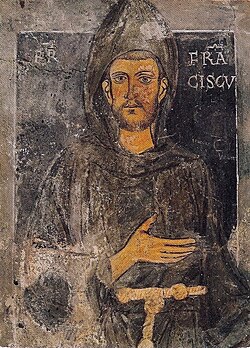
Key Facts
- Founder: Francis of Assisi.
- Established: February 24, 1209.
- Core Motto: Pax et bonum (Peace and all good).
- Primary Structure: Divided into First, Second, and Third Orders.
- Key Branches: Order of Friars Minor (OFM), Conventuals (OFM Conv.), and Capuchins (OFM Cap.).
The Three Orders of the Franciscan Family
The Franciscan movement is not a single entity but a collection of orders designed for different vocations, ranging from cloistered nuns to laypeople living in the secular world.
The First Order: Order of Friars Minor
The First Order consists of friars who take vows of poverty, chastity, and obedience. Historically, the degree of adherence to extreme poverty caused internal tension, leading to the formation of three distinct branches:
- Order of Friars Minor (OFM): Formerly the "Observant" branch, focusing on a strict adherence to the original rule.
- Order of Friars Minor Conventual (OFM Conv.): Formed in 1209, this branch historically allowed for more communal living arrangements.
- Order of Friars Minor Capuchin (OFM Cap.): Founded in 1525 by Matteo Serafini (Matteo da Bascio), the Capuchins sought an even stricter return to Franciscan austerity and became a separate order in 1619.
The Second Order: Poor Clares
Founded in 1212 by Clare of Assisi and Francis of Assisi, the Poor Clares (officially the Order of Saint Clare) are a contemplative order of nuns. They follow the Rule of St. Clare, approved by Pope Innocent IV in 1253. The order includes several branches, such as the Colettine Poor Clares (1410), Capuchin Poor Clares (1538), and Poor Clares of Perpetual Adoration (1854).
The Third Order: Secular and Regular
The Third Order was established in 1212 for those who wish to follow Franciscan spirituality without leaving their secular lives. The Secular Franciscan Order (renamed in 1978) allows members to live in their own homes while gathering for fraternal activities. There is also a Third Order Regular for those who live in community but follow the Third Order's rule.
Historical Evolution and Conflict
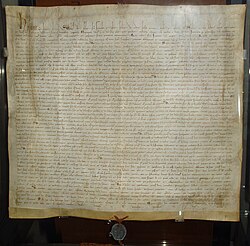
The history of the Franciscans is marked by a recurring struggle between the "Observants," who advocated for strict poverty, and those who favored a more relaxed interpretation of the rule. In 1223, the final revision of the rule relaxed some requirements of extreme poverty, which became a primary source of conflict and subsequent secessions.
During the 13th and 14th centuries, various congregations emerged, such as the Clareni and the Minorites of Narbonne. A significant reform led by Johannes de Vallibus in 1334 eventually helped unify many Observantist houses into the "brothers of the regular Observance."
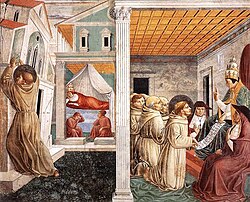
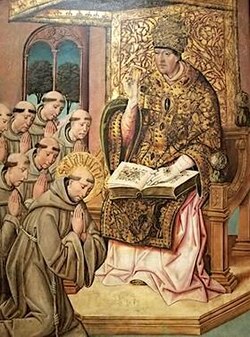
The order's influence extended beyond theology into the arts. The Italian Gothic style was heavily influenced by Franciscan ideals, most notably in the great convent church at Assisi (built 1228–1253). Renowned painters like Cimabue and Giotto, while not friars, were considered spiritual sons of Francis, reflecting his vision in their masterpieces.
Global Reach and Membership
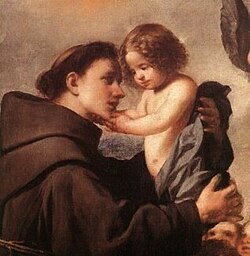
The Franciscans expanded rapidly from Italy to the rest of Europe and eventually to the New World through various missions. Today, the order maintains a significant global presence across different branches.
| Branch | Communities | Total Members | Number of Priests |
|---|---|---|---|
| Order of Friars Minor (OFM) | 1,915 | 12,476 | 8,512 |
| OFM Conventual | 572 | 3,981 | 2,777 |
| OFM Capuchin | 1,542 | 10,355 | 6,796 |
Beyond the Catholic Church, the 19th-century Oxford Movement led to the re-establishment of Franciscan-inspired communities within the Anglican Communion, including the Society of Saint Francis and the Community of St. Francis.
Frequently Asked Questions
Who founded the Franciscan Order?
The order was founded by Francis of Assisi on February 24, 1209, based on a commitment to poverty, humility, and peace.
What is the difference between the First, Second, and Third Orders?
The First Order consists of friars (priests and brothers); the Second Order consists of cloistered nuns (Poor Clares); and the Third Order is for laypeople (Secular Franciscans) or those in non-cloistered religious communities.
What are the Capuchins?
The Capuchins are the youngest branch of the First Order, founded in 1525 by Matteo Serafini to return to a stricter observance of Franciscan austerity.
What does "Pax et bonum" mean?
It is Latin for "Peace and all good," serving as the traditional greeting and motto of the Franciscan family.
How did the Franciscans influence art?
Franciscan ideals of simplicity and nature influenced the Italian Gothic style and the works of legendary artists such as Giotto and Cimabue.