Frances Cleveland: The Youngest First Lady and Her Lasting Legacy
Frances Clara Folsom Cleveland holds a unique place in American history, not only as the youngest woman to ever serve as First Lady of the United States but also as the first to hold the position nonconsecutively. Her life spanned a transformative era of the United States, moving from the Victorian social structures of the late 19th century to the global upheavals of the early 20th century.
From her childhood in Buffalo to her later years as an education advocate and political figure, Frances Cleveland balanced the intense public scrutiny of the White House with a private dedication to her family and philanthropic causes.
Key Facts
- Youngest First Lady: Married Grover Cleveland at age 21.
- Nonconsecutive Tenure: Served as First Lady from 1886–1889 and again from 1893–1897.
- White House Pioneer: The first presidential spouse to marry inside the White House.
- Education Advocate: Served on the board of Wells College and supported the creation of kindergartens.
- Longest Post-Presidency: Holds the record for the longest post-presidency period of any First Lady.
Early Life and Education
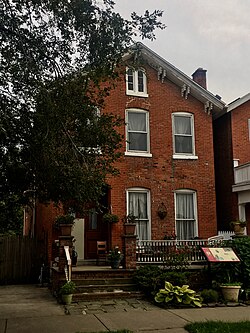
Born on July 21, 1864, in Buffalo, New York, Frances Clara Folsom was the daughter of Oscar and Emma Folsom. Her father, a lawyer, shared a close partnership with Grover Cleveland. This relationship began in Frances' infancy, and Cleveland remained a constant presence in her life, even purchasing her first baby carriage.
Following the death of her father in 1875, Grover Cleveland stepped in as the executor of the Folsom estate, settling the family's debts and ensuring the financial security of Frances and her mother. Frances later pursued higher education at Wells College, where she earned her Bachelor of Arts degree on June 20, 1885.
A Secret Engagement
In August 1885, while visiting a friend in Pennsylvania, Frances received a marriage proposal via letter from Cleveland. To avoid premature media frenzy, the couple kept their engagement a secret. During this time, the president's sister, Rose Cleveland, acted as the White House hostess. The secret was eventually compromised when reporters spotted the Folsoms shopping for a wedding gown.
The First Tenure as First Lady (1886–1889)
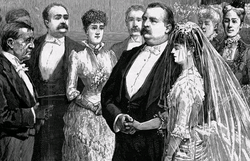
On June 2, 1886, Frances and Grover Cleveland married in the Blue Room of the White House. The ceremony was an intimate affair with only 31 guests, though hundreds of citizens gathered outside to celebrate. At 21, Frances was significantly younger than her 49-year-old husband.
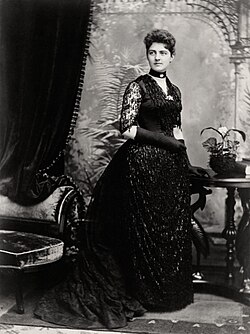
The couple's first term was marked by immense public popularity. During a 1887 tour of the United States, Frances became a sensation. In Chicago, a crowd of approximately 100,000 people gathered to see her, necessitating military and police intervention for her safety. The overwhelming nature of these public appearances led her to avoid such highly publicized events for the remainder of her time in the White House.
The Intervening Years and Second Tenure (1893–1897)
After Grover Cleveland lost the 1888 election, the couple entered private life for four years. During this period, they began their family and Frances' image was used in campaign materials for the 1892 election, helping Grover win back his home state of New York through her social connections and charity work.
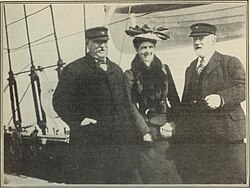
Returning to the White House on March 4, 1893, Frances became the first nonconsecutive First Lady. Her second term was more focused on motherhood. She is the only First Lady to give birth in the presidential residence, welcoming her daughter Esther in 1893. She also took a keen interest in German culture, learning the language and hiring a German nurse for her children.
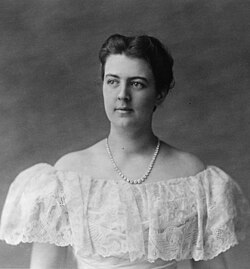
Beyond her domestic duties, she continued her advocacy for kindergartens (early childhood education centers) and supported the Home for Friendless Colored Girls, demonstrating a commitment to social welfare and education.
Widowhood, Remarriage, and Later Activism
Following the president's death in 1908, Frances raised her four surviving children in Princeton, New Jersey. She faced a public legal battle against Broughton Brandenburg, who had forged an article attributed to her late husband; she testified against him, and he was convicted of grand larceny.
In 1913, Frances became the first presidential widow to remarry, wedding Thomas J. Preston Jr., a professor of archaeology and acting president of Wells College.
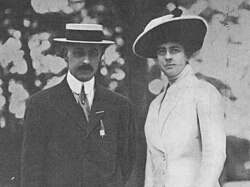
During World War I, she shifted her focus toward national security, heading the speakers' bureau of the National Security League to promote military preparedness. In her later years, she became a prominent opponent of women's suffrage, serving as vice president of the New Jersey Association Opposed to Woman's Suffrage from 1913 to 1920.
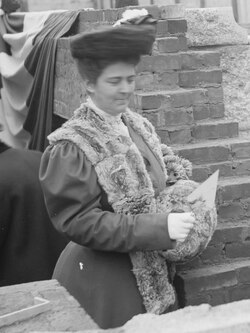
Despite her failing eyesight due to cataracts, Frances learned Braille and spent her final years translating books for blind children. She passed away in her sleep on October 29, 1947, at the age of 83.
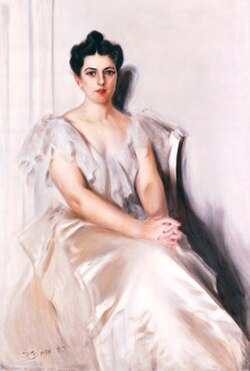
Summary of Frances Cleveland's Life
| Category | Details |
|---|---|
| First Lady Terms | 1886–1889 and 1893–1897 |
| Education | Wells College (BA) |
| Spouses | Grover Cleveland (m. 1886), Thomas J. Preston Jr. (m. 1913) |
| Key Advocacy | Women's education, kindergartens, military preparedness |
| Historical Firsts | Youngest First Lady; First nonconsecutive First Lady; First to marry in the White House |
Frequently Asked Questions
Why was Frances Cleveland considered a pioneer as First Lady?
She was the first presidential spouse to marry within the White House and the first to serve two nonconsecutive terms in the role. Additionally, she was the youngest person to ever hold the position.
What were Frances Cleveland's primary philanthropic interests?
She was a strong advocate for education, specifically supporting women's higher education through her work with Wells College and organizing the construction of kindergartens for young children.
Did Frances Cleveland hold any political views?
Yes, she was an outspoken opponent of women's suffrage and served as the vice president of the New Jersey Association Opposed to Woman's Suffrage. She also advocated for military preparedness during World War I.
How did she spend her time after the presidency?
She remained active in the Princeton community, remarried Thomas J. Preston Jr., worked with the National Security League, and later translated books into Braille for blind children.
Where is Frances Cleveland buried?
She is buried in Princeton Cemetery, alongside her first husband, President Grover Cleveland.