Forest Canopy: The Biological Architecture and Ecology of the Upper Layer
In the study of biology, a canopy is the aboveground portion of a plant crop or cropping, created by the collective crowns of individual plants. In the context of forest ecology, the canopy represents the upper habitat zone formed by mature tree crowns. This complex layer is far more than just a ceiling of leaves; it is a vibrant ecosystem that includes epiphytes (plants that grow on other plants), lianas (woody climbing vines), and a vast array of arboreal animals.
For decades, scientists studied these heights from the ground using binoculars or by analyzing fallen debris. Some early researchers relied on extrapolation from the more accessible understory, while others used daring methods like chairs suspended from vines or hot-air dirigibles. Today, adapted mountaineering gear and modern technology have transformed canopy research, allowing for more accurate, collaborative, and long-term observations.
Key Facts
- Biodiversity Hotspot: The canopies of tropical rainforests contain the highest terrestrial biodiversity on Earth.
- Animal Habitat: Approximately 90% of rainforest animals live within the canopy.
- Light Interception: A typical rainforest canopy is about 10 meters (33 feet) thick and blocks roughly 95% of sunlight.
- Climate Impact: Forest canopies handle at least half of the global carbon dioxide exchange between land ecosystems and the atmosphere.
- Urban Cooling: Increased canopy cover in cities significantly reduces daytime summer heat.
Canopy Structure and Organization
Canopy structure refers to the three-dimensional spatial arrangement of a plant canopy. A primary metric used by ecologists to compare these structures is the leaf area index, which measures the leaf area per unit of ground area. While the canopy is always taller than the understory, its appearance varies by environment.
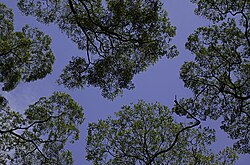
In rainforests, the canopy can appear as an unbroken green carpet from the air. However, a phenomenon known as crown shyness often occurs, where the branches of mature trees rarely touch, remaining separated by a few feet. This layer sits below the emergent layer, which consists of a few exceptionally tall trees (typically one or two per hectare) that tower above the rest of the forest.
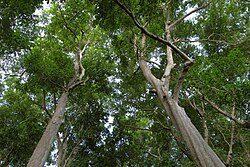
The uneven nature of the canopy is formed by dominant and co-dominant trees. Because these trees have abundant access to light, they can photosynthesize rapidly, supporting the majority of the forest's primary productivity. This dense coverage protects the forest floor from strong winds and storms, though it also limits the light and nutrients available to the understory.
Diverse Ecosystems Across Environments
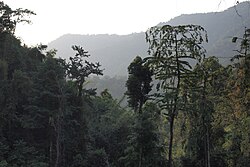
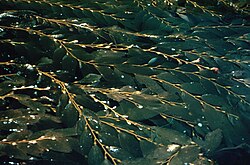
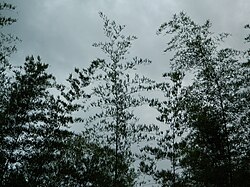
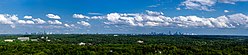
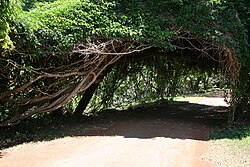
While often associated with rainforests, canopies exist in various forms across the globe. From the giant kelp forests of the ocean to bamboo forests and urban greenery, the canopy serves as the primary interface between the biological community and the atmosphere.
Ecological Importance and Climate Regulation
Often called "the last biotic frontier," the forest canopy is one of the most species-rich environments on the planet. It provides a unique habitat for microorganisms, invertebrates, birds, and mammals, many of which have evolved to spend their entire lives without ever touching the ground. These communities are essential for maintaining the overall resilience and functioning of the forest.
Beyond providing habitat, canopies perform critical ecosystem services:
- Environmental Buffering: They act as a shield, modifying the internal forest environment by regulating temperature, wind, and light.
- Gas Exchange: They facilitate the cycling of nutrients and energy.
- Carbon Sequestration: By acting as carbon sinks, canopies reduce atmospheric CO2. The destruction of these layers releases stored carbon, contributing to the greenhouse effect and global warming.
Canopy Interception of Rainfall
Canopy interception is the process where precipitation is caught by the leaves and branches and evaporates back into the atmosphere before reaching the ground. Water that manages to pass through is categorized as either throughfall (falling through gaps) or stemflow (running down the trunk).
Measuring this process is challenging because canopies are not homogeneous. Common methods include:
- Subtraction Method: Measuring total rainfall above the canopy and subtracting the throughfall and stemflow.
- Plastic Sheeting: Covering the forest floor with plastic to collect throughfall, though this can cause water shortages for trees over long periods.
- Cantilever/Strain Gauge Method: Measuring the bending of branches as they become heavier with water. While accurate for a single branch, this method is labor-intensive for entire forests.
| Layer | Position | Key Characteristics |
|---|---|---|
| Emergent Layer | Highest | Sparse, very tall trees; maximum light exposure. |
| Canopy | Upper | Dense crowns; 90% of rainforest animals; 95% light interception. |
| Understory | Lower | Sparsely vegetated; limited light and nutrients. |
Frequently Asked Questions
What is the difference between the canopy and the emergent layer?
The canopy is the main upper layer formed by mature tree crowns, while the emergent layer consists of a few exceptionally tall trees that rise above the general canopy level.
How does the canopy affect the forest floor?
The canopy intercepts approximately 95% of sunlight and a significant portion of rainfall, creating a shaded, protected, and relatively sparsely vegetated understory.
Why is the canopy important for global warming?
Canopies act as carbon sinks, absorbing atmospheric carbon dioxide. If canopies are destroyed, this stored carbon is released, increasing the greenhouse effect and raising global temperatures.
What is crown shyness?
Crown shyness is the phenomenon where the uppermost branches of rainforest trees do not touch each other, leaving narrow gaps of space between the crowns.
How do scientists measure canopy interception?
Scientists use several methods, including subtracting throughfall and stemflow from total rainfall, using plastic sheets on the forest floor, or using strain gauges to measure the weight of water on bending branches.