Fish Stocks: Management, Sustainability, and Population Dynamics
In the vast expanse of the world's oceans, fish are not distributed uniformly. Instead, they exist in fish stocks—subpopulations of a particular species that share specific biological and behavioral characteristics. For fisheries scientists, understanding these stocks is the cornerstone of maintaining a healthy ocean and ensuring that global food sources remain viable for future generations.
Traditionally, the dynamics of a fish stock are determined by intrinsic parameters such as growth, recruitment (the rate at which new fish join the population), mortality, and fishing mortality. While extrinsic factors like immigration and emigration are often ignored in basic models, the interplay of these internal drivers determines whether a population thrives or collapses.
Key Facts
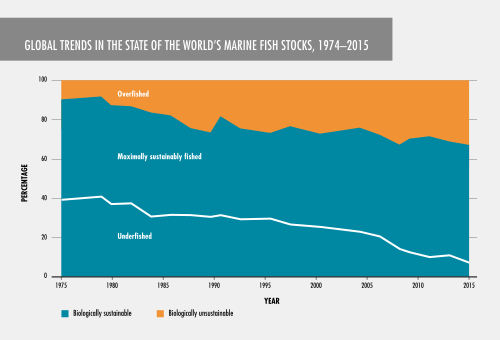
- Sustainability Decline: Stocks fished within biologically sustainable levels dropped from 90% in 1974 to 62.3% in 2021.
- Scombridae Loss: Populations of mackerel, tuna, and bonitos saw a dramatic 74% fall between 1970 and 2010.
- Global Trend: Average population sizes of fish, mammals, birds, reptiles, and amphibians fell by half over a 40-year period.
- Management Goal: UN Sustainable Development Goal 14 (Target 14.4) specifically aims to reverse these trends through sustainability indicators.
The Concept of the Fish Stock
While a species may have a broad geographic range, individuals rarely reproduce randomly across their entire biological limit. Environmental tolerances and competition create boundaries. In marine environments, these boundaries are often invisible, created by mesoscale and sub-mesoscale circulations (small-to-medium scale ocean currents) that limit the dispersal of fish larvae.
This leads to the formation of discrete populations that are isolated by space, time, or both. Over time, this isolation results in genetic differences, morphological variations, and different exposures to parasites or chemical regimes. Crucially, these subpopulations often respond independently to fishing; harvesting one stock may have no measurable effect on a neighboring population of the same species.
According to the definition by Begg et al. (1999), a stock describes the characteristics of semi-discrete groups of fish with definable attributes that are of interest to fishery managers.
Straddling and Transboundary Stocks
Managing fish becomes complex when stocks move across political borders. The United Nations identifies two primary types of cross-border populations:
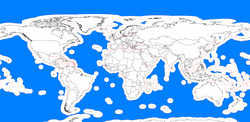
- Straddling Stocks: Fish that migrate between, or exist in both, the Exclusive Economic Zones (EEZ) of one or more states and the high seas (international waters).
- Transboundary Stocks: Fish that range within the EEZs of at least two different countries.
A single stock can be both transboundary and straddling. Because these fish move across jurisdictions, sovereign responsibility must be coordinated through intergovernmental regional organizations.
Pelagic vs. Demersal Species
Most straddling stocks are pelagic (living in the open water column), as they are highly mobile and influenced by ocean temperatures and zooplankton availability. Examples include herring, mackerel, whiting, capelin, and redfish. In contrast, demersal species (living on or near the ocean floor) are generally less mobile because they are tied to bottom topography. However, some demersal species, such as the Greenland halibut, are straddling stocks due to their long-distance feeding and spawning migrations between Greenland and the Faeroes.
Stock Assessment and Sustainability
Stock assessment is the primary tool used in fisheries management to prevent overfishing. A critical measurement is the spawning stock biomass—the total mass of the population capable of reproducing. By monitoring this, managers can set sustainable fishing quotas to ensure the population can replenish itself.
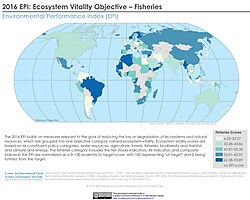
Despite these tools, reports indicate significant declines. The "Living Blue Planet Report" (2015) highlighted a 74% decrease in important scombridae fish (tuna, mackerel, and bonitos) between 1970 and 2010. Furthermore, FAO data shows a steady decline in the percentage of stocks fished at sustainable levels over the last several decades.
Population Fluctuations: Boom and Bust
Marine species often exhibit "boom and bust" cycles that are linked. When one species declines, another may rise to fill the ecological niche, a process known as compensatory growth. For example:
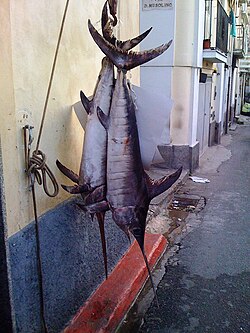
- Billfish: In the Atlantic, a decline in blue marlin in the 1960s was followed by an increase in sailfish. When sailfish declined in the 1980s, swordfish catches increased, keeping the overall billfish catch stable.
- Georges Bank: A decline in cod during the 1960s led to a rise in flatfish. More recently, the collapse of predatory Atlantic cod has led to a boom in lobster catches in Maine.
| Term | Definition | Primary Characteristics |
|---|---|---|
| Straddling Stock | Moves between EEZs and high seas | Often pelagic; requires international coordination |
| Transboundary Stock | Exists in EEZs of two or more states | Crosses national borders but stays within EEZs |
| Pelagic Fish | Open water species | High mobility; driven by temperature and food |
| Demersal Fish | Bottom-dwelling species | Lower mobility; tied to ocean floor topography |
Frequently Asked Questions
What is the difference between a fish species and a fish stock?
A species is a biological classification, while a stock is a semi-discrete subpopulation of that species. Stocks are defined by their reproductive isolation and shared characteristics, meaning they can be managed separately even if they belong to the same species.
What are straddling stocks?
Straddling stocks are fish populations, such as pollock, that move between the Exclusive Economic Zones (EEZ) of coastal states and the high seas (international waters), requiring collaborative management between nations.
How is spawning stock biomass used in conservation?
Spawning stock biomass measures the portion of the fish population that is capable of reproducing. By tracking this number, fisheries managers can establish sustainable fishing quotas to prevent the population from falling below a critical threshold.
Why do some fish populations boom when others bust?
This occurs due to compensatory dynamics. When a dominant predator or competitor (like the Atlantic cod) declines, it reduces pressure on other species (like lobster or flatfish), allowing their populations to increase rapidly.
What is the current state of global fish stock sustainability?
According to the FAO, the percentage of fish stocks fished within biologically sustainable levels has decreased significantly, falling from 90% in 1974 to 62.3% in 2021.