Firma y Odilo Estévez Municipal Decorative Art Museum
Located in the heart of Rosario, Argentina, the Firma y Odilo Estévez Municipal Decorative Art Museum serves as a stunning window into the refined tastes and historical collections of a prominent local family. Once a private residence, this mansion now stands as a public testament to the art of decorative design and international craftsmanship.
The museum's origin is rooted in a generous act of philanthropy. Mrs. Firma Mayor de Estévez bequeathed her home and its extensive contents to the city of Rosario in memory of her husband, Odilo Estévez. The municipal government took ownership of the property in 1966, and the museum officially opened its doors to the public on July 8, 1968.
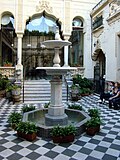
A Prime Location in Historic Rosario
The museum is situated in the historical core of the city, positioned directly in front of Plaza 25 de Mayo. This area marks the starting point of the original village and places the museum in the immediate vicinity of other landmark structures, including the Cathedral and the Palacio de los Leones (the town hall). Administratively, the institution is managed by the Culture and Education Secretariat of the Municipality of Rosario.
The Estévez Collection
The museum's permanent exhibition is the result of nearly 30 years of dedicated collecting by the Estévez family. The curation spans several continents and centuries, offering a diverse look at global decorative arts.
Furniture and Textiles
A significant portion of the collection is dedicated to furniture, featuring authentic Spanish pieces from the 16th, 17th, and 18th centuries, as well as high-quality copies of 18th-century French furniture. The textile collection is equally impressive, showcasing a variety of tapestries, carpets, and fans.
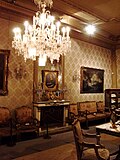
Fine Arts and Rare Materials
Beyond furniture, the museum houses a curated selection of European paintings and various sculptures. Visitors can also find intricate works crafted from precious and semi-precious materials, including:
- Ivory and Jade
- Glass and Porcelain
- Silver (featuring European, Asian, and pre-Columbian origins)
Key Facts
- Official Opening: July 8, 1968.
- Ownership: Donated by Firma Mayor de Estévez to the Municipality of Rosario.
- Location: Opposite Plaza 25 de Mayo, Rosario, Argentina.
- Collection Scope: Art and furniture gathered over nearly 30 years.
- Notable Exhibits: 16th-18th century Spanish furniture and multi-regional silver works.
| Feature | Details |
|---|---|
| Official Name | Museo de Arte Decorativo Firma y Odilo Estévez |
| City | Rosario, Argentina |
| Management | Culture and Education Secretariat of the Municipality |
| Primary Collection | Decorative arts, furniture, and fine art |
| Key Eras Represented | 16th, 17th, and 18th centuries |
Frequently Asked Questions
Who donated the museum to the city?
The mansion and its contents were bequeathed to the city of Rosario by Mrs. Firma Mayor de Estévez in memory of her husband, Odilo Estévez.
When did the museum officially open?
The museum was officially inaugurated on July 8, 1968, after the municipal government assumed ownership in 1966.
What types of furniture can be found in the collection?
The collection includes original Spanish furniture from the 16th, 17th, and 18th centuries, along with copies of French furniture from the 18th century.
Where is the museum located?
It is located in the historical center of Rosario, Argentina, facing Plaza 25 de Mayo and near the Cathedral and the Palacio de los Leones.
What materials are represented in the museum's decorative objects?
The museum displays works made from ivory, glass, porcelain, jade, and silver from European, Asian, and pre-Columbian sources.