Fir Trees: Characteristics, Evolution, and Diverse Species of the Genus Abies
Fir trees, belonging to the genus Abies within the Pinaceae family, are iconic evergreen conifers that play a vital role in ecosystems across the Northern Hemisphere. From the towering giants of North America to the specialized species of Eurasia, these trees are defined by their unique biological structures and significant ecological presence. Whether serving as a cornerstone of forest habitats or providing timber for industry, firs are among the most recognizable members of the gymnosperm group.
The name "fir" finds its roots in the Old Norse fyri or Old Danish fyr, while the scientific name Abies is the Latin term for the tree itself. Today, the genus comprises approximately 48 to 65 extant species, found in diverse environments ranging from high-altitude mountains to temperate forests.
Key Facts
- Scientific Genus: Abies
- Family: Pinaceae
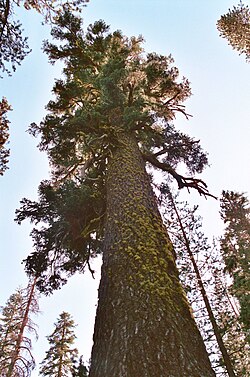
- Typical Height: 40–60 metres, occasionally reaching 100 metres
- Distinguishing Feature: Upright, candle-like cones that disintegrate at maturity
- Leaf Attachment: Needle-like leaves attached singly to branches with a circular base
- Global Distribution: North and Central America, Eurasia, and North Africa
Botanical Description and Identification
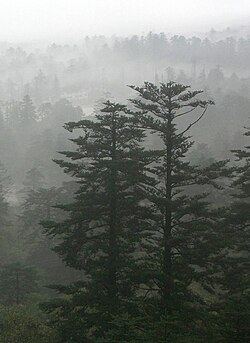
Firs are characterized by their tall, often straight trunks and a conical crown that may vary in shape as the tree ages. A primary branch arrangement typically occurs in whorls around the main trunk.
Leaves and Foliage
The leaves of a fir tree are needle-like and arranged spirally, though they often appear in two or more rows on opposite sides of the twigs. A key identifying feature is the circular base of each leaf, which sits in a small pit on the twig. Many species exhibit a specific orientation where the leaf is twisted at the base, ensuring the side containing stomata (microscopic pores used for gas exchange) faces downward.
Leaf appearance can vary significantly between species. For example, Abies alba features two whitish strips on the underside of the leaves formed by wax-covered stomatal bands. In the upper canopy, leaves on cone-bearing branches are often shorter, more curved, and sometimes sharp to the touch.
Cone Structure
One of the most reliable ways to distinguish firs from other conifers, such as spruces, is the structure of their cones. Fir cones are erect and cylindrical, standing upright on the branches like candles. They typically measure between 5 and 25 cm in length. Unlike many other conifers, these cones do not fall whole; instead, they disintegrate at maturity to release winged seeds.
The lifecycle of a cone takes approximately one year. They often begin as bright green or other vibrant colors before darkening to deep brown or black as they mature. While the female seed cones are upright, the male cones are pendulous, resembling catkins, and are responsible for producing pollen that is dispersed by the wind.
Evolutionary and Taxonomic History
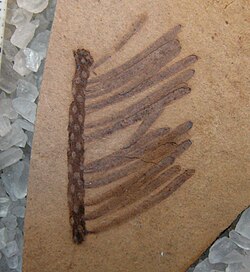
The fossil record indicates that the genus Abies has a long history. The oldest pollen attributed to the genus dates back to the Late Cretaceous in Siberia, with fossilized leaves and reproductive organs appearing across the Northern Hemisphere from the Eocene epoch onward.
Taxonomically, the classification of firs has evolved through various scientific perspectives. While Philip Miller established the genus in 1754, modern researchers use phylogenomic analysis to understand their relationships. Current data suggests that the genus Keteleeria is the closest relative to Abies. Internal classification is organized into several sections, including Abies, Balsamea, Grandis, Momi, and Nobilis.
Ecological and Economic Importance
Firs occupy a wide range of habitats. Some species, like Abies sibirica, thrive as far north as 67°N in Siberia, while others, such as Abies guatemalensis, are found as far south as 15°N in Central America. Many species are relict distributions, meaning they exist in small, isolated pockets of their former widespread ranges.
The economic uses of fir are diverse:
- Timber and Pulp: The softwood produced by firs is used for paper pulp, plywood, and indoor construction materials like stud walls.
- Ornamental Use: Many species, such as the Korean fir, are grown as decorative garden trees due to their brightly colored cones.
- Holiday Tradition: Species like the Fraser's fir, Noble fir, and Balsam fir are highly prized as Christmas trees because of their aromatic foliage and needle retention.
- Medicinal: In Ayurveda, Abies spectabilis is utilized as an antitussive (cough suppressant).
Beyond human use, firs support local wildlife. For instance, the Abies religiosa (sacred fir) provides essential roosting shelter for overwintering monarch butterflies.
Summary of Fir Characteristics
| Feature | Description |
|---|---|
| Leaf Attachment | Single needle with a circular base in a twig pit |
| Cone Orientation | Erect (upright) on branches |
| Cone Maturity | Disintegrates to release winged seeds |
| Primary Uses | Pulp, plywood, construction, and ornamental trees |
| Dispersal Method | Wind-dispersed pollen and seeds |
Frequently Asked Questions
How can I tell a fir tree apart from a spruce tree?
The most distinct difference is the cones: fir cones stand upright on the branches and disintegrate at maturity, whereas spruce cones typically hang downward and fall to the ground intact.
What are the most popular fir species for Christmas trees?
Caucasian fir, noble fir, Fraser's fir, and balsam fir are widely considered the best choices due to their pleasant aroma and ability to retain needles after being cut.
Are fir trees used in construction?
Yes, firs produce softwood that is commonly used for making paper pulp, plywood, and for internal construction applications such as stud walls.
Where are fir trees typically found?
They are distributed throughout the Northern Hemisphere, primarily in mountain ranges or high-latitude regions that offer cooler climates.
What is the significance of the circular base on fir needles?
The circular base is a key botanical identifier; it allows the needle to be attached singly to a small pit in the twig, distinguishing it from other conifers.