FIFA World Cup 2030: A Historic Multi-Continental Tournament
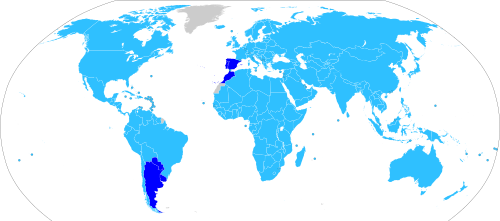
The FIFA World Cup 2030 is set to be one of the most ambitious tournaments in football history. Confirmed by FIFA on December 11, 2024, the event will be jointly hosted by Morocco, Portugal, and Spain. This marks a significant milestone as the first World Cup to be held across more than one confederation, bridging Africa and Europe.
The tournament is also steeped in history, serving as the first World Cup in North Africa and the first ever hosted by Morocco and Portugal. Additionally, it returns to Spain for the second time since 1982. To honor the centenary of the first World Cup in 1930, celebratory matches will also be held in Uruguay, Argentina, and Paraguay.
The event is scheduled to take place from June 8 to July 21, 2030.
Key Facts
- Primary Hosts: Morocco, Portugal, and Spain.
- Centenary Hosts: Argentina, Paraguay, and Uruguay.
- Dates: June 8 – July 21, 2030.
- Historic Firsts: First World Cup across multiple confederations and the first in North Africa.
- Broadcasting: Major global networks including BBC, ITV, CCTV, and SBS have secured rights.
Proposed Venues and Stadiums
The 2030 World Cup will utilize a vast array of stadiums across the host nations, featuring a mix of existing world-class arenas and ambitious new constructions.
Morocco
Morocco is investing heavily in infrastructure, including the massive new Hassan II Stadium in Casablanca, which is expected to hold 115,000 spectators.
- Casablanca: Hassan II Stadium (115,000 - New)
- Tangier: Ibn Batouta Stadium (75,500 - Renovated)
- Rabat: Prince Moulay Abdellah Stadium (69,500 - New)
- Fez: Fez Stadium (55,800 - Renovated)
- Agadir: Adrar Stadium (46,000 - Renovated)
- Marrakesh: Marrakesh Stadium (45,860 - Renovated)
Portugal
Portugal will leverage its established sporting infrastructure in Lisbon and Porto.
- Lisbon: Estádio da Luz (68,100) and Estádio José Alvalade (52,095)
- Porto: Estádio do Dragão (50,033)
Spain
Spain offers a wide distribution of venues, including the iconic Camp Nou in Barcelona, which will undergo renovation to reach a capacity of 105,000.
- Barcelona: Camp Nou (105,000 - Renovated) and RCDE Stadium (40,500)
- Madrid: Bernabéu (83,186) and Estadio Metropolitano (70,692)
- Seville: Estadio de La Cartuja (70,000 - Renovated)
- Valencia: Nou Mestalla (70,044 - New)
- Bilbao: Estadio de San Mamés (53,331)
- Other venues: Las Palmas, San Sebastián, Vigo, and Zaragoza.
In addition to the primary hosts, the centenary matches will be held at the Estadio Monumental (Argentina), Estadio Osvaldo Domínguez Dibb (Paraguay), and Estadio Centenario (Uruguay).
Tournament Format and Qualification
While the final number of teams is still to be announced, there have been reports and discussions regarding a potential expansion to 64 teams. Several regional confederations are already adjusting their qualifying processes.
CONCACAF Qualification
CONCACAF (the confederation for North and Central America and the Caribbean) announced its format on February 6, 2026. The final round will feature 12 teams divided into three groups of four. Teams will play home-and-away matches, with the top two from each group qualifying automatically. The two best third-placed teams will enter a Play-in round.
UEFA Qualification
UEFA (the confederation for Europe) is planning a revamped qualifying system. Reports suggest a move toward a "Champions League-style" format that may split major and minor nations to reduce mismatches.
Summary of Tournament Details
| Category | Details |
|---|---|
| Main Host Countries | Morocco, Portugal, Spain |
| Centenary Match Hosts | Argentina, Paraguay, Uruguay |
| Tournament Dates | June 8 – July 21, 2030 |
| Largest Proposed Venue | Hassan II Stadium (115,000) |
| Key Sponsors | Adidas, Coca-Cola, Visa, Qatar Airways, Hyundai-Kia |
Controversies and Challenges
The lead-up to the tournament has not been without friction. In Spain, allegations of venue manipulation surfaced regarding the selection of San Sebastián over Vigo. In Morocco, the government has faced criticism over animal welfare concerns, specifically regarding the culling of stray dogs, and political tensions surrounding the occupation of Western Sahara.
Furthermore, the tournament has seen social unrest, including 2025 Gen Z protests in Morocco demanding health and education reforms. There were also reports of a potential UEFA boycott in response to FIFA's private investment proposals, though some of these plans were later scrapped following widespread opposition.
Frequently Asked Questions
Which countries are hosting the 2030 World Cup?
The primary hosts are Morocco, Portugal, and Spain. Additionally, Argentina, Paraguay, and Uruguay will host centenary matches to commemorate the 100th anniversary of the first World Cup.
When will the 2030 World Cup take place?
The tournament is scheduled to run from June 8 to July 21, 2030.
What is special about the 2030 World Cup format?
It is the first World Cup to be hosted across more than one confederation (Africa and Europe) and the first ever held in North Africa.
How many teams will participate in 2030?
The exact number of teams is still to be officially confirmed (TBA), although there have been reports that FIFA is considering an expansion to 64 teams.
Which is the largest stadium proposed for the tournament?
The Hassan II Stadium in Casablanca, Morocco, is proposed as a new venue with a capacity of 115,000.