2010 FIFA World Cup Qualification: The Road to South Africa
The journey to the 2010 FIFA World Cup was one of the most expansive in football history. Spanning from August 2007 to November 2009, the qualification process involved a massive global effort to determine which 31 nations would join the host, South Africa, in the final tournament. Organized by the six FIFA confederations, the competition tested the endurance and skill of teams from every corner of the globe.
A total of 205 teams entered the competition, breaking the previous record of 199 entrants set during the 2002 qualifiers. While South Africa qualified automatically as the host, the remaining spots were fiercely contested through a series of group stages, knockout ties, and high-stakes play-offs.
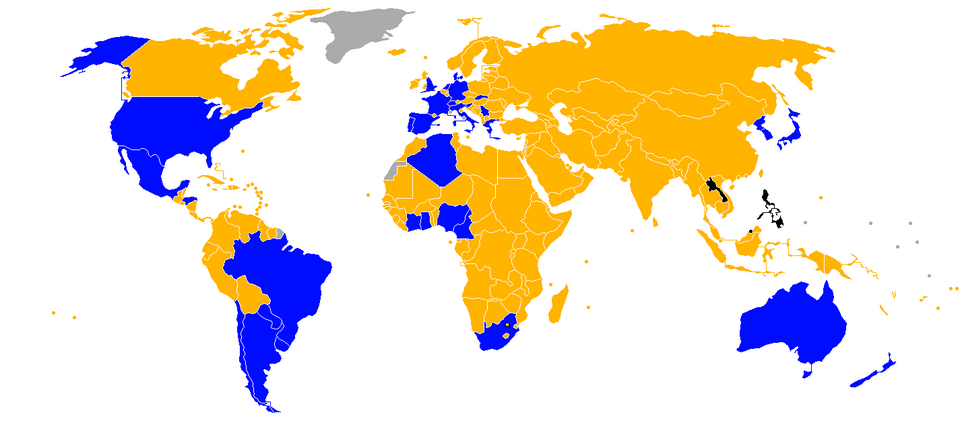
Key Facts
- Total Entrants: 205 teams from six confederations.
- Total Matches: 852 matches played.
- Total Goals: 2,338 goals (averaging 2.74 per match).
- Total Attendance: 19,336,189 spectators.
- Top Scorers: Moumouni Dagano and Osea Vakatalesau (12 goals each).
- Perfect Records: Spain and the Netherlands both won every single one of their qualifying matches.
The Qualification Framework
The qualification process was managed by the six FIFA confederations, each allocated a specific number of slots for the 32-team finals. The distribution was as follows:
- UEFA (Europe): 13 places
- CAF (Africa): 5 places (plus South Africa as host)
- AFC (Asia): 4.5 places
- CONMEBOL (South America): 4.5 places
- CONCACAF (North, Central America and Caribbean): 3.5 places
- OFC (Oceania): 0.5 places
The ".5" designation indicates that the confederation had a guaranteed number of spots, with one additional spot decided via an inter-confederation play-off.
Tiebreaking Criteria
To ensure fairness in group standings, FIFA implemented a specific hierarchy of tiebreakers. If teams were level on points, the following criteria were applied in order:
- Goal difference in all group matches.
- Greater number of goals scored in all group matches.
- Greater number of points obtained in matches between the tied teams.
- Goal difference in matches between the tied teams.
- Greater number of goals scored in matches between the tied teams.
- Drawing of lots or a FIFA-approved play-off.
Confederation Breakdown
AFC (Asia) and OFC (Oceania)
The AFC process began with preliminary rounds to reduce 43 teams down to 20. After a group stage and a final round, Australia and South Korea qualified directly. A complex play-off system eventually saw New Zealand (the OFC winner) defeat Bahrain in the inter-confederation play-off to secure a spot in the finals.
CAF (Africa)
CAF qualification was uniquely combined with the 2010 African Cup of Nations qualifying process. After preliminary rounds and group stages, five teams joined South Africa. A notable highlight was the tiebreaking play-off between Algeria and Egypt in Sudan, where Algeria prevailed 1–0 to qualify.
CONCACAF and CONMEBOL
CONCACAF utilized preliminary rounds and a final six-team group, where the United States, Mexico, and Honduras qualified directly. In South America, CONMEBOL used a single league system for its 10 members. Brazil, Chile, Paraguay, and Argentina secured automatic qualification, while Uruguay advanced after defeating Costa Rica in the inter-confederation play-off.
UEFA (Europe)
UEFA's process involved nine groups. The nine group winners qualified automatically, while the eight best runners-up entered home-and-away play-offs. Spain set a historic record by winning all 10 of their qualifying matches.
Qualification Summary Table
| Confederation | Slots | Teams Started | Teams Qualified | Start Date | End Date |
|---|---|---|---|---|---|
| AFC | 4 or 5 | 43 | 4 | 8 Oct 2007 | 14 Nov 2009 |
| CAF | 5+1 | 52+1 | 5+1 | 14 Oct 2007 | 18 Nov 2009 |
| CONCACAF | 3 or 4 | 35 | 3 | 3 Feb 2008 | 18 Nov 2009 |
| CONMEBOL | 4 or 5 | 10 | 5 | 13 Oct 2007 | 18 Nov 2009 |
| OFC | 0 or 1 | 10 | 1 | 25 Aug 2007 | 14 Nov 2009 |
| UEFA | 13 | 53 | 13 | 20 Aug 2008 | 18 Nov 2009 |
Frequently Asked Questions
How many teams entered the 2010 World Cup qualification?
A total of 205 teams entered the competition, which was a record at the time, surpassing the 199 entrants from the 2002 qualification cycle.
Which teams achieved a perfect qualifying record?
Spain set a new record by winning all 10 of their qualifying matches. The Netherlands also achieved a perfect record, winning all 8 of their matches.
How did South Africa qualify for the tournament?
As the host nation for the 2010 FIFA World Cup, South Africa qualified automatically.
What happened in the inter-confederation play-offs?
New Zealand (OFC) defeated Bahrain (AFC) to qualify, and Uruguay (CONMEBOL) defeated Costa Rica (CONCACAF) to secure their place in the finals.
Who were the top goalscorers during the qualification phase?
Moumouni Dagano and Osea Vakatalesau were the joint top scorers, each netting 12 goals.