2006 FIFA World Cup Qualification: The Road to Germany
The qualification process for the 2006 FIFA World Cup was a massive global undertaking, involving 197 teams from six different confederations. Spanning from September 2003 to November 2005, this series of tournaments determined which 31 nations would join the host nation, Germany, in the final tournament.
One of the most significant changes for this cycle occurred in 2001, when FIFA ended the tradition of automatic qualification for the reigning champion. This meant that Brazil, the 2002 World Cup winners, had to compete in the qualifying rounds for the first time in history. FIFA stated that competitive qualification matches provided better preparation than the friendly matches previously played by champions.
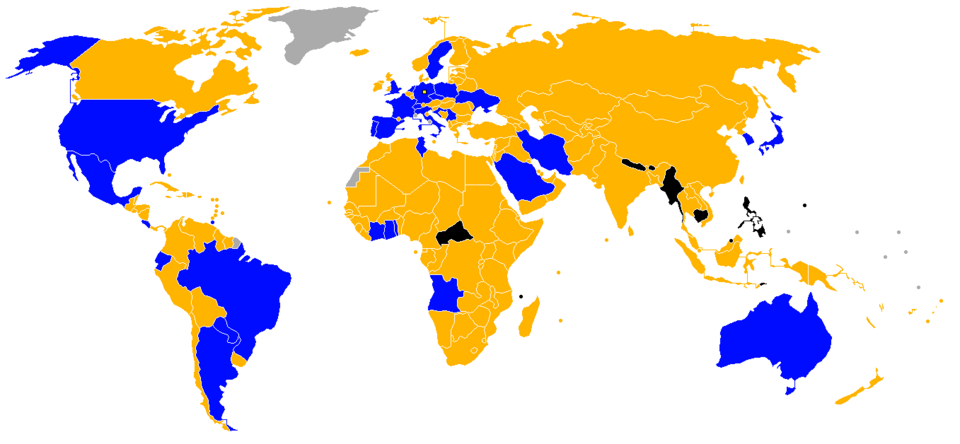
Key Facts
- Total Teams: 197 entered the qualification process.
- Matches Played: 849 matches.
- Total Goals: 2,476 goals scored (average of 2.92 per match).
- Total Attendance: 19,339,789 spectators.
- Top Scorer: Jared Borgetti with 14 goals.
- Host Nation: Germany (qualified automatically).
The Qualification Process and Slot Distribution
The 32 spots for the World Cup were distributed among the six FIFA confederations. While some regions had guaranteed slots, others had to fight for their final positions through inter-confederation play-offs.
Confederation Slot Allocation
- UEFA (Europe): 13 places (plus Germany as host).
- CAF (Africa): 5 places.
- AFC (Asia): 4 or 5 places.
- CONMEBOL (South America): 4 or 5 places.
- CONCACAF (North, Central America and Caribbean): 3 or 4 places.
- OFC (Oceania): 0 or 1 place.
The variable slots were decided by play-offs between the fifth-placed teams of AFC and CONMEBOL, and the fourth-placed team of CONCACAF against the first-placed team of OFC.
| Confederation | Available Slots | Teams Started | Teams Qualified | Qualifying Period |
|---|---|---|---|---|
| AFC | 4 or 5 | 38 | 4 | Nov 2003 – Nov 2005 |
| CAF | 5 | 51 | 5 | Oct 2003 – Oct 2005 |
| CONCACAF | 3 or 4 | 34 | 4 | Feb 2004 – Nov 2005 |
| CONMEBOL | 4 or 5 | 10 | 4 | Sep 2003 – Nov 2005 |
| OFC | 0 or 1 | 12 | 1 | May 2004 – Nov 2005 |
| UEFA | 13+1 | 51+1 | 13+1 | Aug 2004 – Nov 2005 |
Regional Qualification Highlights
AFC (Asia)
Out of 44 affiliated teams, 39 participated. The process involved three rounds, culminating in two groups of four. Saudi Arabia and Japan topped their respective groups, while Bahrain eventually advanced to the inter-confederation play-off after defeating Uzbekistan.
CAF (Africa)
The African zone was marked by the rise of debutants, with Angola, Togo, Ivory Coast, and Ghana all qualifying for the first time. A notable "group of death" (Group 3) featured Cameroon, Egypt, and the Ivory Coast.
CONCACAF (North, Central America and Caribbean)
Following a three-stage process, the United States, Mexico, and Costa Rica qualified directly. Trinidad and Tobago secured their spot after winning the inter-confederation play-off against Bahrain.
CONMEBOL (South America)
All 10 teams competed in a single league group. Brazil and Argentina dominated the standings. Uruguay finished fifth and entered a play-off against the OFC winner.
OFC (Oceania)
Australia emerged as the dominant force in Oceania, defeating the Solomon Islands 9–1 on aggregate to reach the inter-confederation play-off against Uruguay.
UEFA (Europe)
Fifty-one teams were divided into eight groups. Group winners like the Netherlands, Ukraine, Portugal, France, Italy, England, Serbia and Montenegro, and Croatia qualified directly. Sweden and Poland also qualified as the best runners-up, while others faced knock-out play-offs.
Tiebreakers and Final Play-offs
For league formats, FIFA implemented a specific set of tiebreakers to separate teams level on points. The primary criteria were points obtained in matches between the tied teams, followed by goal difference and goals scored in those specific matches. This was a shift from the 2002 cycle, where total goal difference was the first tiebreaker.
The final spots were decided in the inter-confederation play-offs. Trinidad and Tobago defeated Bahrain (2–1 aggregate), and Australia defeated Uruguay in a dramatic penalty shootout (4–2) after a 1–1 aggregate draw to secure the final two places.
Frequently Asked Questions
Why did Brazil have to qualify for the 2006 World Cup?
FIFA ended the automatic qualification of the reigning champion in 2001. The official reason was that competitive qualification matches provided better preparation for the finals than friendly matches.
Who was the top goalscorer during the qualification phase?
Jared Borgetti was the top scorer of the qualification competition, netting a total of 14 goals.
How did Australia qualify for the 2006 tournament?
Australia won the OFC qualification and then defeated Uruguay in an inter-confederation play-off via a penalty shootout after the aggregate score ended 1–1.
Which African teams made their World Cup debut in 2006?
Four African nations made their debut: Angola, Togo, Ivory Coast, and Ghana.
What happened to Myanmar during the qualification process?
Myanmar was excluded from the competition for refusing to play a qualifier in Iran during the 2002 qualifying cycle.