FIFA Confederations Cup: History, Format, and Legacy
The FIFA Confederations Cup was a premier international association football tournament for men's national teams. Organized by FIFA, the competition served as a high-stakes gathering of the world's most successful regional teams, providing a unique bridge between continental championships and the global stage of the FIFA World Cup.
The tournament featured eight teams: the holders of the six continental championships (AFC, CAF, CONCACAF, CONMEBOL, OFC, and UEFA), the reigning FIFA World Cup champion, and the host nation. For many years, it functioned as a critical "dress rehearsal" for the World Cup, allowing host nations to test their infrastructure and experience elite competition before the main event.
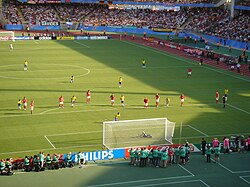
Key Facts
- Founded: 1992 (originally as the King Fahd Cup).
- Abolished: 2017 (officially confirmed in March 2019).
- Most Successful Team: Brazil, with 4 titles.
- Last Champion: Germany (2017).
- Participants: 8 teams from 6 confederations, the World Cup winner, and the host.
The Evolution of the Tournament
The King Fahd Cup Era
Before it became a global FIFA-led event, the tournament began in Saudi Arabia as the King Fahd Cup (also known as the Confederations Winners Cup or Intercontinental Championship). Held in 1992 and 1995, it was named in honor of the Saudi ruler who organized the event with the support of the Saudi Arabian federation.
The FIFA Confederations Cup Era
FIFA took over the organization in 1997, rebranding it as the FIFA Confederations Cup. Initially held every two years, the schedule shifted after 2005 to a quadrennial format. From that point forward, the tournament typically took place in the year preceding the FIFA World Cup, hosted by the same country.
This arrangement allowed the host nation to utilize approximately half of the stadiums intended for the World Cup, ensuring operational readiness. While participation was generally mandatory for continental winners, it was optional for the European and South American champions.
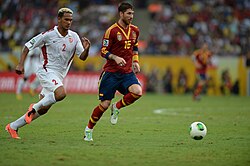
Abolition and Transition
The tournament's end was precipitated by logistical challenges and shifting priorities. Plans for a 2021 tournament in Qatar were complicated by extreme summer temperatures, leading FIFA to move the event to another Asian Football Confederation country. However, in October 2017, FIFA revealed plans to abolish the competition entirely.
In March 2019, FIFA officially confirmed the abolition of the Confederations Cup. Its slot was replaced by an expanded FIFA Club World Cup and the 2021 FIFA Arab Cup, which served as a prelude to the 2022 World Cup.
Tournament Format and Regulations
The competition followed a structured format designed to ensure diverse representation:
- Group Stage: Eight teams were divided into two round-robin groups. To maintain variety, teams from the same confederation were generally kept apart unless three teams from one confederation qualified (as seen in 2017).
- Ranking Criteria: Group standings were determined by total points, goal difference, and goals scored. If teams remained tied, head-to-head results and fair play points (deductions for yellow and red cards) were used.
- Knockout Stage: The top two teams from each group advanced to the semi-finals. The winners progressed to the final, while the losers competed in a third-place match. Matches ending in a draw after regular time proceeded to extra time and, if necessary, a penalty shoot-out.
Historical Performance Summary
Throughout its history, the tournament saw the dominance of South American and European powerhouses, with Brazil emerging as the most successful nation.
| Metric | Detail |
|---|---|
| Most Titles | Brazil (4) |
| Last Winner | Germany (2017) |
| All-Time Top Scorer | Ronaldinho (Brazil) - 9 goals |
| Single Tournament Record | Romário (Brazil) - 7 goals in 1997 |
| Total Editions | 10 (including King Fahd Cup) |
The Modern Successor: Finalissima
Following the abolition of the Confederations Cup, UEFA and CONMEBOL sought to maintain a high-level clash between the champions of Europe and South America. This led to the relaunch of the CONMEBOL–UEFA Cup of Champions, known as the Finalissima. The first edition of this revived contest took place on June 1, 2022, where Argentina defeated Italy.
Frequently Asked Questions
Why was the FIFA Confederations Cup abolished?
FIFA decided to abolish the tournament to make room for an expanded, 24-team FIFA Club World Cup and to adjust the international calendar.
Which team won the most Confederations Cups?
Brazil is the most successful team in the history of the tournament, winning a total of four titles.
How did teams qualify for the tournament?
Qualification was based on being the host nation, the current FIFA World Cup holder, or the winner of one of the six continental championships.
What was the purpose of holding the tournament in the World Cup host country?
It served as a test event or "dress rehearsal," allowing the host nation to test stadiums and logistics before the larger FIFA World Cup the following year.
Who was the all-time leading goalscorer of the competition?
Ronaldinho of Brazil holds the record for the most overall goals scored in the tournament, with a total of 9.