Ferrum College: A Century of Educational Evolution in the Blue Ridge Mountains
Founded on a mission of service and accessibility, Ferrum College began as a modest effort to bring education to the underprivileged youth of Virginia's Blue Ridge Mountains. From its humble origins as a training school to its current status as a comprehensive institution offering graduate degrees, the college's journey reflects a persistent commitment to rural community development and academic growth.
Key Facts
- Founded: 1913 as Ferrum Training School.
- Founding Body: Charitable members of the Methodist Episcopal Church in Virginia.
- Location: Ferrum, Virginia, strategically placed near the Norfolk and Western Railway.
- Major Transitions: Evolved from a training school to a junior college (1926), then to a four-year college (1971), and finally a graduate-degree granting institution (2020).
- Accreditation: Accredited by the Southern Association of Colleges and Schools (SACS) for four-year status in 1976.
The Founding of Ferrum Training School
The vision for the institution began with the Virginia Conference Woman's Home Missionary Society (VCWHMS). Under the leadership of President Mrs. Lee Britt, the society sought to educate the rural population of southwestern Virginia. By 1909, the VCWHMS had raised $1,200 for the project. In 1911, the village of Ferrum was chosen as the site due to its position as a train depot on the Norfolk and Western Railway, located between Roanoke and Winston-Salem.
With the help of Benjamin Beckham, who assisted in raising $25,000, the society purchased 80 acres from farmer George Goode in 1913, supplemented by another 50 acres donated by local citizens. This land formed the foundation of the Ferrum Training School.
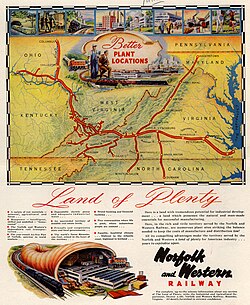
Construction began in 1914, and the first term of instruction commenced that fall in the first section of John Wesley Hall. The school's early growth was bolstered by the railway, which built a cinder road connecting the Ferrum Depot to the campus. In 1917, the institution celebrated a milestone by graduating its first diploma-earning student, Berta Thompson, who entered the public-school teaching profession.
Transition to a Junior College
Throughout its first decade, the school faced significant challenges, including financial instability, health crises, and the difficulty of attracting faculty to a remote rural area. Despite these hurdles, the trustees voted in 1926 to recast the institution as a junior college. Between 1926 and 1935, the school transitioned through secondary education, offering occasional postsecondary courses in religious training.
Under President James A. Chapman, the school began pursuing formal accreditation. By 1940, the institution was known as "Ferrum Training School – Ferrum Junior College," with half of its students enrolled at the college level. The primary school division eventually closed before the end of World War II.
Overcoming Post-War Crisis
The late 1940s brought a period of uncertainty. In 1948, some critics, including George Reamey of the Richmond Christian Advocate, suggested the school should close, believing its original mission had been fulfilled. This sentiment contributed to the resignation of President Luther J. Derby. However, this crisis galvanized alumni support, leading to more competitive salaries and better living conditions to attract qualified staff. The school subsequently shortened its name to Ferrum Junior College.
Under the leadership of alumnus Nathaniel Davis (Class of 1924), the transition to a junior college continued, and the high school division was officially closed in 1955.
The Era of Rapid Growth and Modernization
The appointment of President C. Ralph Arthur in 1954 marked a transformative era. President Arthur professionalized the faculty, removing undercredentialed staff and recruiting collegiate-level educators by providing campus housing. He also aggressively pursued funding from the Methodist Church, government officials, and local businesses.
This strategic shift led to an explosion in enrollment: the student body grew from 238 in 1958 to 646 in 1962, reaching 799 students and 50 full-time faculty by the 1963–1964 academic year. This period also saw the rise of collegiate athletics, highlighted by the long tenure of coach Hank Norton, who began his work in 1960.
Social Progress and Institutional Change
In line with recommendations from the Methodist Church Annual Conference, Ferrum began integrating its student body. In 1967, the college welcomed its first four African-American students: Alice Baker, Fred Dunnings, Jerry Venable, and Allen White.
The college's religious affiliation also evolved through the merging of Methodist branches in 1939 and 1968, eventually becoming part of the United Methodist Church.
Evolution into a Four-Year and Graduate Institution
Following the death of President Arthur in 1970, Joseph Hart took leadership. President Hart emphasized the college's role as a cornerstone of the local community, integrating academic growth with community engagement through initiatives like the Blue Ridge Institute and Folk Life Festivals.
To remain competitive against the rising community college model, Ferrum transitioned into a four-year institution, adopting its current name, Ferrum College, in 1971. In 1976, it received accreditation from the Southern Association of Colleges and Schools (SACS) to operate as a four-year college.
The college continued to expand its academic reach, receiving accreditation to confer graduate degrees in 2020. Today, Ferrum College offers over 50 bachelor's degree programs and several graduate programs, maintaining its affiliation with the Virginia Annual Conference of the United Methodist Church.
| Period/Year | Institutional Name | Primary Educational Level | Key Milestone |
|---|---|---|---|
| 1913–1926 | Ferrum Training School | Primary/Secondary | Founded to serve rural youth |
| 1926–1971 | Ferrum Junior College | Secondary/Junior College | Transition to collegiate status |
| 1971–2020 | Ferrum College | Four-Year College | SACS accreditation (1976) |
| 2020–Present | Ferrum College | Bachelor's & Graduate | Accreditation for graduate degrees |
Presidential History
The leadership of Ferrum College has been shaped by a series of dedicated presidents who guided the school through its various stages of growth:
- Benjamin M. Beckham (1913–1934)
- John A. Carter (1934–1935)
- James A. Chapman (1935–1943)
- Luther J. Derby (1943–1948)
- Nathaniel H. Davis '24 (1948–1952)
- Stanley E. Emrich (1952–1954)
- C. Ralph Arthur (1954–1970)
- Joseph T. Hart (1971–1986)
- Jerry M. Boone (1987–2002)
- Jennifer L. Braaten (2002–2016)
- Joseph "Jody" Carson Spooner (2016–2017)
- David L. Johns (2018–2022)
- Mirta M. Martin (2022–Present)
Frequently Asked Questions
Why was Ferrum Training School originally established?
It was founded in 1913 by members of the Methodist Episcopal Church to provide educational opportunities to underprivileged youth in the Blue Ridge Mountains region of Virginia.
When did Ferrum College become a four-year institution?
The school adopted the name Ferrum College in 1971 and received official accreditation from the Southern Association of Colleges and Schools to operate as a four-year college in 1976.
Who were the first African-American students at Ferrum?
In 1967, the college welcomed Alice Baker, Fred Dunnings, Jerry Venable, and Allen White as its first four African-American students.
What role did the Norfolk and Western Railway play in the school's history?
The railway influenced the location of the school due to the Ferrum train depot and supported the campus by constructing a cinder road from the depot to the school.
Does Ferrum College offer advanced degrees?
Yes, as of 2020, Ferrum College is accredited to confer graduate degrees in addition to its bachelor's degree programs.