Fernando Fader: The Post-Impressionist Master of Argentina
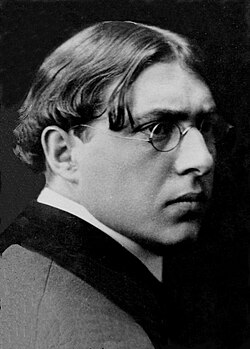
Fernando Fader was a pivotal figure in the evolution of Argentine art, blending European academic training with a profound sensitivity to the South American landscape. Born in France and later adopting Argentina as his home, Fader became a leading exponent of Post-Impressionism—an art movement that extended Impressionism by emphasizing symbolic content and more structured forms.
Key Facts
- Born: April 11, 1882, in Bordeaux, France.
- Died: February 1935, in Ischilín Department, Córdoba, Argentina.
- Education: Trained at the Munich Academy of Fine Arts under Heinrich von Zügel.
- Major Honors: First prize at the Fourth National Art Bienale and a gold medal at the 1915 Pacific International Exposition.
- Artistic Evolution: Transitioned from urban landscapes to bucolic scenes and eventually to still lifes and portraits due to health constraints.
Early Life and European Training
Fader's journey began in Bordeaux, France. In 1884, his father, who was of Prussian descent, moved the family to Mendoza, Argentina. After a period back in France for his secondary education, Fader returned to Mendoza in 1898, where he began honing his craft by painting urban landscapes.
Seeking advanced training, Fader moved to Munich in 1900. After attending a vocational school, he gained admission to the prestigious Munich Academy of Fine Arts. There, he studied under Heinrich von Zügel, a prominent figure in the Naturalist Barbizon School, which focused on realistic depictions of nature and rural life.
Establishing a Legacy in Argentina
Fader first exhibited his work at the Costa Salon in Buenos Aires in 1906. While local critics of the time favored traditional Impressionism, Fader's Post-Impressionist style set him apart. This stylistic divergence led him to align with other avant-garde artists who were similarly marginalized by conservative audiences, including the sculptor Rogelio Yrurtia, Cesáreo Bernaldo de Quirós, and Martín Malharro.
Together, they formed the Nexus group. Although they initially struggled, the group gained significant influence around 1910 through Malharro's atelier. By 1914, Fader had settled in Buenos Aires and achieved critical acclaim, winning first prize at the Fourth National Art Bienale. His international reputation grew as he toured galleries in Germany and Spain and earned a gold medal at the 1915 Pacific International Exposition in San Francisco.
Health Struggles and Artistic Evolution
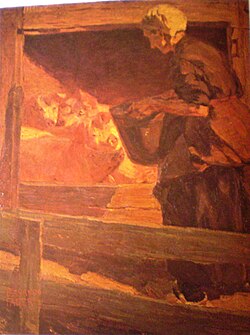
The trajectory of Fader's career was deeply impacted by his health. An onset of tuberculosis forced him to leave the humid city for the drier climate of the Argentine Andes foothills in Córdoba. This relocation sparked a shift in his style; his work became more Impressionistic, characterized by a heightened use of sunlight contrasts and romanticized portrayals of farm life.
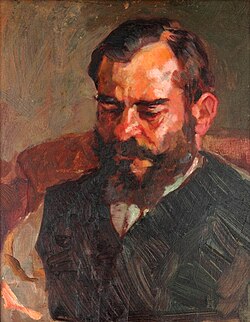
However, by 1921, his condition evolved into chronic asthma, which made outdoor painting impossible. This forced a third transition in his work, as he turned his attention to still lifes, nudes, and self-portraits. Despite his physical reclusion, his popularity remained steadfast.
Final Years and Recognition
Fader's contributions to art were recognized through major retrospectives. The National Academy of Fine Arts held an exhibition of his work in 1924, and in 1932, a massive retrospective of 119 works was organized to celebrate his 50th birthday, though he was too ill to attend. Fader passed away in 1935 at the age of 52. Today, his former home in the hamlet of Loza Corral serves as a museum dedicated to his legacy.
| Period | Primary Location | Key Focus & Style | Influences/Drivers |
|---|---|---|---|
| Early Career | Mendoza & Munich | Urban landscapes & Naturalism | Academic training under Heinrich von Zügel |
| Mid Career | Buenos Aires & Córdoba | Post-Impressionist & Bucolic scenes | Nexus group; move to Andes for tuberculosis |
| Late Career | Córdoba | Still lifes, nudes, and self-portraits | Chronic asthma preventing outdoor work |
Frequently Asked Questions
What art movement is Fernando Fader associated with?
Fernando Fader is primarily recognized as a Post-Impressionist painter, though his style evolved to include Naturalism and Impressionistic elements throughout his life.
How did health issues affect Fader's art?
Tuberculosis led him to the Andes, where he began painting sunlight-heavy rural scenes. Later, chronic asthma prevented him from working outdoors, shifting his focus to indoor subjects like still lifes and portraits.
Who was Fader's mentor in Munich?
He was mentored by Heinrich von Zügel, a prominent figure in the Naturalist Barbizon School, at the Munich Academy of Fine Arts.
What was the Nexus group?
The Nexus group was a collective of artists, including Fader, Martín Malharro, Rogelio Yrurtia, and Cesáreo Bernaldo de Quirós, who challenged the conservative art preferences of the Argentine public.
Where can visitors see Fader's legacy today?
His former home in the rural hamlet of Loza Corral has been preserved and maintained as a museum.