Antonio Berni: The Master of Nuevo Realismo and Social Narrative
Delesio Antonio Berni was a towering figure in Argentine art, known for his ability to blend aesthetic innovation with a profound commitment to social justice. As a figurative artist, Berni navigated the complexities of the 20th century, evolving from the dreamlike vistas of surrealism to a gritty, tactile style known as Nuevo Realismo (New Realism). His work serves as a visual chronicle of the struggles, poverty, and industrialization of Argentina, most notably through his iconic characters Juanito Laguna and Ramona Montiel.
Key Facts
- Full Name: Delesio Antonio Berni (1905–1981).
- Primary Movement: Nuevo Realismo, an Argentine extension of social realism.
- Signature Technique: Use of discarded materials (collage) to represent urban poverty.
- Major Works: The Juanito Laguna and Ramona Montiel series, La Manifestación, and Desocupados.
- Global Recognition: First Prize at the Venice Biennale for his engravings.
Early Life and the Influence of Paris
Born in Rosario, Argentina, on May 14, 1905, Berni showed early promise as a child prodigy. After apprenticing as a stained-glass craftsman and studying painting at the Rosario Catalá Center, he gained critical acclaim for his impressionist landscapes in the early 1920s.
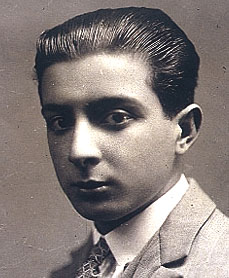
A scholarship from the Jockey Club of Rosario led Berni to Europe in 1925. After exploring Spain, he settled in Paris, where he immersed himself in the "City of Lights" workshops at the Académie de la Grande Chaumière. During this period, he transitioned toward surrealism—an art movement focusing on the unconscious and dreamlike imagery—which he viewed as a dynamic representation of the youth's internal state following World War I. His surrealist phase produced evocative works such as La Torre Eiffel en la Pampa.
Beyond the canvas, Berni's time in Paris was marked by intellectual growth. He studied Marxist theory and maintained a significant correspondence with the Communist poet Louis Aragon, discussing the intersection of politics, culture, and the responsibilities of the intellectual in colonial societies.
The Rise of Nuevo Realismo
Returning to Rosario in 1931, Berni found a country starkly different from the artistic hubs of Europe. Witnessing the misery of unemployment and the political instability of the "Infamous Decade," he felt that surrealism could no longer capture the hopelessness of the Argentine people. This realization birthed his commitment to Nuevo Realismo.
While he briefly collaborated with Mexican muralist David Alfaro Siqueiros on the work Ejercicio Plástico, Berni eventually diverged from muralism. He believed murals were often too tied to the bourgeoisie and instead turned to realistic paintings based on photographs to document the "abysmal conditions" of the working class. Masterpieces like Desocupados (The Unemployed) and Manifestación (Manifestation) balanced narrative social content with aesthetic originality.
Mid-Career Evolution and Global Reach
Throughout the 1940s and 50s, Berni's work expanded in scope and geography. A trip to Bolivia, Ecuador, Peru, and Colombia to study pre-Columbian art inspired Mercado indígena. He also responded to Latin American political turmoil with poignant works like Masacre and El Obrero Muerto.
In the 1950s, Berni explored expressionism and suburban landscapes, capturing the ecological damage in provinces like Santiago del Estero. His professional standing grew as he served as Director of Culture for the Argentine Foreign Relations Ministry in 1960, and his engravings earned top honors at the Venice Biennale.
The Legacy of Juanito Laguna and Ramona Montiel
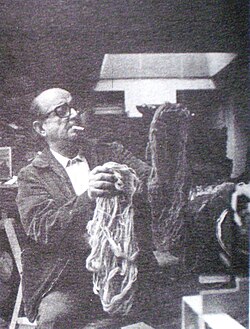
In 1958, Berni began a revolutionary series featuring Juanito Laguna, a character representing the children of the slums. In a synthesis of Pop Art and Social Realism, Berni utilized collage, incorporating actual discarded materials—old wood, iron, cardboard, and metal sheets—found in the shacks of the poor. This technique ensured that the medium itself reflected the reality of the subject.
This narrative expanded to include Ramona Montiel, a female counterpart who further explored the effects of neocolonialism and economic backwardness. These works, including Retrato de Juanito Laguna, evolved from paintings into complex three-dimensional altarpieces by the late 1970s.
| Period | Primary Style/Movement | Key Themes | Notable Works |
|---|---|---|---|
| 1920s | Impressionism & Surrealism | Landscapes, Dream-states | La Torre Eiffel en la Pampa |
| 1930s-40s | Nuevo Realismo | Labor struggles, Poverty | Desocupados, Manifestación |
| 1950s-70s | Social Realism & Collage | Industrialization, Slums | Juanito Laguna series |
| Late 1970s-81 | Spiritual/Reflective | Consumerism, Faith | Apocalipsis, La crucifixion |
Final Years and Lasting Impact
Following the 1976 coup in Argentina, Berni moved to New York City. He viewed the city as a place of material wealth but spiritual poverty, a theme he explored with social irony in works like Aeropuerto and Chelsea Hotel. In his final years, his work turned toward the spiritual, culminating in the paintings for the Chapel of San Luis Gonzaga.
Berni passed away on October 13, 1981, in Buenos Aires. His legacy persists not only in museums but in popular culture; musicians like Mercedes Sosa recorded songs inspired by Juanito Laguna. Despite a tragic 2008 theft of fifteen of his paintings, Berni remains recognized as one of Argentina's most influential artists, honored posthumously with the Konex Award.
Frequently Asked Questions
What is Nuevo Realismo?
Nuevo Realismo (New Realism) was an Argentine artistic movement and extension of social realism. It focused on depicting the authentic, often harsh, social and political realities of the working class and the impoverished in Argentina.
Who was Juanito Laguna?
Juanito Laguna is a fictional character created by Berni to serve as a social narrative. Through a series of paintings and collages, Juanito represents the children living in the slums of Buenos Aires, highlighting the disparity between the wealthy aristocracy and the poor.
Why did Berni use discarded materials in his art?
Berni used materials like scrap metal, cardboard, and wood because they were the actual materials used to build the shacks in the slums. By incorporating these into his collages, he created a direct, physical link between the artwork and the environment of his subjects.
How did Berni's time in Paris influence his work?
In Paris, Berni was exposed to surrealism and the works of artists like Giorgio de Chirico and René Magritte. He also engaged with Marxist theory and revolutionary politics, which laid the intellectual groundwork for his later shift toward social realism.
What was the significance of the Ramona Montiel series?
Similar to the Juanito Laguna series, the Ramona Montiel works focused on the struggles of the underprivileged, specifically through a female lens, bearing witness to the effects of neocolonialism and economic hardship in Latin America.