The Fascinating World of Ferns: Evolution, Anatomy, and Diversity
Ferns are among the most ancient and resilient groups of plants on Earth. Spanning a temporal range from the Middle Devonian period to the present day, these plants have survived countless geological shifts and evolutionary upheavances. Today, they are recognized as a diverse group of vascular plants, with approximately 10,560 known extant species thriving in environments ranging from tropical rainforests to temperate forests.
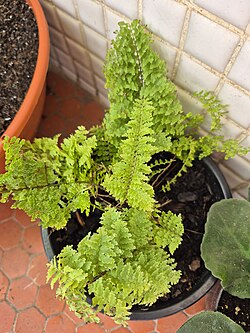
Understanding Fern Anatomy and Classification
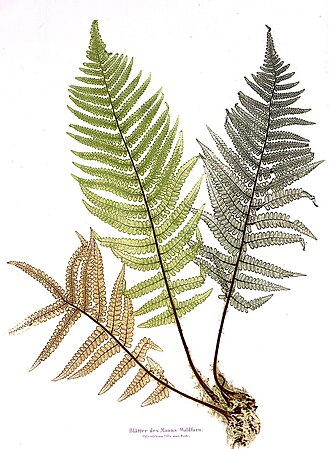
What distinguishes a fern from other plants? One of the primary characteristics is the presence of megaphylls, which are complex leaves that are more advanced than the simpler microphylls found in clubmosses. Many ferns are classified as leptosporangiate ferns, a group known for producing coiled "fiddleheads" that eventually uncoil and expand into large, leafy fronds. This group represents the majority of the ferns we recognize today.
![Barnsley fern created using a chaos game, through an Iterated function system[71]](/images/ae/1a/ae1a079f5e89741e9f2575426fd82ade225e96fb5d406276d9a205b4cf3bc602.png)
In a broader scientific sense, the term "fern" can encompass the entire class Polypodiopsida. This includes both the leptosporangiate ferns and the eusporangiate ferns. The latter group is more diverse in form and includes horsetails, whisk ferns, marattioid ferns, and ophioglossoid ferns.
Ferns reproduce via spores rather than seeds. In many species, these spores are contained within clusters known as sori, which house the sporangia (the specialized structures that produce the spores).
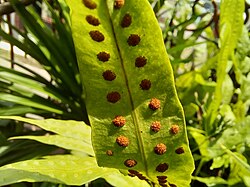
The Life Cycle: Alternation of Generations
Unlike seed plants (gymnosperms and angiosperms), ferns follow a life cycle known as alternation of generations. This process involves two distinct phases: a diploid sporophyte and a haploid gametophyte.
- The Sporophyte: This is the diploid phase (2n), meaning it possesses paired chromosomes. In most familiar plants, this is the large, leafy stage.
- The Gametophyte: This is the haploid phase (n), containing half the number of chromosomes as the sporophyte. Unlike the gametophytes of seed plants, which are dependent on the sporophyte, the fern gametophyte is a free-living organism.
The gametophyte stage is represented by the prothallus, a small, green, photosynthetic structure. It is typically heart- or kidney-shaped, measuring only 3–10 mm long and 2–8 mm broad.
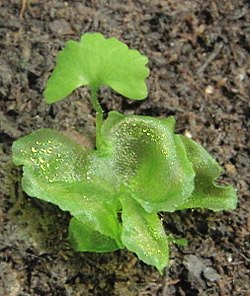
Growth Habits and Physical Structure
The physical structure of a fern can vary significantly depending on its species. While many people refer to fern stems as rhizomes, these underground stems are only found in certain species. Other ferns may possess above-ground creeping stolons, or even erect, semi-woody trunks. Some species, such as the tree ferns in the family Cyatheaceae, can reach impressive heights of up to 20 meters (66 ft).
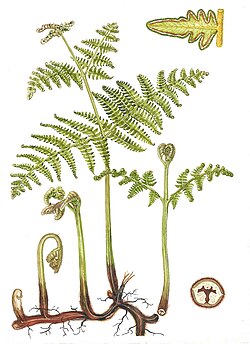
Evolution and Global Distribution
The evolutionary history of ferns is vast. Fern-like taxa first appeared in the fossil record around 390 million years ago. While the fern crown group is estimated to have originated in the late Silurian period (approximately 423.2 million years ago), the Polypodiales—a group that accounts for 80% of living fern diversity—did not diversify until the Cretaceous period, alongside the rise of flowering plants.
Geographically, ferns are found worldwide, though their distribution is not uniform. They reach their greatest richness in the tropics, particularly within tropical rainforests, and are least common in arctic regions. They are also common inhabitants of European forests and are a significant symbol of New Zealand.
Human Uses and Cultural Significance
Throughout history, humans have interacted with ferns in various ways. Some species are used as food; for example, the fiddleheads of bracken, ostrich fern, and cinnamon fern are edible. In the tropics, Diplazium esculentum is a traditional food ingredient, and tubers from the king fern are used in the South Pacific. However, caution is advised, as some species can be carcinogenic, and the British Royal Horticultural Society recommends avoiding consumption for health reasons.
Beyond food, ferns have played roles in medicine and even modern biotechnology. The protein Tma12, found in the edible fern Tectaria macrodonta, has been transferred to cotton plants to help them resist whitefly infestations. Culturally, ferns have also enjoyed periods of intense popularity, such as the "Pteridomania" craze during the Victorian era.
Key Facts
- Temporal Range: Middle Devonian to the present.
- Species Diversity: Approximately 10,560 extant species.
- Dominant Group: Polypodiales makes up 80% of living fern diversity.
- Reproduction: They use spores and undergo alternation of generations.
- Habitat: Highest diversity is found in tropical rainforests.
Summary of Major Fern Subclasses
| Subclass | Representative Groups | Approximate Species |
|---|---|---|
| Equisetidae | Horsetails | ~20 |
| Ophioglossidae | Whisk ferns and ophioglossoid ferns | ~92 |
| Marattiidae | Marattioid ferns | ~130 |
| Polypodiidae | Leptosporangiate ferns | ~9,000 |
Frequently Asked Questions
Are all ferns edible?
No. While some species like the ostrich fern are used for food, some ferns are carcinogenic. The British Royal Horticultural Society advises against consuming any species for the health of humans and livestock.
What is the difference between a fern and a flowering plant?
Ferns are vascular plants that reproduce via spores and lack flowers and seeds. Flowering plants (angiosperms) reproduce using seeds produced within flowers.
What are "true ferns"?
The term "true ferns" is often used to refer to the leptosporangiate ferns, which comprise the majority of the species known as ferns.
How do ferns reproduce?
Ferns reproduce through a life cycle called alternation of generations, switching between a diploid sporophyte stage and a haploid gametophyte stage using spores.
Where can I find the most diverse fern populations?
The greatest diversity of ferns is found in tropical rainforests, whereas they are least abundant in arctic areas.